Visual summary
Recognize the glomerular syndrome first, then integrate urine, serology, tissue, and time course to determine the disease.
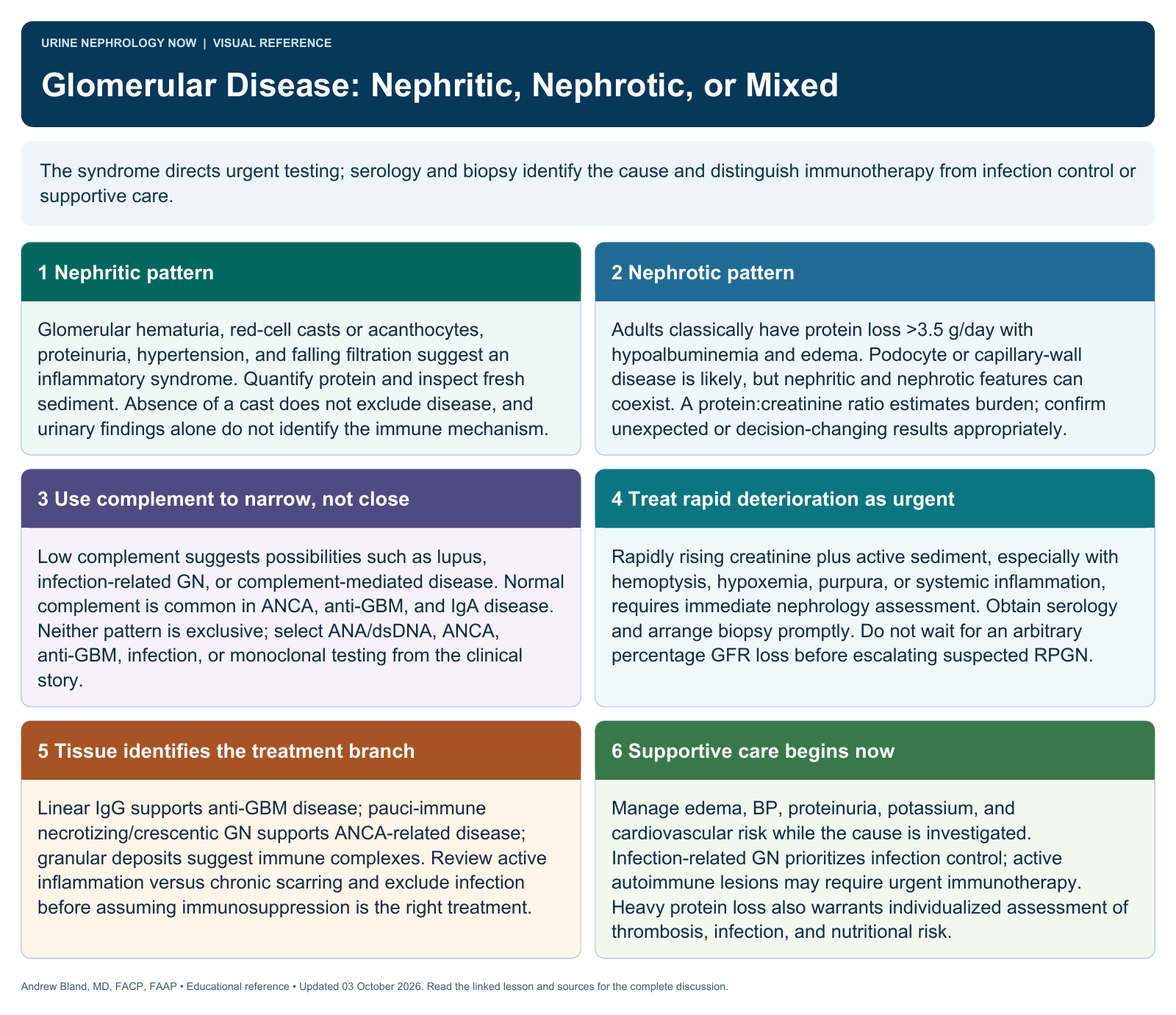
Text version
The filter has several failure patterns
Glomerular inflammation can permit red cells into urine and reduce filtration, while podocyte or filtration-barrier dysfunction can produce major protein loss. Individual diseases may cause nephritic, nephrotic, or overlapping features.
Recognize the syndrome
Hematuria, proteinuria, edema, hypertension, and declining kidney function should be interpreted together. Red cell casts or acanthocytes support a glomerular source, but their absence does not exclude glomerular disease.
Define activity and cause
Quantify urine protein, examine sediment, review renal trajectory, and assess systemic findings. Select complement, autoimmune, infection, and paraprotein studies according to the differential rather than treating every positive antibody as diagnostic.
Use tissue when it changes care
Kidney biopsy can distinguish immune-complex, pauci-immune, anti-GBM, podocyte, and other patterns. Pathology must be correlated with serology and the clinical syndrome; sampling and chronic scarring affect what can be concluded.
Treat supportively and specifically
Manage blood pressure, edema, proteinuria, and complications while evaluating disease-specific therapy. Immunosuppression is appropriate for selected active diseases, whereas infection-related disease or advanced irreversible injury can require a different strategy.
Identify the emergency
Rapid kidney deterioration, pulmonary hemorrhage, severe hypertension, or dangerous metabolic complications require urgent specialist assessment. Do not await every test before escalating a suspected pulmonary–renal syndrome or rapidly progressive glomerulonephritis.
Self-check: Describe how urine, serology, and biopsy complement one another, and identify the findings that would make glomerular disease an urgent problem.
Continue learning
This graphic summarizes a topic. The full educational pages provide the broader discussion and references.