Visual summary
In liver disease, persistent hypoxemia requires a mechanism-based workup; pulmonary vascular dilatation is different from simple congestion.
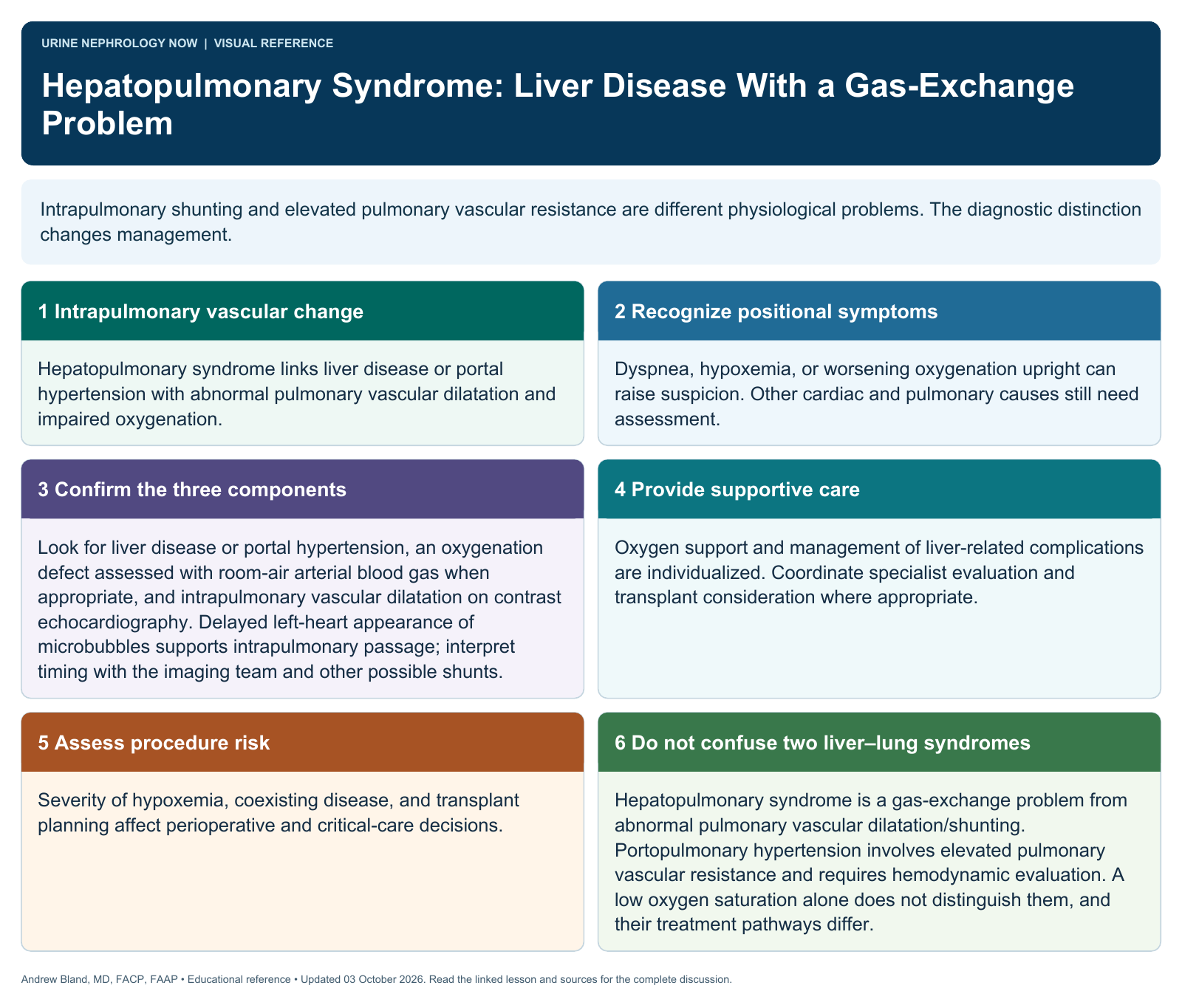
Text version
Liver disease can alter pulmonary vessels
Intrapulmonary vascular dilatation in the setting of liver disease or portal hypertension can impair oxygenation. The mechanism differs from fluid overload, pneumonia, and portopulmonary hypertension, although disorders can coexist.
Recognize suggestive symptoms
Dyspnea, hypoxemia, and positional worsening when upright may raise suspicion. Absence of a classic positional complaint does not exclude the syndrome, and an abnormal oxygen saturation deserves a broader differential.
Confirm the components
Assess oxygenation appropriately, evaluate for intrapulmonary vascular dilatation with suitable testing, and establish the liver or portal-hypertensive context. Interpret contrast echocardiography and other findings with expertise and exclusion of competing explanations.
Support while assessing definitive options
Oxygen may relieve hypoxemia, while liver transplantation can be relevant to definitive management in eligible patients. Coordinate pulmonary and liver assessment rather than assuming that diuresis will correct this mechanism.
Consider renal-treatment implications
Hypoxemia, hemodynamic instability, and concurrent kidney dysfunction can complicate dialysis or procedures. The dialysis plan should address volume and solute needs without assuming that removing fluid treats every oxygenation problem.
Keep related syndromes distinct
Portopulmonary hypertension, intracardiac shunting, pleural disease, and hepatopulmonary syndrome have different diagnostic and treatment pathways. Verify current transplant evaluation and exception rules instead of treating a teaching severity category as an automatic listing decision.
Continue learning
This graphic summarizes a topic. The full educational pages provide the broader discussion and references.