Visual summary
First identify acute organ injury; then choose the BP strategy appropriate to that exact emergency.
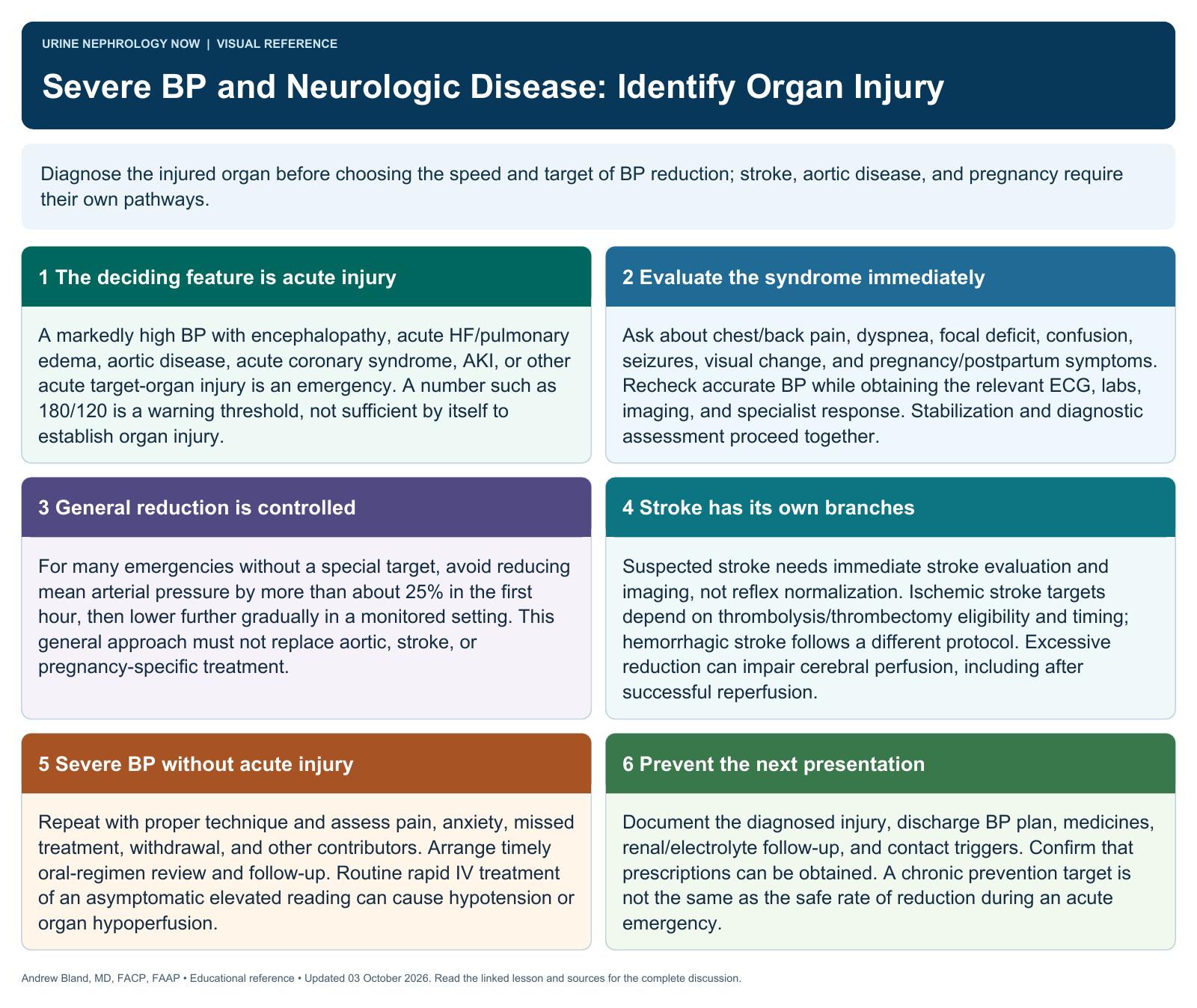
Text version
The emergency is organ injury
Markedly elevated pressure with acute target-organ injury is a hypertensive emergency. A high number without such injury requires evaluation and follow-up but does not automatically justify rapid intravenous lowering.
Recognize concerning presentations
Assess chest or back pain, acute dyspnea, neurologic deficit, seizures, confusion, visual change, kidney deterioration, and pregnancy-related symptoms. The history and examination determine which immediately threatening syndrome must be evaluated.
Define the affected organ
Use focused testing for the suspected condition, including ECG, laboratory studies, brain or vascular imaging, and other appropriate investigations. Distinguish ischemic stroke, intracerebral hemorrhage, aortic disease, pulmonary edema, and encephalopathy.
Use syndrome-specific treatment
The appropriate rate and target of BP reduction differ across emergencies. Ischemic stroke management also depends on reperfusion therapy. Treat in a monitored setting with an agent and plan suitable for the specific organ injury.
Avoid reflexive normalization
Abrupt excessive lowering can compromise perfusion, especially when autoregulation is adapted to chronic hypertension. Severe asymptomatic readings should prompt confirmation, medication review, and a timely plan rather than automatic emergency-style treatment.
Plan secondary prevention
After stabilization, address long-term BP control, medication access, vascular risk, kidney function, and follow-up. Cognitive and stroke-prevention claims should be described by the specific trial population and outcome rather than as guaranteed individual benefit.
Self-check: Two patients have similarly high BP. What findings make one an emergency, and why can their safe treatment targets differ?
Continue learning
This graphic summarizes a topic. The full educational pages provide the broader discussion and references.