Visual summary
Diagnose the injured organ before choosing the speed and target of BP reduction; stroke, aortic disease, and pregnancy require their own pathways.
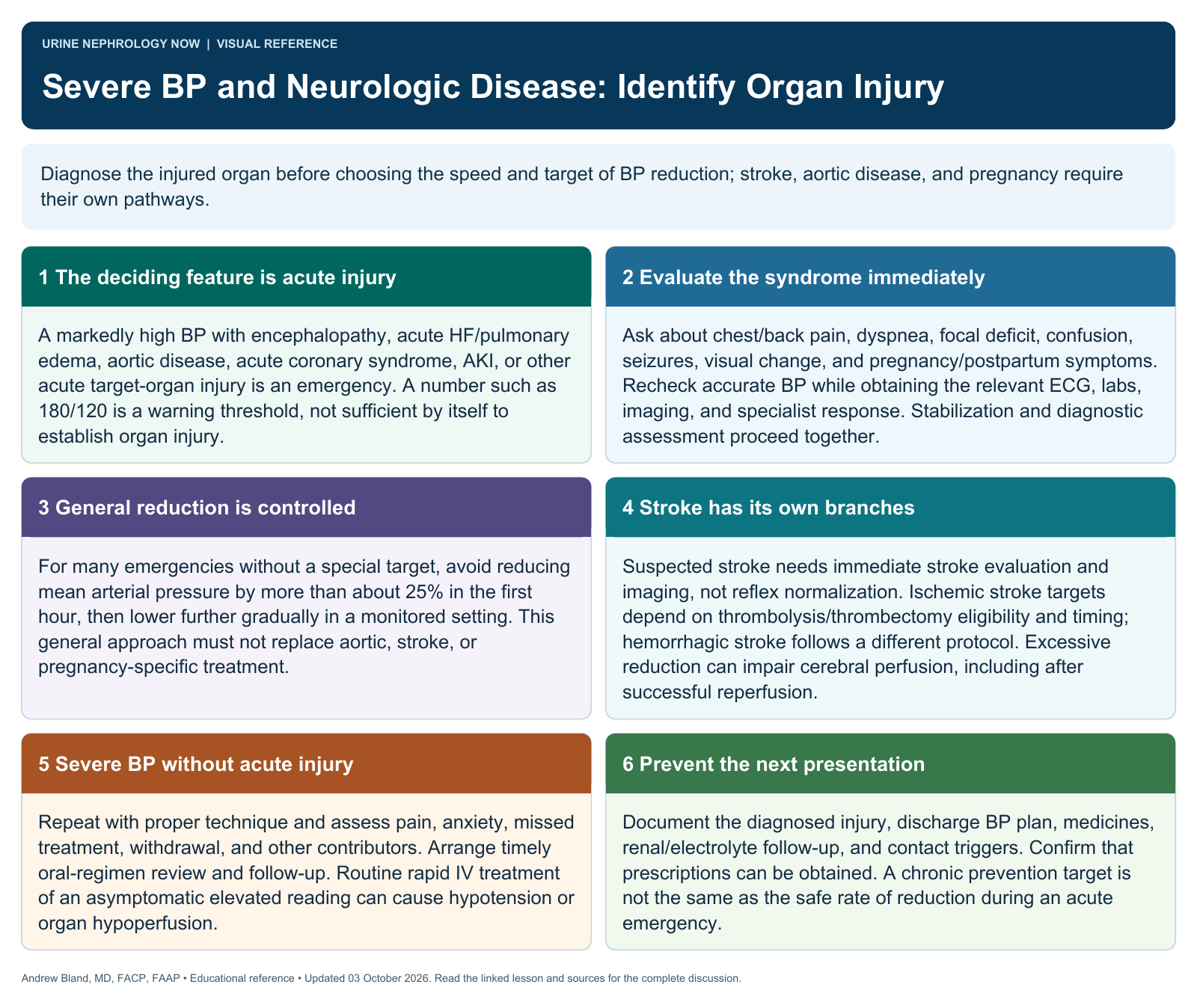
Text version
The deciding feature is acute injury
A markedly high BP with encephalopathy, acute HF/pulmonary edema, aortic disease, acute coronary syndrome, AKI, or other acute target-organ injury is an emergency. A number such as 180/120 is a warning threshold, not sufficient by itself to establish organ injury.
Evaluate the syndrome immediately
Ask about chest/back pain, dyspnea, focal deficit, confusion, seizures, visual change, and pregnancy/postpartum symptoms. Recheck accurate BP while obtaining the relevant ECG, labs, imaging, and specialist response. Stabilization and diagnostic assessment proceed together.
General reduction is controlled
For many emergencies without a special target, avoid reducing mean arterial pressure by more than about 25% in the first hour, then lower further gradually in a monitored setting. This general approach must not replace aortic, stroke, or pregnancy-specific treatment.
Stroke has its own branches
Suspected stroke needs immediate stroke evaluation and imaging, not reflex normalization. Ischemic stroke targets depend on thrombolysis/thrombectomy eligibility and timing; hemorrhagic stroke follows a different protocol. Excessive reduction can impair cerebral perfusion, including after successful reperfusion.
Severe BP without acute injury
Repeat with proper technique and assess pain, anxiety, missed treatment, withdrawal, and other contributors. Arrange timely oral-regimen review and follow-up. Routine rapid IV treatment of an asymptomatic elevated reading can cause hypotension or organ hypoperfusion.
Prevent the next presentation
Document the diagnosed injury, discharge BP plan, medicines, renal/electrolyte follow-up, and contact triggers. Confirm that prescriptions can be obtained. A chronic prevention target is not the same as the safe rate of reduction during an acute emergency.