Visual summary
IgA nephropathy treatment depends on proven diagnosis and progression risk, with careful interpretation of rapidly evolving evidence.
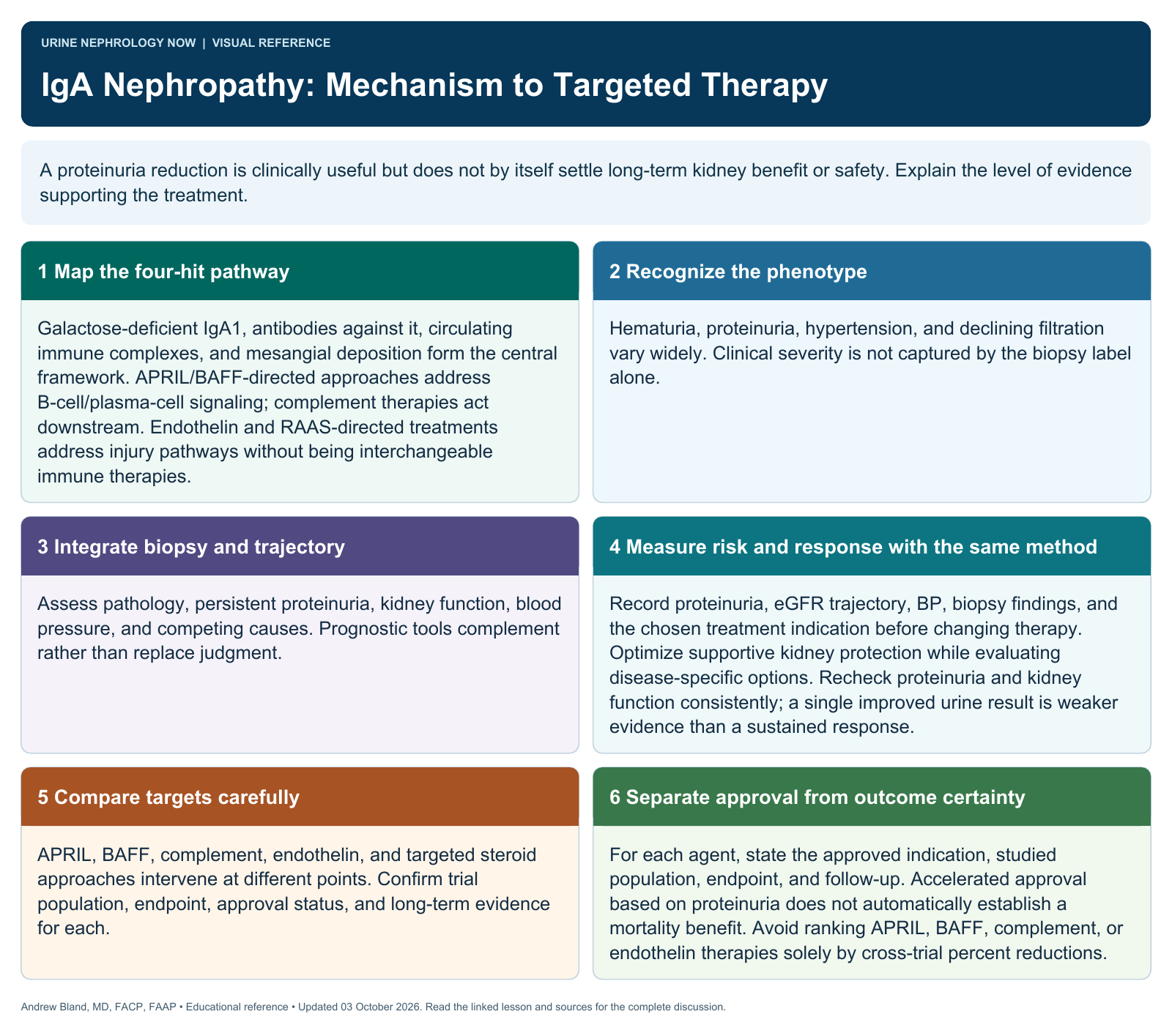
Text version
Immune complexes injure the glomerulus
The multihit model links abnormal IgA, autoantibody formation, immune complexes, and glomerular deposition. It helps explain disease biology, but individual progression and treatment response vary substantially.
Recognize a variable presentation
Episodes of visible hematuria, persistent microscopic hematuria, proteinuria, or declining filtration may occur. A classic infection-associated timing pattern is suggestive rather than diagnostic, and systemic findings raise additional possibilities.
Confirm and assess progression risk
Biopsy interpretation, proteinuria, BP, kidney function, and trajectory inform prognosis. Use validated prediction tools only within their intended setting, and distinguish active rapidly progressive disease from chronic proteinuric risk.
Build supportive care first
Optimize indicated BP and proteinuria treatment and address cardiovascular risk. Disease-targeted therapies depend on current eligibility, evidence, renal function, adverse effects, and the patient’s preferences and monitoring capacity.
Read new trials precisely
Targeted-release steroids, endothelin-pathway agents, complement treatments, and emerging immune therapies have different populations and endpoints. Proteinuria benefit, preservation of filtration, and regulatory status should be stated separately.
Do not transfer evidence automatically
Primary IgA nephropathy trials do not necessarily apply to IgA vasculitis, pregnancy, or rapidly progressive crescentic disease. Review current guidance before presenting a new agent as standard care for every patient.
Continue learning
This graphic summarizes a topic. The full educational pages provide the broader discussion and references.