Visual summary
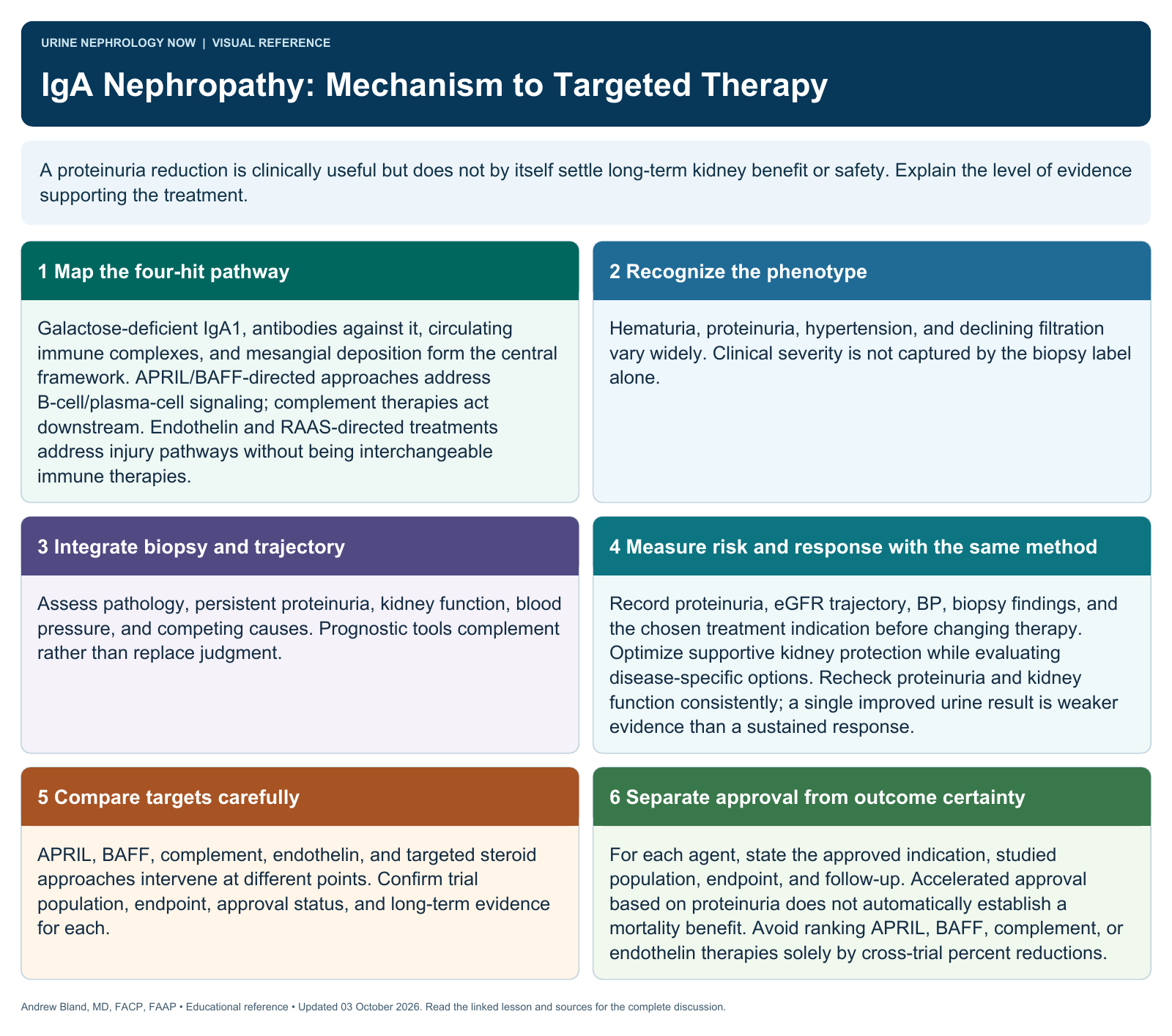
A proteinuria reduction is clinically useful but does not by itself settle long-term kidney benefit or safety. Explain the level of evidence supporting the treatment.
Text version
Map the four-hit pathway
Galactose-deficient IgA1, antibodies against it, circulating immune complexes, and mesangial deposition form the central framework. APRIL/BAFF-directed approaches address B-cell/plasma-cell signaling; complement therapies act downstream. Endothelin and RAAS-directed treatments address injury pathways without being interchangeable immune therapies.
Recognize the phenotype
Hematuria, proteinuria, hypertension, and declining filtration vary widely. Clinical severity is not captured by the biopsy label alone.
Integrate biopsy and trajectory
Assess pathology, persistent proteinuria, kidney function, blood pressure, and competing causes. Prognostic tools complement rather than replace judgment.
Measure risk and response with the same method
Record proteinuria, eGFR trajectory, BP, biopsy findings, and the chosen treatment indication before changing therapy. Optimize supportive kidney protection while evaluating disease-specific options. Recheck proteinuria and kidney function consistently; a single improved urine result is weaker evidence than a sustained response.
Compare targets carefully
APRIL, BAFF, complement, endothelin, and targeted steroid approaches intervene at different points. Confirm trial population, endpoint, approval status, and long-term evidence for each.
Separate approval from outcome certainty
For each agent, state the approved indication, studied population, endpoint, and follow-up. Accelerated approval based on proteinuria does not automatically establish a mortality benefit. Avoid ranking APRIL, BAFF, complement, or endothelin therapies solely by cross-trial percent reductions.