Visual summary
The infection’s timing and activity matter: supportive renal care and treatment of the underlying infection belong in the same plan.
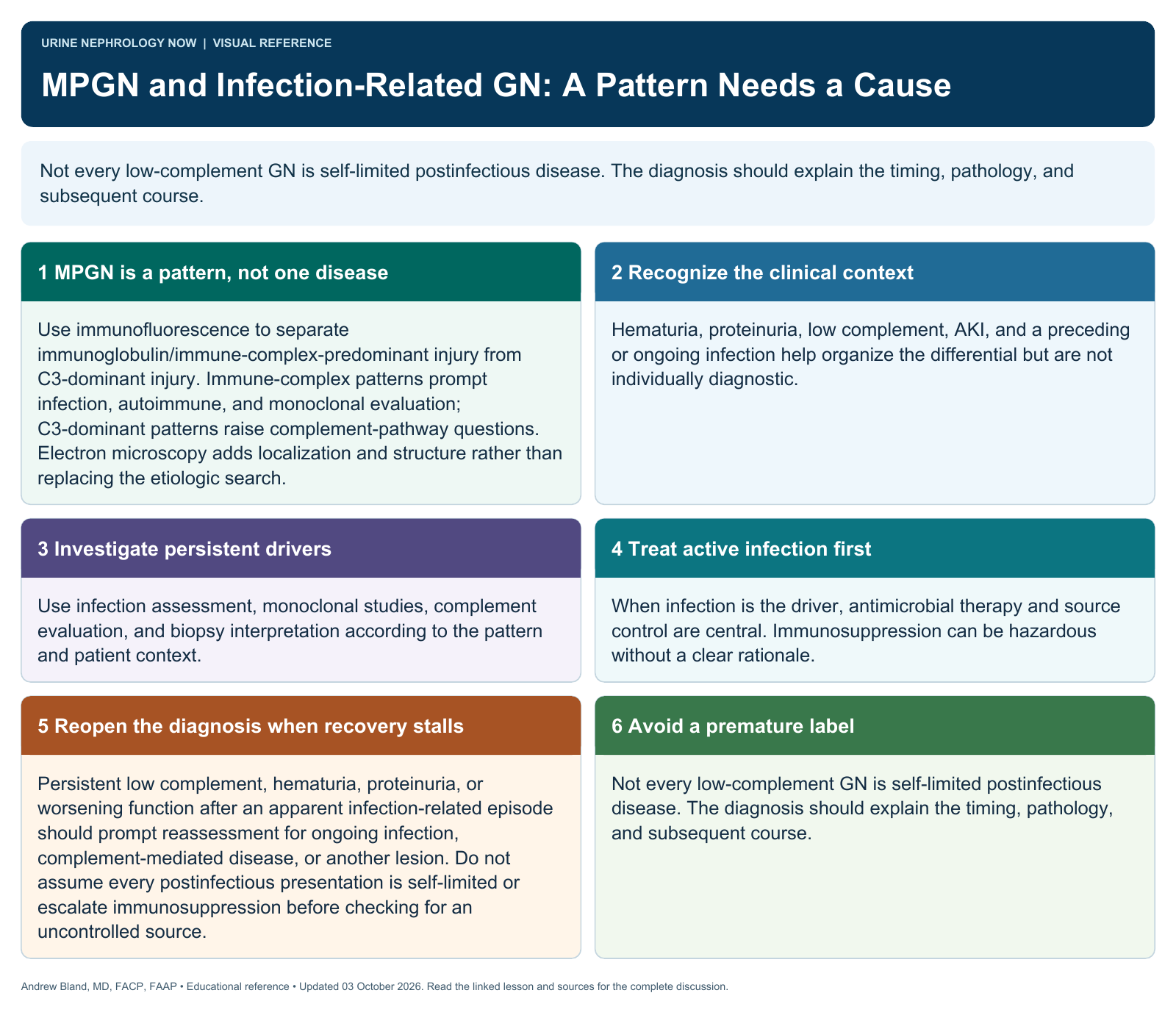
Text version
Infection can drive immune renal injury
Glomerular inflammation may follow a resolved infection or occur during an active infection. Poststreptococcal childhood disease and infection-related GN in adults can differ substantially in context and prognosis.
Recognize the renal syndrome
Hematuria, proteinuria, edema, hypertension, and reduced kidney function may appear. Look for ongoing fever, wounds, endocarditis risk, or other infectious clues instead of assuming every presentation is a remote postinfectious event.
Investigate infection and renal pattern
Use history, cultures or other microbiologic studies, complement, serology when appropriate, and urine assessment. A positive exposure antibody supports past infection but does not necessarily identify the current renal mechanism by itself.
Prioritize source control and support
Treat active infection and manage BP, volume, electrolytes, and renal complications. Dialysis may be needed for established indications. Immunosuppression is not routine for every infection-related glomerular lesion.
Use biopsy when uncertainty matters
Atypical course, severe disease, persistent abnormalities, or competing diagnoses may require tissue. Correlate staining and deposits with microbiology and clinical findings rather than diagnosing from one “classic” histologic feature.
Follow recovery
Monitor kidney function, urine findings, BP, and complement where relevant. Failure to recover as expected should prompt reassessment for persistent infection, another glomerular disease, or substantial chronic damage.
Continue learning
This graphic summarizes a topic. The full educational pages provide the broader discussion and references.