Visual summary
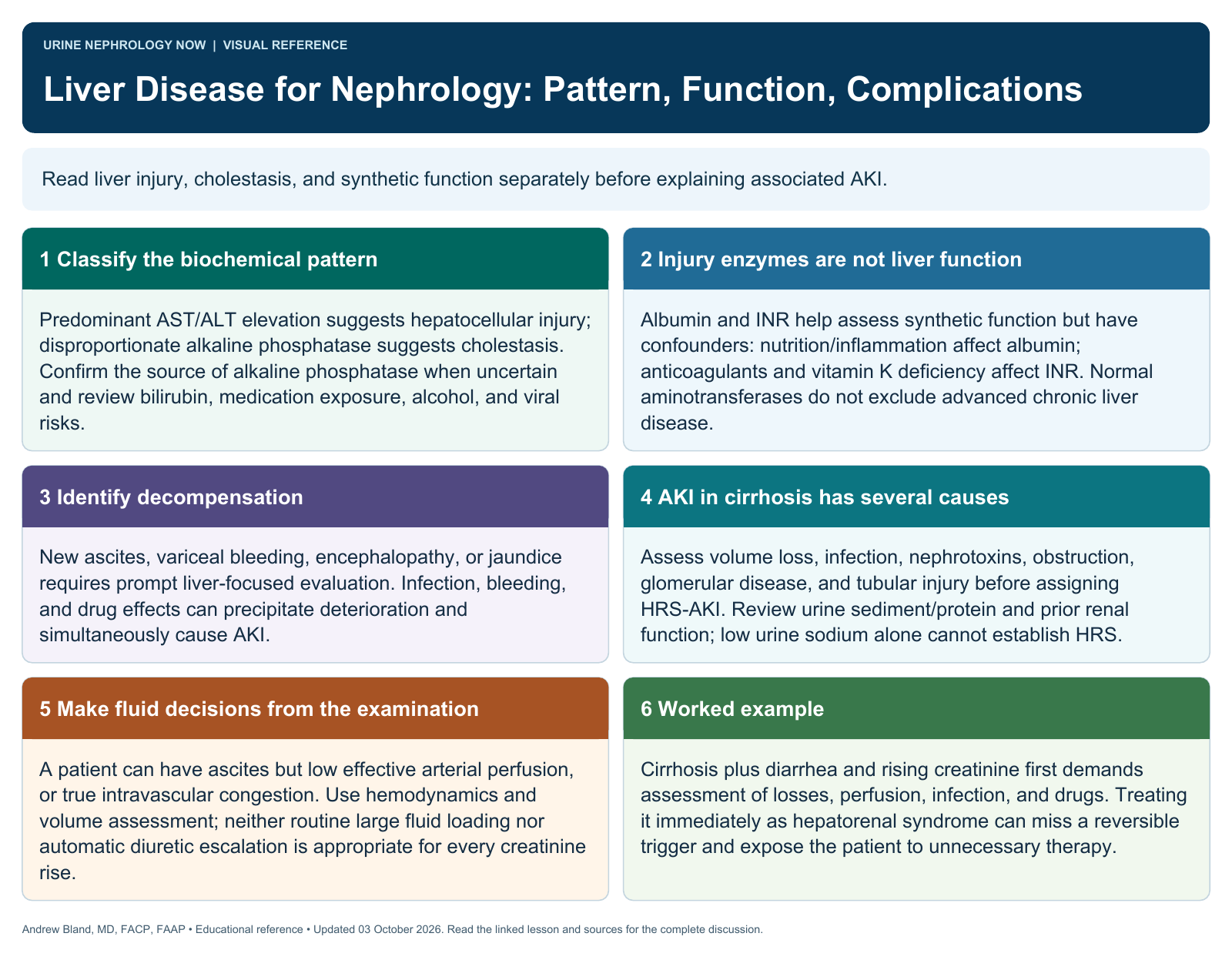
Read liver injury, cholestasis, and synthetic function separately before explaining associated AKI.
Text version
Classify the biochemical pattern
Predominant AST/ALT elevation suggests hepatocellular injury; disproportionate alkaline phosphatase suggests cholestasis. Confirm the source of alkaline phosphatase when uncertain and review bilirubin, medication exposure, alcohol, and viral risks.
Injury enzymes are not liver function
Albumin and INR help assess synthetic function but have confounders: nutrition/inflammation affect albumin; anticoagulants and vitamin K deficiency affect INR. Normal aminotransferases do not exclude advanced chronic liver disease.
Identify decompensation
New ascites, variceal bleeding, encephalopathy, or jaundice requires prompt liver-focused evaluation. Infection, bleeding, and drug effects can precipitate deterioration and simultaneously cause AKI.
AKI in cirrhosis has several causes
Assess volume loss, infection, nephrotoxins, obstruction, glomerular disease, and tubular injury before assigning HRS-AKI. Review urine sediment/protein and prior renal function; low urine sodium alone cannot establish HRS.
Make fluid decisions from the examination
A patient can have ascites but low effective arterial perfusion, or true intravascular congestion. Use hemodynamics and volume assessment; neither routine large fluid loading nor automatic diuretic escalation is appropriate for every creatinine rise.
Worked example
Cirrhosis plus diarrhea and rising creatinine first demands assessment of losses, perfusion, infection, and drugs. Treating it immediately as hepatorenal syndrome can miss a reversible trigger and expose the patient to unnecessary therapy.