Visual summary
Lupus nephritis care combines tissue-informed treatment with sustained renal surveillance and attention to the patient’s wider life.
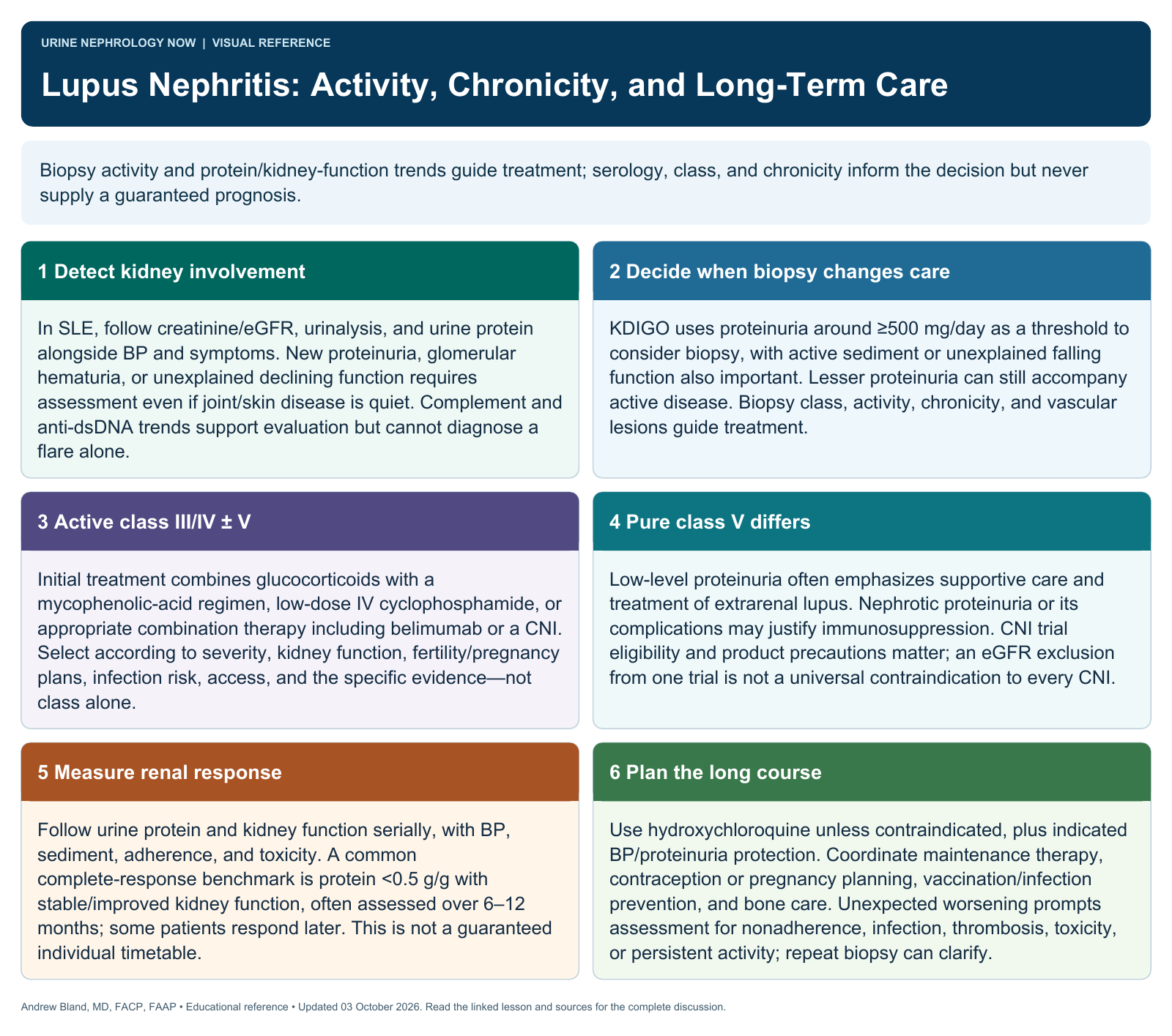
Text version
Immune injury in a systemic disease
Lupus nephritis reflects immune-mediated kidney injury that may involve several glomerular patterns and other renal compartments. Kidney activity may not track all extra-renal symptoms, so surveillance remains important even when systemic disease seems quiet.
Recognize renal involvement
New proteinuria, hematuria, hypertension, edema, or declining kidney function warrants evaluation. Complement and anti-dsDNA trends can support assessment, but neither proves nor excludes active nephritis without the clinical and urinary context.
Use biopsy to guide interpretation
When indicated, tissue defines the pattern and estimates active inflammation versus chronic damage. Class, activity, chronicity, kidney function, and proteinuria jointly inform treatment; a class label alone does not fully describe prognosis.
Choose an individualized regimen
Use current disease-specific evidence to select initial and maintenance therapy, alongside blood pressure and proteinuria control. Balance renal disease severity with infection, adverse effects, fertility, pregnancy planning, and treatment access.
Apply the concept: a young woman
The lupus presentation integrates systemic findings, serology, urinary abnormalities, and biopsy. Learners should explain treatment goals, monitor response, and incorporate contraception or pregnancy planning without assuming that every patient prioritizes the same outcomes.
Monitor the long course
Track proteinuria, filtration, blood pressure, urine sediment, and medication toxicity. A suspected flare may require reassessment of adherence, infection, alternative pathology, or repeat biopsy rather than reflexively escalating treatment from an antibody result alone.
Self-check: Why should treatment decisions integrate biopsy activity and chronicity with renal trajectory, rather than relying on an antibody result or class alone?
Continue learning
This graphic summarizes a topic. The full educational pages provide the broader discussion and references.