Visual summary
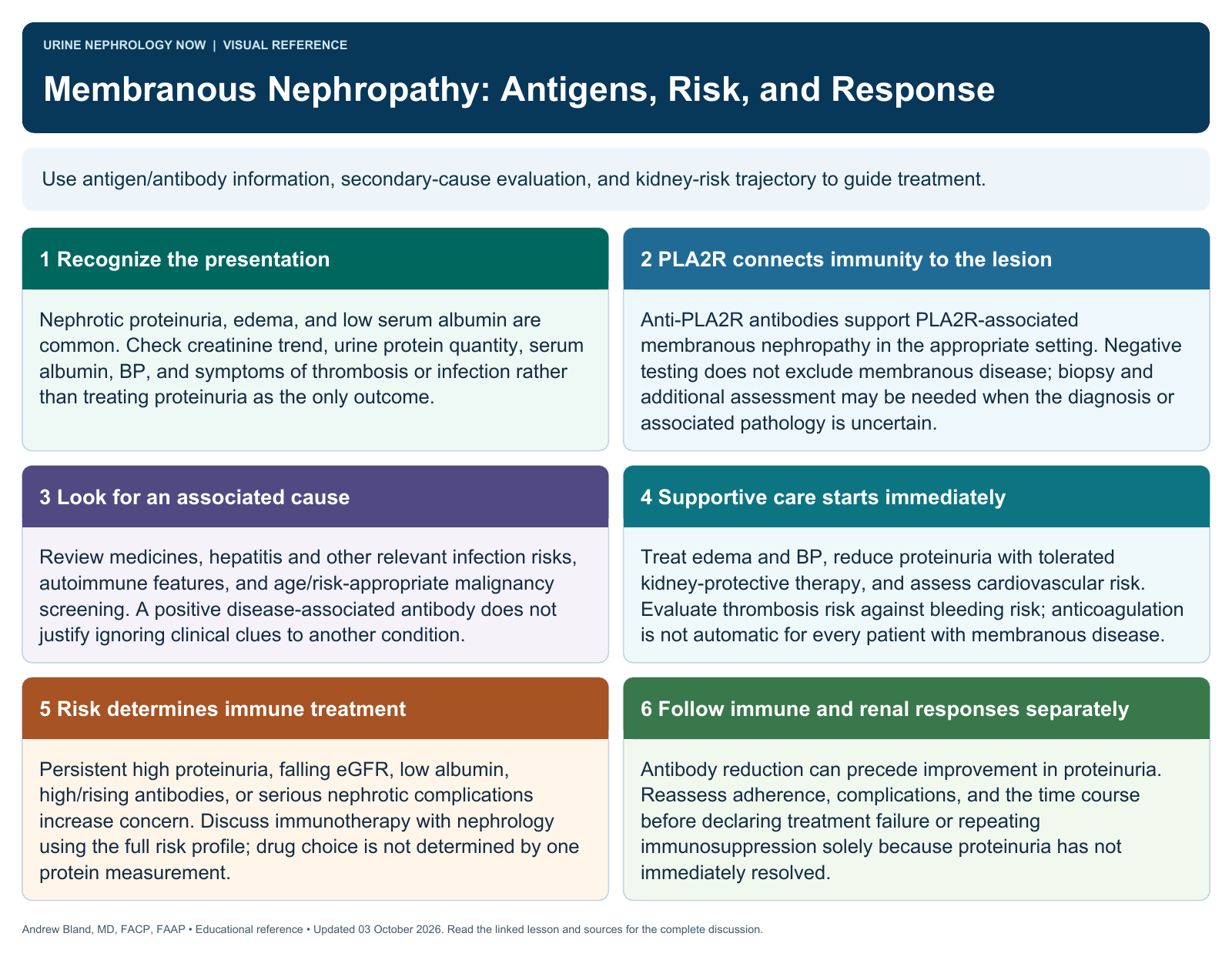
Combine antigen information with the clinical course to decide who needs observation, supportive care, or disease-directed therapy.
Text version
Subepithelial immune injury
Membranous nephropathy involves immune deposits along the outer glomerular capillary wall with podocyte injury. Antigen-associated disease and secondary conditions can produce similar clinical presentations but different evaluation and management needs.
Recognize nephrotic consequences
Proteinuria, hypoalbuminemia, edema, and thrombotic complications may be prominent. Kidney function can initially be preserved, so filtration alone does not describe disease burden or the risk of complications.
Integrate antibodies and tissue
Anti-PLA2R and other appropriate testing can support diagnosis and monitoring in selected settings. Biopsy may remain important when the presentation is atypical, renal function declines, or results would change the differential.
Look for associated disease
Review medications, infection, malignancy risk, autoimmune conditions, and clinical context. The presence of one antibody does not mean every secondary question is irrelevant; evaluation should be individualized and proportionate.
Treat according to risk
Provide supportive BP, proteinuria, edema, and complication care. Immunotherapy depends on persistence, trajectory, risk, and current evidence; not every newly diagnosed patient requires immediate intensive treatment.
Track immunologic and clinical response
Antibody and proteinuria changes may occur on different timelines. Avoid assuming persistent proteinuria always means ongoing immune activity or prescribing anticoagulation automatically without weighing thrombosis and bleeding risk.
Continue learning
This graphic summarizes a topic. The full educational pages provide the broader discussion and references.