Visual summary
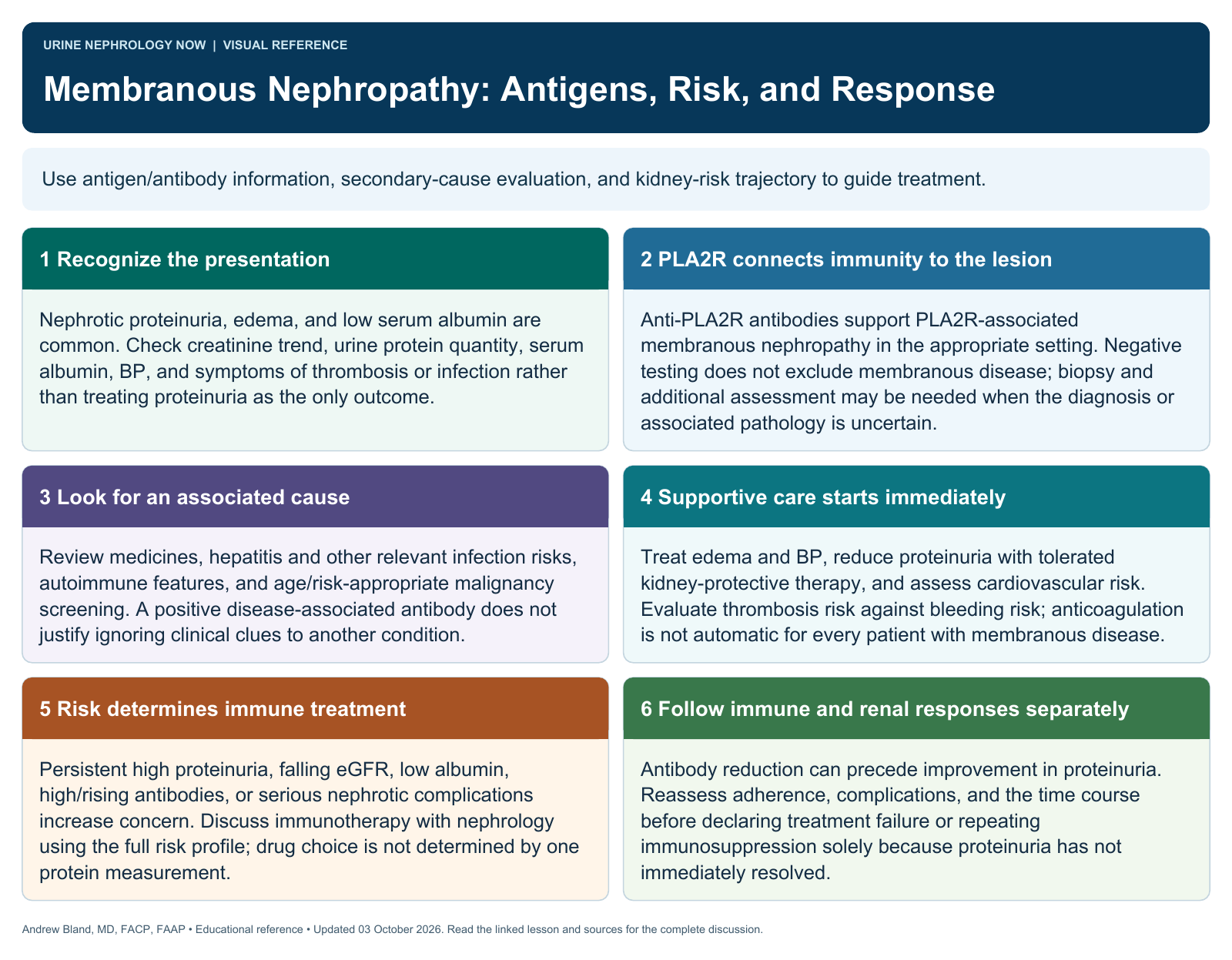
Use antigen/antibody information, secondary-cause evaluation, and kidney-risk trajectory to guide treatment.
Text version
Recognize the presentation
Nephrotic proteinuria, edema, and low serum albumin are common. Check creatinine trend, urine protein quantity, serum albumin, BP, and symptoms of thrombosis or infection rather than treating proteinuria as the only outcome.
PLA2R connects immunity to the lesion
Anti-PLA2R antibodies support PLA2R-associated membranous nephropathy in the appropriate setting. Negative testing does not exclude membranous disease; biopsy and additional assessment may be needed when the diagnosis or associated pathology is uncertain.
Look for an associated cause
Review medicines, hepatitis and other relevant infection risks, autoimmune features, and age/risk-appropriate malignancy screening. A positive disease-associated antibody does not justify ignoring clinical clues to another condition.
Supportive care starts immediately
Treat edema and BP, reduce proteinuria with tolerated kidney-protective therapy, and assess cardiovascular risk. Evaluate thrombosis risk against bleeding risk; anticoagulation is not automatic for every patient with membranous disease.
Risk determines immune treatment
Persistent high proteinuria, falling eGFR, low albumin, high/rising antibodies, or serious nephrotic complications increase concern. Discuss immunotherapy with nephrology using the full risk profile; drug choice is not determined by one protein measurement.
Follow immune and renal responses separately
Antibody reduction can precede improvement in proteinuria. Reassess adherence, complications, and the time course before declaring treatment failure or repeating immunosuppression solely because proteinuria has not immediately resolved.