Visual summary
A patient-centered renal plan makes goals explicit and delivers symptom treatment and support whichever kidney-treatment path is chosen.
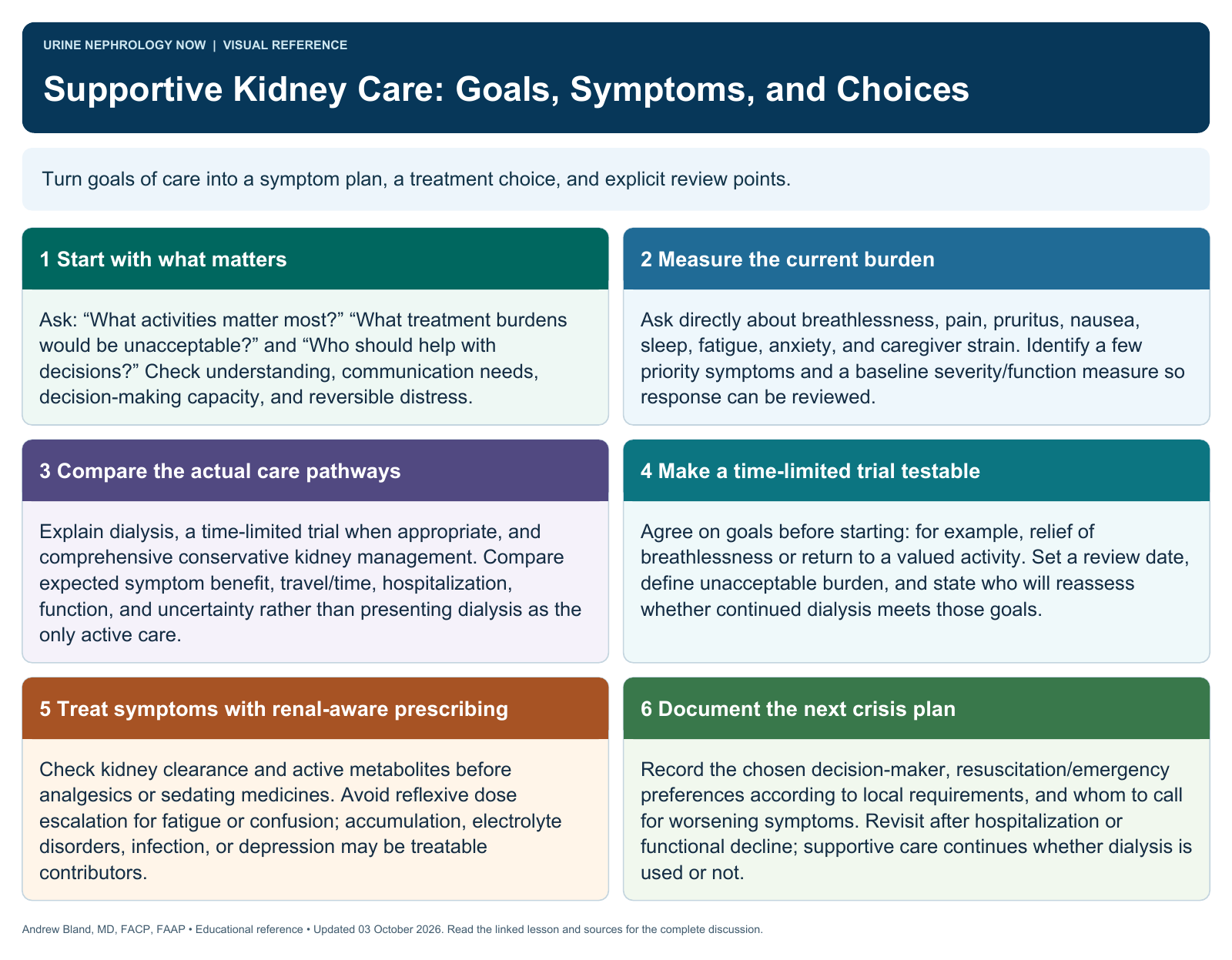
Text version
Supportive care is active care
Palliative and supportive kidney care address symptoms, communication, function, and treatment burden alongside disease-directed therapy. Comprehensive conservative kidney management is a planned care pathway, not abandonment of medical treatment.
Recognize unmet needs
Pain, itching, nausea, fatigue, breathlessness, sleep disturbance, anxiety, and caregiver strain may remain under-addressed. Repeated hospitalization or declining function can prompt a review of whether the current treatment matches the patient’s priorities.
Understand goals and decision capacity
Ask what matters most, what tradeoffs are acceptable, and who should participate in decisions. Assess understanding, capacity, communication needs, and reversible distress without assuming that a preference against dialysis reflects inadequate information.
Compare options honestly
Discuss dialysis, a time-limited treatment trial when appropriate, and conservative management using individualized expectations. Prognostic estimates are uncertain and depend on comorbidity, function, disease trajectory, and the outcomes the person values.
Treat symptoms thoughtfully
Medication selection and dosing must reflect renal clearance and the patient’s current goals. Coordinate renal, palliative, primary, and community teams so that symptom relief and practical support continue across settings.
Document and revisit
Record preferences, surrogate decision-makers, and emergency plans according to local requirements. Decisions about withdrawal or noninitiation need careful communication and continued support; neither age nor an isolated laboratory value should decide them automatically.
Continue learning
This graphic summarizes a topic. The full educational pages provide the broader discussion and references.