Visual summary
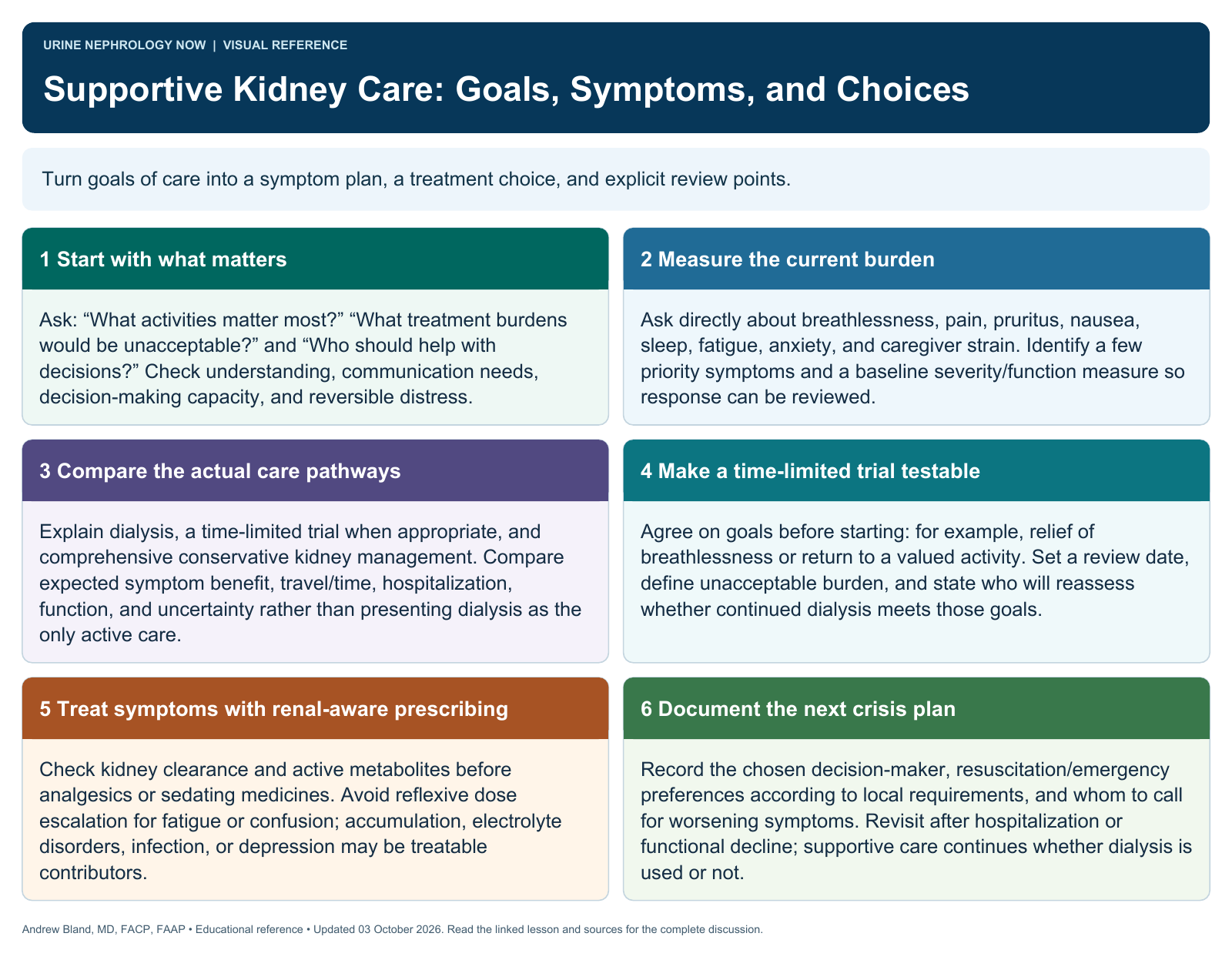
Turn goals of care into a symptom plan, a treatment choice, and explicit review points.
Text version
Start with what matters
Ask: “What activities matter most?” “What treatment burdens would be unacceptable?” and “Who should help with decisions?” Check understanding, communication needs, decision-making capacity, and reversible distress.
Measure the current burden
Ask directly about breathlessness, pain, pruritus, nausea, sleep, fatigue, anxiety, and caregiver strain. Identify a few priority symptoms and a baseline severity/function measure so response can be reviewed.
Compare the actual care pathways
Explain dialysis, a time-limited trial when appropriate, and comprehensive conservative kidney management. Compare expected symptom benefit, travel/time, hospitalization, function, and uncertainty rather than presenting dialysis as the only active care.
Make a time-limited trial testable
Agree on goals before starting: for example, relief of breathlessness or return to a valued activity. Set a review date, define unacceptable burden, and state who will reassess whether continued dialysis meets those goals.
Treat symptoms with renal-aware prescribing
Check kidney clearance and active metabolites before analgesics or sedating medicines. Avoid reflexive dose escalation for fatigue or confusion; accumulation, electrolyte disorders, infection, or depression may be treatable contributors.
Document the next crisis plan
Record the chosen decision-maker, resuscitation/emergency preferences according to local requirements, and whom to call for worsening symptoms. Revisit after hospitalization or functional decline; supportive care continues whether dialysis is used or not.