Visual summary
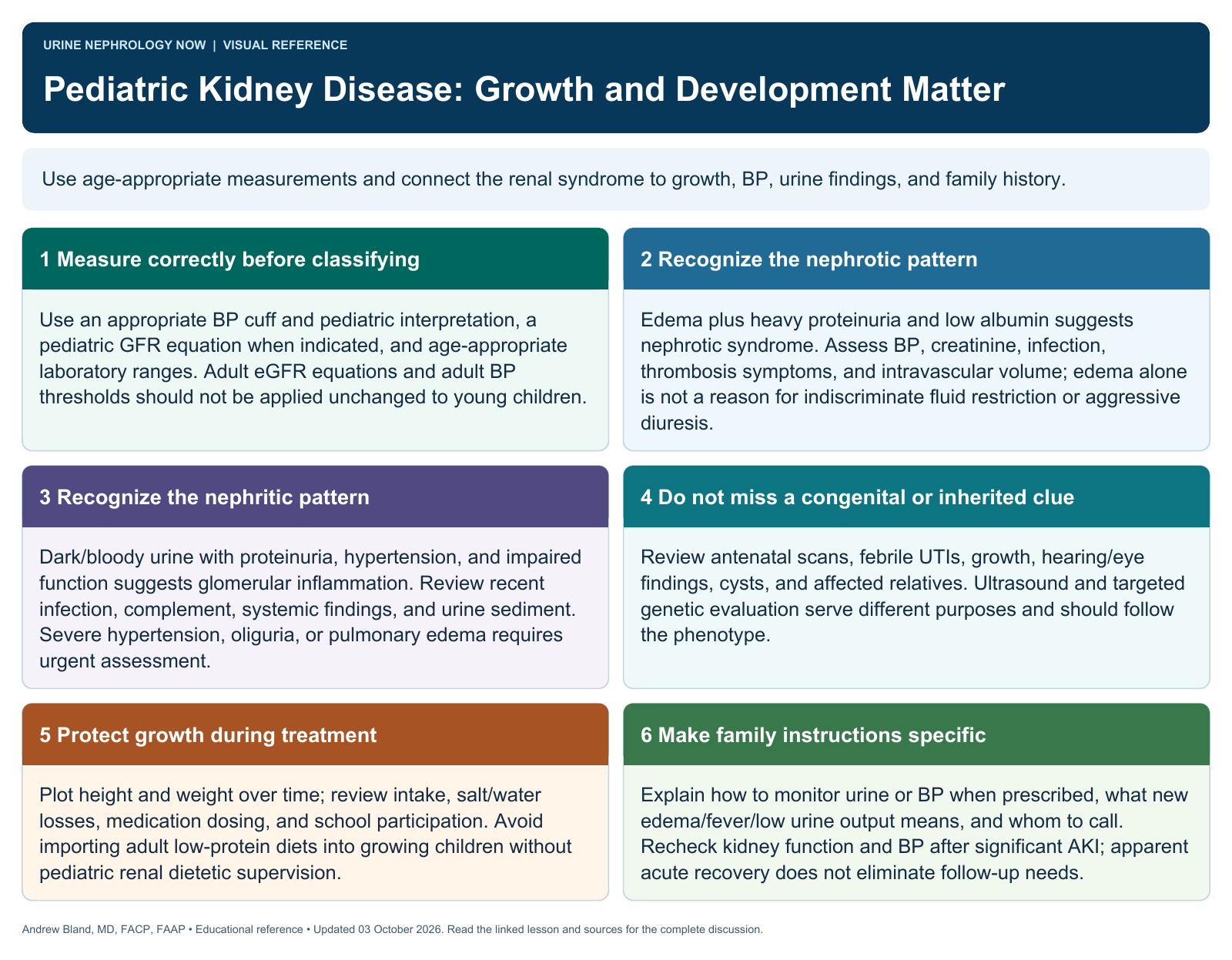
Pediatric kidney assessment connects renal findings with development, growth, family context, and an age-appropriate management plan.
Text version
Renal physiology changes with development
Neonates and children differ from adults in filtration, tubular handling, body composition, and drug dosing. Early laboratory values and urine patterns must be interpreted in an age-appropriate context.
Recognize pediatric presentations
Poor growth, feeding problems, edema, recurrent fever or UTI, abnormal urine, hypertension, or an antenatal finding may signal disease. Serious AKI or electrolyte disturbances can develop with limited early symptoms.
Build a development-aware evaluation
Review pregnancy and birth history, growth, family history, medications, BP technique, renal trajectory, and urine findings. Select imaging and genetic assessment according to the syndrome rather than applying an adult workup unchanged.
Distinguish common pathways
Congenital urinary anomalies, neonatal AKI, nephrotic syndrome, infection-related GN, and inherited basement-membrane disorders require different approaches. A single phenotype such as hematuria may therefore lead to several possible diagnoses.
Protect growth and daily life
Management includes nutrition, development, school participation, vaccination planning when relevant, and family education in addition to laboratory control. Medication and diet plans should account for the child’s changing size and needs.
Coordinate long-term follow-up
Monitor BP, proteinuria, kidney function, hearing or other syndromic features when relevant, and the transition to adult care. Avoid equating one childhood episode with inevitable CKD or assuming apparent recovery eliminates every future risk.
Continue learning
This graphic summarizes a topic. The full educational pages provide the broader discussion and references.