Visual summary
Phosphate disorders reflect intake, excretion, and cellular shifts; the mechanism and clinical consequences determine the response.
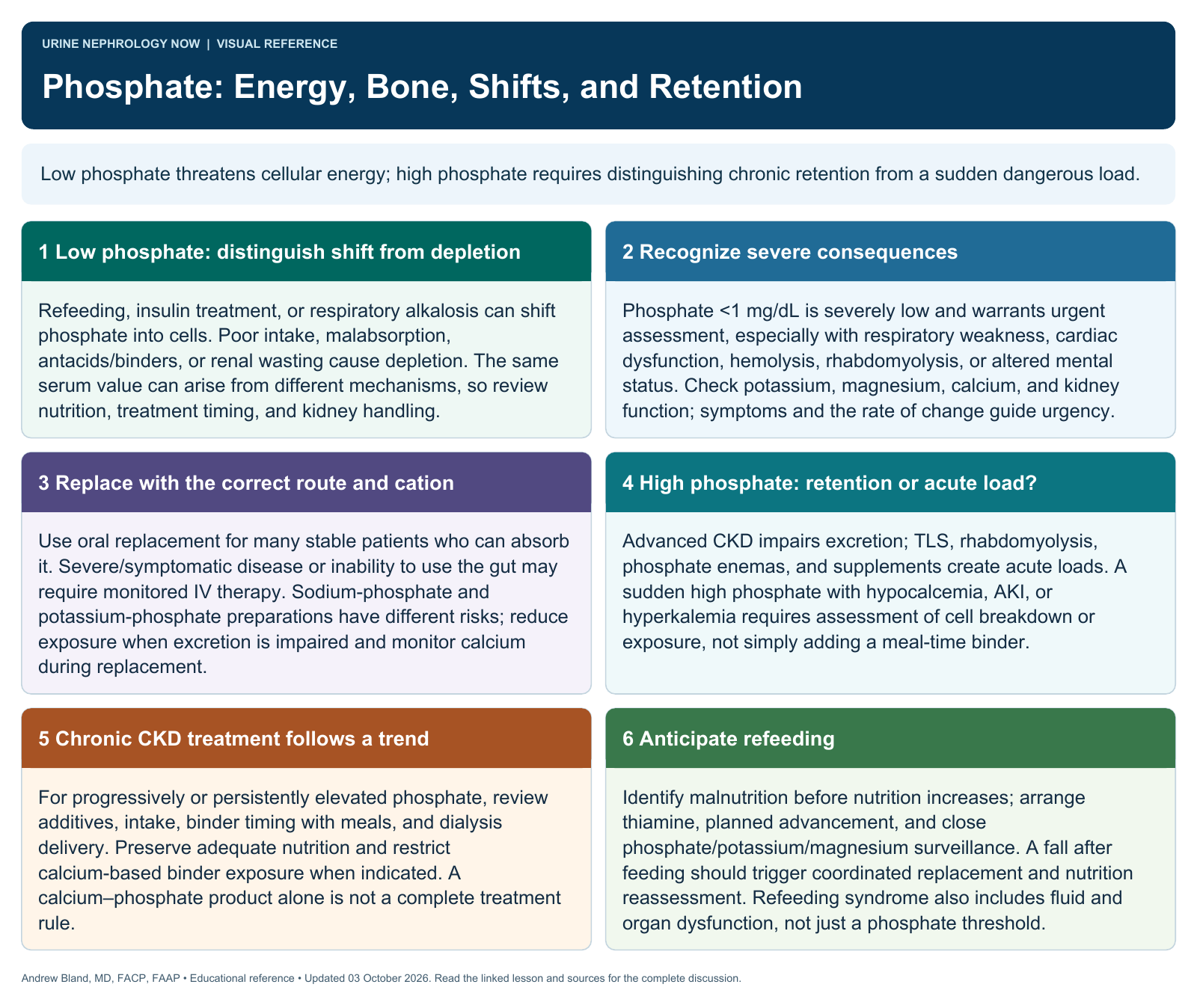
Text version
An intracellular energy ion
Phosphate supports ATP, cell membranes, and skeletal mineralization. Kidney excretion, intestinal absorption, PTH, vitamin D, and FGF23 regulate balance, while rapid shifts can change serum phosphate without immediately reflecting total-body stores.
Recognize low and high states
Severe depletion can impair muscle, respiratory, neurologic, and blood-cell function. Excess may accompany CKD, cell lysis, or phosphate loading and can disturb calcium balance, especially during an acute metabolic emergency.
Trace the mechanism
For low phosphate, assess refeeding, insulin treatment, respiratory alkalosis, malnutrition, gastrointestinal loss, and renal wasting. For high phosphate, review kidney function, tumor lysis, rhabdomyolysis, supplements, enemas, and specimen or assay issues.
Replace with a monitoring plan
Select oral or intravenous phosphate according to severity, symptoms, absorption, and kidney function. The preparation also supplies sodium or potassium. Monitor calcium and other electrolytes to avoid complications from rapid or excessive replacement.
Reduce persistent excess
Treat the acute cause and consider dialysis for uncontrolled dangerous metabolic disturbances. Chronic CKD care includes dietary source review and selected phosphate-lowering therapy while preserving nutrition and avoiding unnecessary calcium exposure.
Anticipate refeeding
A falling phosphate during nutritional restoration can signal refeeding risk and warrants coordinated electrolyte, thiamine, and nutrition management. A single calcium–phosphate product is not a sufficient treatment algorithm for all acute or chronic states.
Self-check: What distinguishes redistribution during refeeding from chronic renal retention, and which additional electrolytes need monitoring during phosphate treatment?
Continue learning
This graphic summarizes a topic. The full educational pages provide the broader discussion and references.