Visual summary
During rehabilitation, unexpected systemic symptoms on an SGLT2 inhibitor warrant assessment even when glucose is not very high.
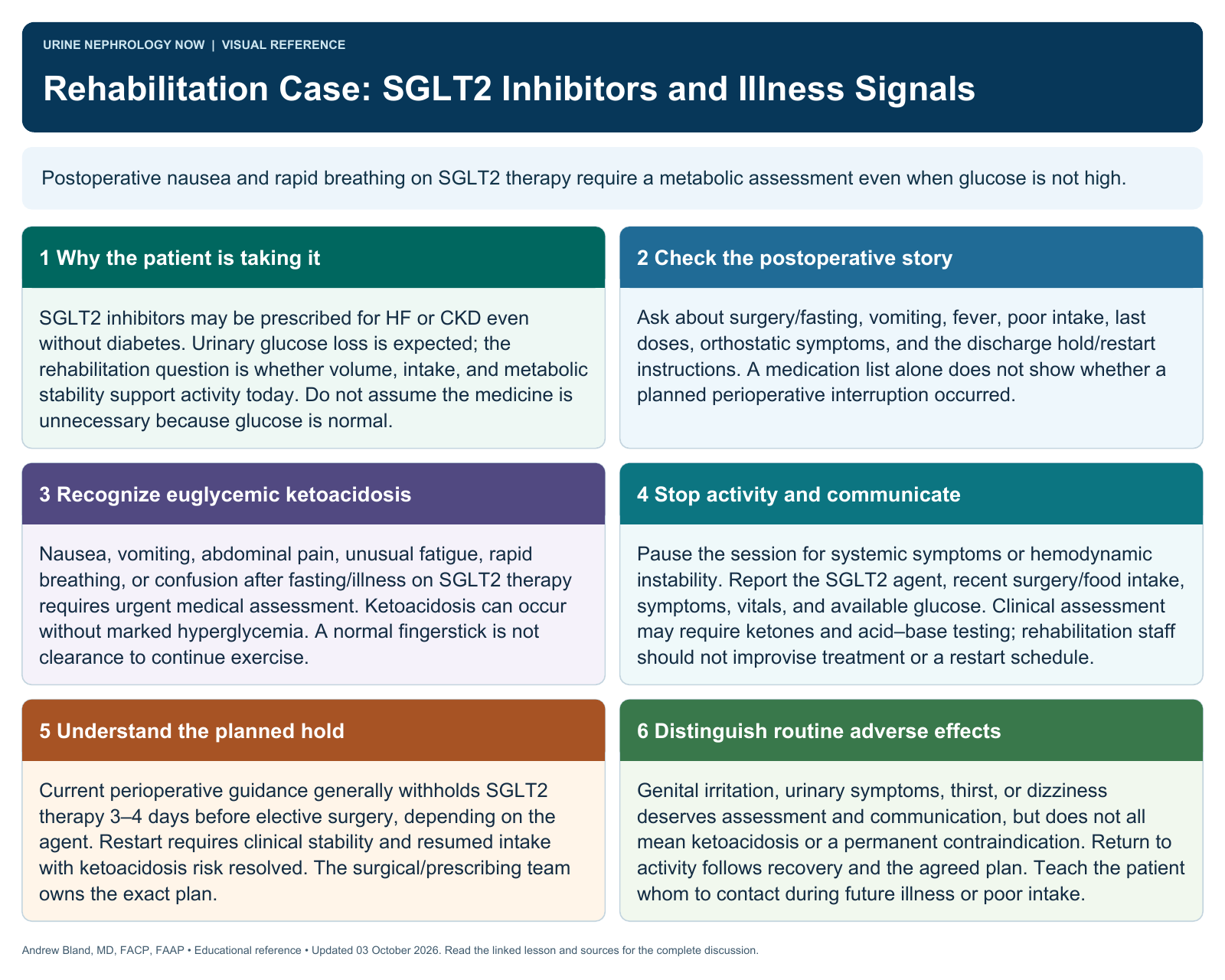
Text version
Glucose excretion is one effect
SGLT2 inhibitors increase urinary glucose excretion and have important cardiac and kidney indications. Their benefits and adverse effects depend on the drug, clinical context, kidney function, and the patient’s current intake and illness status.
Recognize atypical emergencies
The postoperative scenario highlights postoperative illness, poor intake, nausea, abdominal symptoms, rapid breathing, or unexpected fatigue. Ketoacidosis can occur without marked hyperglycemia, so a moderate glucose result does not provide reliable reassurance.
Assess indication and eligibility
Confirm the cardiac, kidney, or glycemic indication and use the current drug-specific guidance for eligibility. Review kidney function, albuminuria, volume status, other glucose-lowering drugs, and relevant illness or surgery plans.
Prescribe with a follow-up plan
Explain expected effects, symptoms to report, and medication-specific illness advice. Review hypoglycemia risk from concomitant therapy and monitor volume status and kidney function when clinically indicated after initiation or treatment changes.
Address routine adverse effects
Ask about genital or urinary symptoms, volume depletion, and skin or foot concerns as clinically appropriate. Distinguish uncomplicated symptoms from systemic infection or urgent illness, and avoid assuming every urinary complaint is caused by the drug.
Read the evidence precisely
Describe trial populations and measured outcomes. DAPA-CKD used a sustained eGFR decline of at least 50% in its primary composite, not 40%. Do not transfer one trial’s endpoint or eligibility to every SGLT2 indication.
Self-check: Separate the drug’s glucose effect from its heart and kidney indications, then identify symptoms that could signal ketoacidosis despite modest glucose elevation.
Continue learning
This graphic summarizes a topic. The full educational pages provide the broader discussion and references.