Visual summary
Postoperative nausea and rapid breathing on SGLT2 therapy require a metabolic assessment even when glucose is not high.
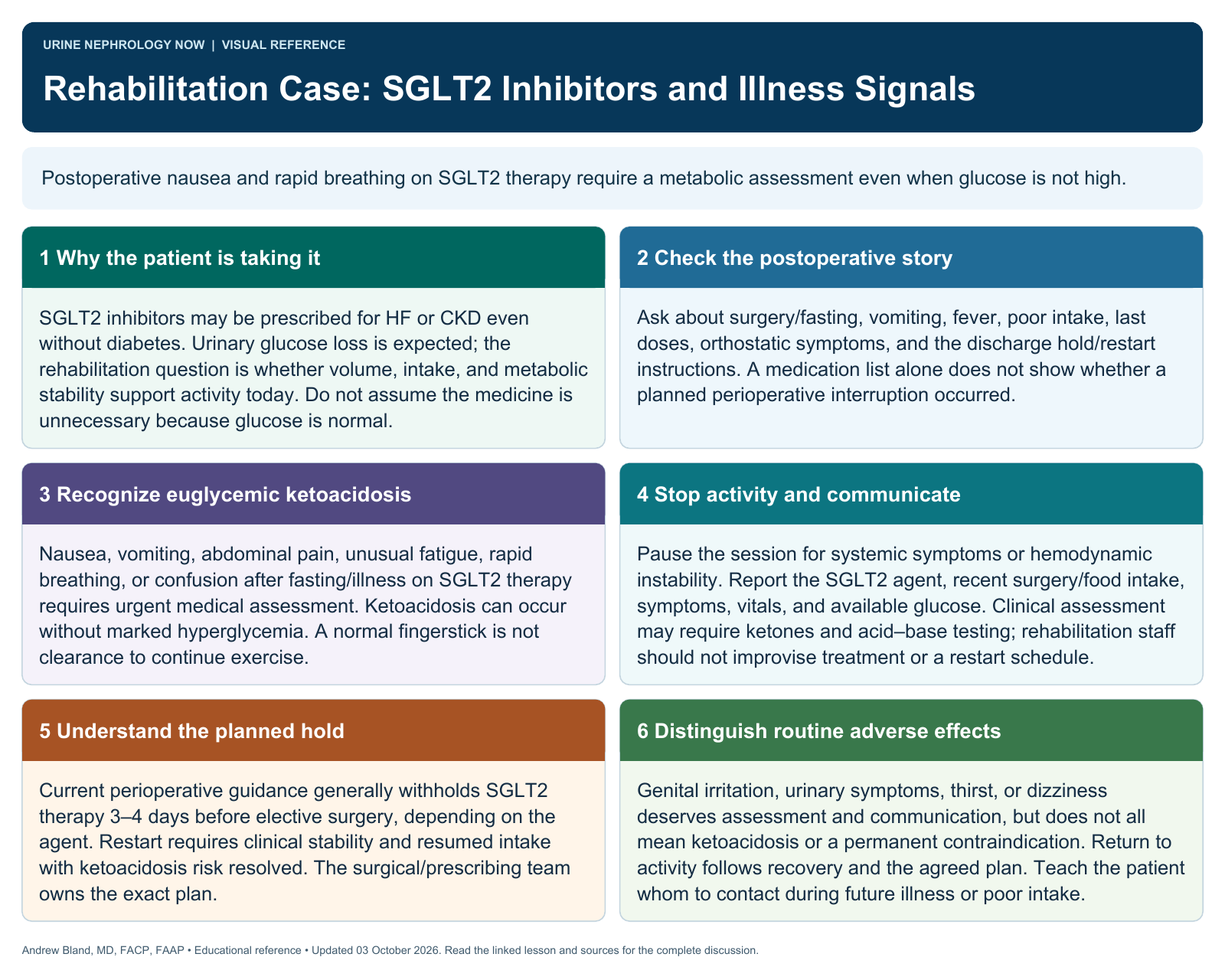
Text version
Why the patient is taking it
SGLT2 inhibitors may be prescribed for HF or CKD even without diabetes. Urinary glucose loss is expected; the rehabilitation question is whether volume, intake, and metabolic stability support activity today. Do not assume the medicine is unnecessary because glucose is normal.
Check the postoperative story
Ask about surgery/fasting, vomiting, fever, poor intake, last doses, orthostatic symptoms, and the discharge hold/restart instructions. A medication list alone does not show whether a planned perioperative interruption occurred.
Recognize euglycemic ketoacidosis
Nausea, vomiting, abdominal pain, unusual fatigue, rapid breathing, or confusion after fasting/illness on SGLT2 therapy requires urgent medical assessment. Ketoacidosis can occur without marked hyperglycemia. A normal fingerstick is not clearance to continue exercise.
Stop activity and communicate
Pause the session for systemic symptoms or hemodynamic instability. Report the SGLT2 agent, recent surgery/food intake, symptoms, vitals, and available glucose. Clinical assessment may require ketones and acid–base testing; rehabilitation staff should not improvise treatment or a restart schedule.
Understand the planned hold
Current perioperative guidance generally withholds SGLT2 therapy 3–4 days before elective surgery, depending on the agent. Restart requires clinical stability and resumed intake with ketoacidosis risk resolved. The surgical/prescribing team owns the exact plan.
Distinguish routine adverse effects
Genital irritation, urinary symptoms, thirst, or dizziness deserves assessment and communication, but does not all mean ketoacidosis or a permanent contraindication. Return to activity follows recovery and the agreed plan. Teach the patient whom to contact during future illness or poor intake.