Visual summary
Start with the patient’s renal phenotype, then use the special clinical context to refine cause, testing, and treatment.
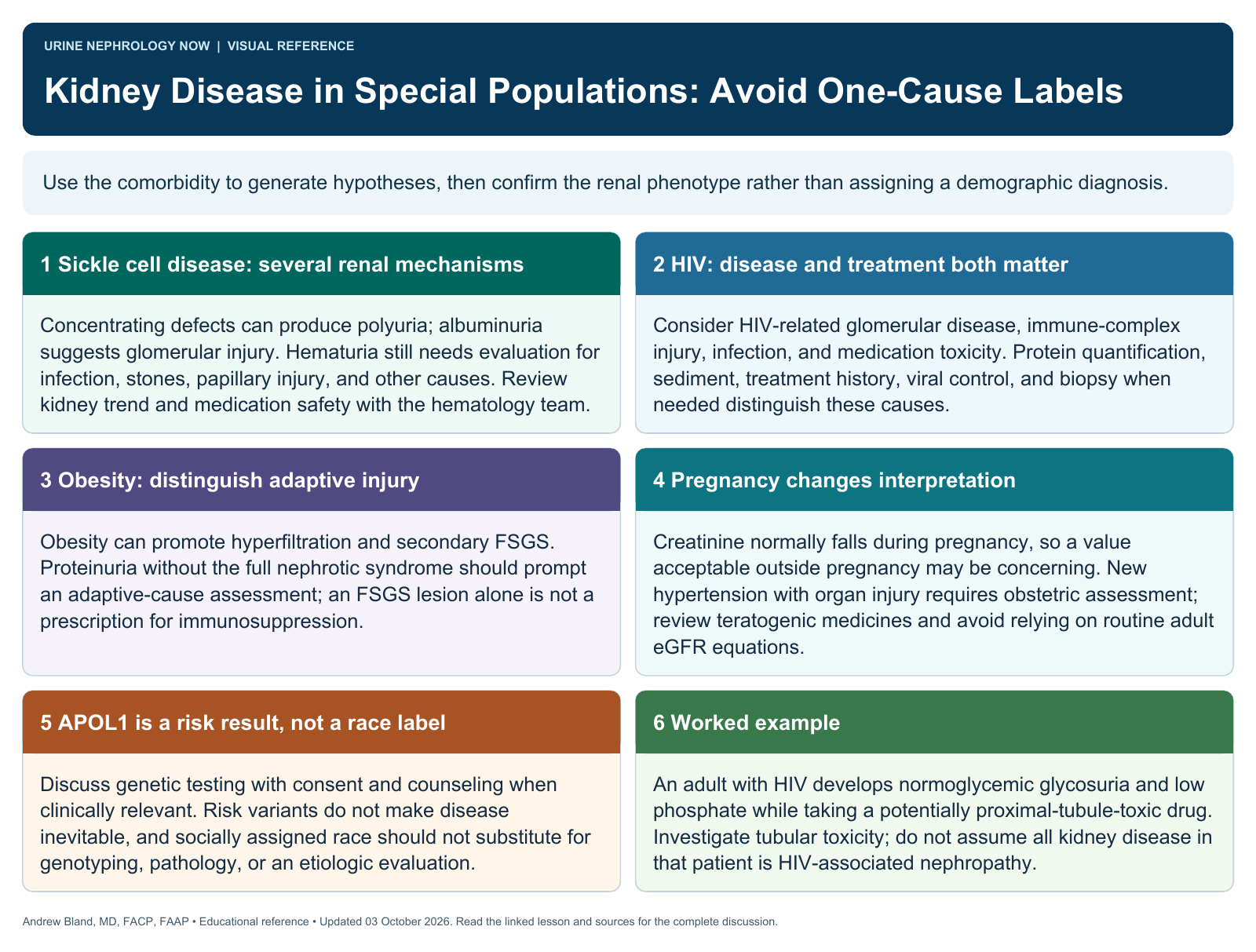
Text version
The same syndrome has different drivers
Sickle cell disease, HIV, obesity, pregnancy, and selected genetic risks can affect kidney structure and function through different pathways. A demographic or comorbidity label does not establish the renal lesion by itself.
Recognize context-specific patterns
Sickle cell disease can cause concentrating defects and glomerular injury; HIV may involve infection, immune disease, or treatment toxicity; obesity can contribute to adaptive glomerular stress. Several processes may coexist.
Assess the renal phenotype
Measure proteinuria, filtration trend, BP, urine findings, and relevant systemic activity. Biopsy or genetic assessment may help when the clinical pattern is atypical or a diagnosis would change disease-specific treatment.
Treat the underlying condition
Coordinate appropriate disease control with kidney-protective care and medication safety. Effective HIV treatment, sickle cell management, or sustainable weight-related intervention answers a different question from empiric immunosuppression for presumed primary GN.
Adapt for pregnancy and acute infection
Pregnancy physiology changes laboratory interpretation and medication safety; preeclampsia and AKI require obstetric coordination. Acute infections, including COVID-associated illness, require evaluation for several renal mechanisms rather than one presumed lesion.
Use genetics carefully
APOL1 risk information must be interpreted with consent, clinical context, and nondeterministic counseling. Do not use race as a surrogate diagnosis or assume that every patient in a group shares the same treatment response.
Continue learning
This graphic summarizes a topic. The full educational pages provide the broader discussion and references.