Visual summary
Use the comorbidity to generate hypotheses, then confirm the renal phenotype rather than assigning a demographic diagnosis.
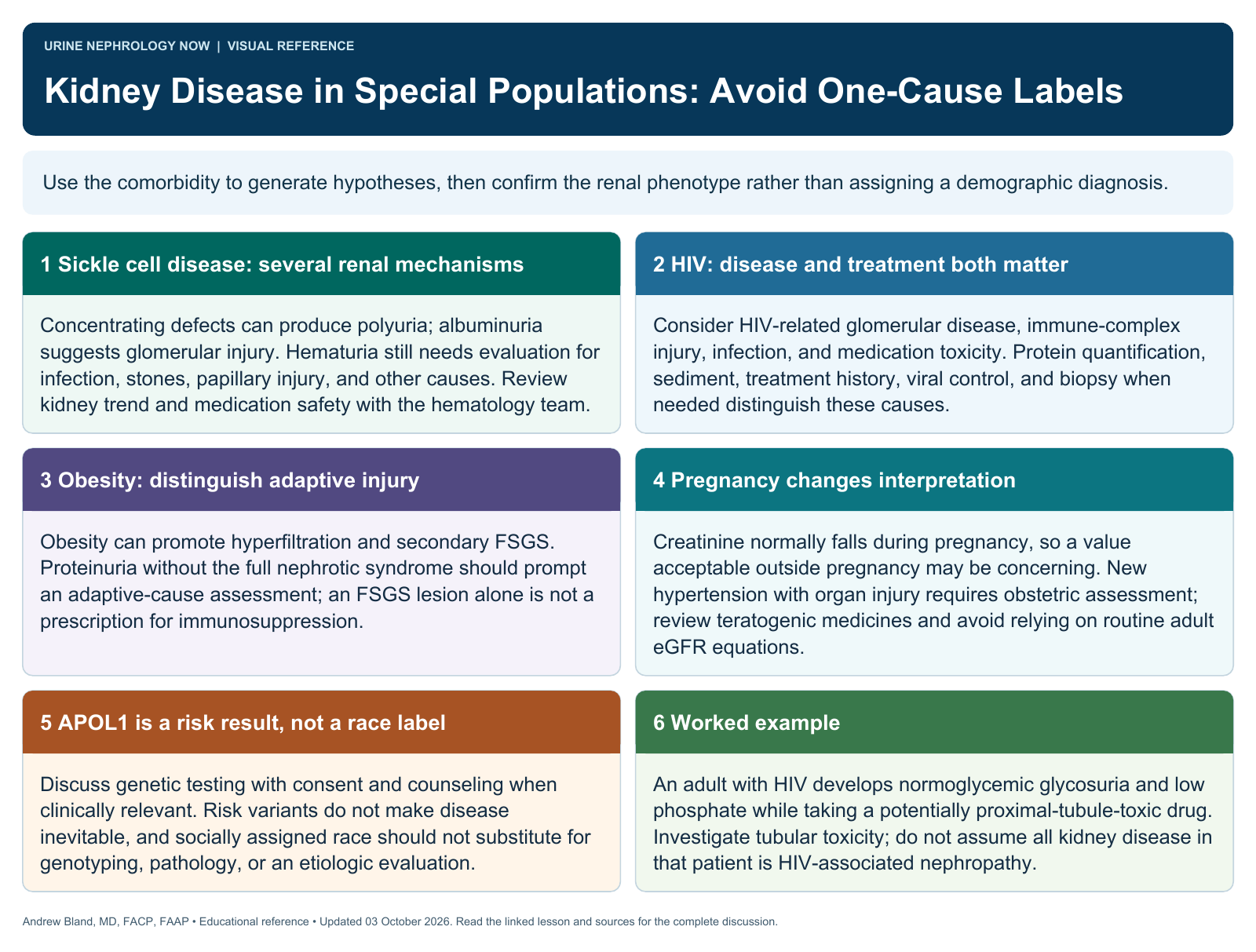
Text version
Sickle cell disease: several renal mechanisms
Concentrating defects can produce polyuria; albuminuria suggests glomerular injury. Hematuria still needs evaluation for infection, stones, papillary injury, and other causes. Review kidney trend and medication safety with the hematology team.
HIV: disease and treatment both matter
Consider HIV-related glomerular disease, immune-complex injury, infection, and medication toxicity. Protein quantification, sediment, treatment history, viral control, and biopsy when needed distinguish these causes.
Obesity: distinguish adaptive injury
Obesity can promote hyperfiltration and secondary FSGS. Proteinuria without the full nephrotic syndrome should prompt an adaptive-cause assessment; an FSGS lesion alone is not a prescription for immunosuppression.
Pregnancy changes interpretation
Creatinine normally falls during pregnancy, so a value acceptable outside pregnancy may be concerning. New hypertension with organ injury requires obstetric assessment; review teratogenic medicines and avoid relying on routine adult eGFR equations.
APOL1 is a risk result, not a race label
Discuss genetic testing with consent and counseling when clinically relevant. Risk variants do not make disease inevitable, and socially assigned race should not substitute for genotyping, pathology, or an etiologic evaluation.
Worked example
An adult with HIV develops normoglycemic glycosuria and low phosphate while taking a potentially proximal-tubule-toxic drug. Investigate tubular toxicity; do not assume all kidney disease in that patient is HIV-associated nephropathy.