Visual summary
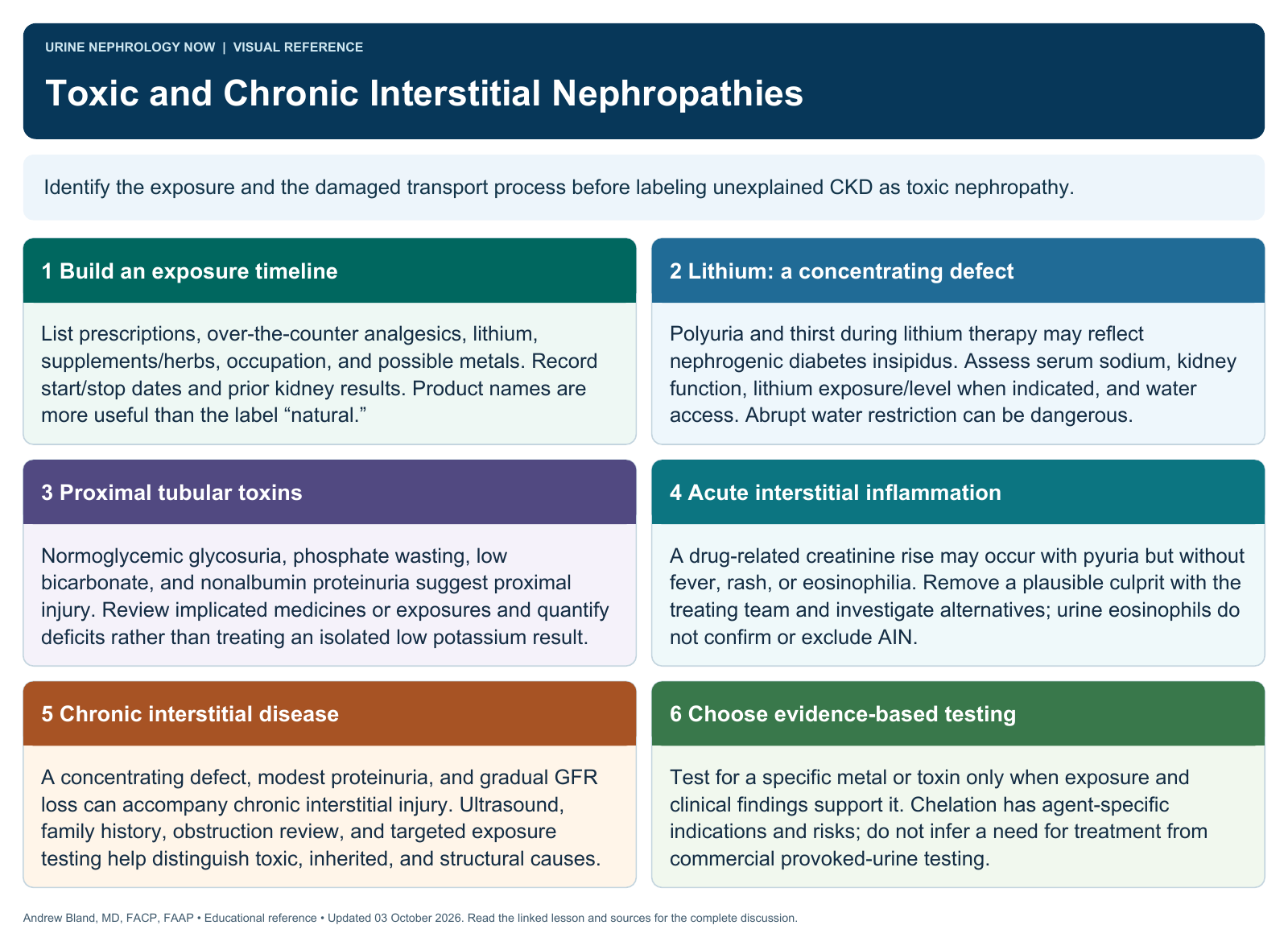
The diagnostic key is a credible exposure history matched to the renal pattern, with toxin-specific management and follow-up.
Text version
Exposure can cause acute or chronic injury
Drugs, metals, and some herbal products can affect tubules, interstitium, renal vessels, or urinary concentration. Repeated or prolonged exposure may produce a different clinical pattern from an acute overdose.
Recognize subtle presentations
Polyuria, electrolyte wasting, modest proteinuria, slowly declining filtration, or unexplained hypertension can accompany chronic toxicity. Acute exposures may instead present with AKI, acid–base disturbance, or systemic neurologic and gastrointestinal symptoms.
Take a detailed exposure history
Review prescribed and nonprescribed drugs, lithium, analgesics, occupational materials, supplements, traditional remedies, and possible contaminated products. Duration and formulation matter, and the patient may not consider a supplement a medication.
Investigate selectively
Use renal studies, imaging, targeted toxicology testing, and specialist input according to a plausible exposure. A detectable metal concentration does not automatically prove it caused the kidney disease; timing and validated interpretation are essential.
Remove exposure and support function
Stop or modify the implicated source when appropriate and treat complications. Chelation, antidotes, or dialysis are toxin-specific decisions, while some chronic damage may persist despite removal.
Plan longer surveillance
Certain exposures have additional consequences, including malignancy risk with aristolochic acid. Coordinate occupational or toxicology support and follow renal recovery rather than assuming that ending exposure eliminates every future risk.
Continue learning
This graphic summarizes a topic. The full educational pages provide the broader discussion and references.