Visual summary
A graft-function change needs a structured differential and coordinated evaluation before treatment is escalated or withdrawn.
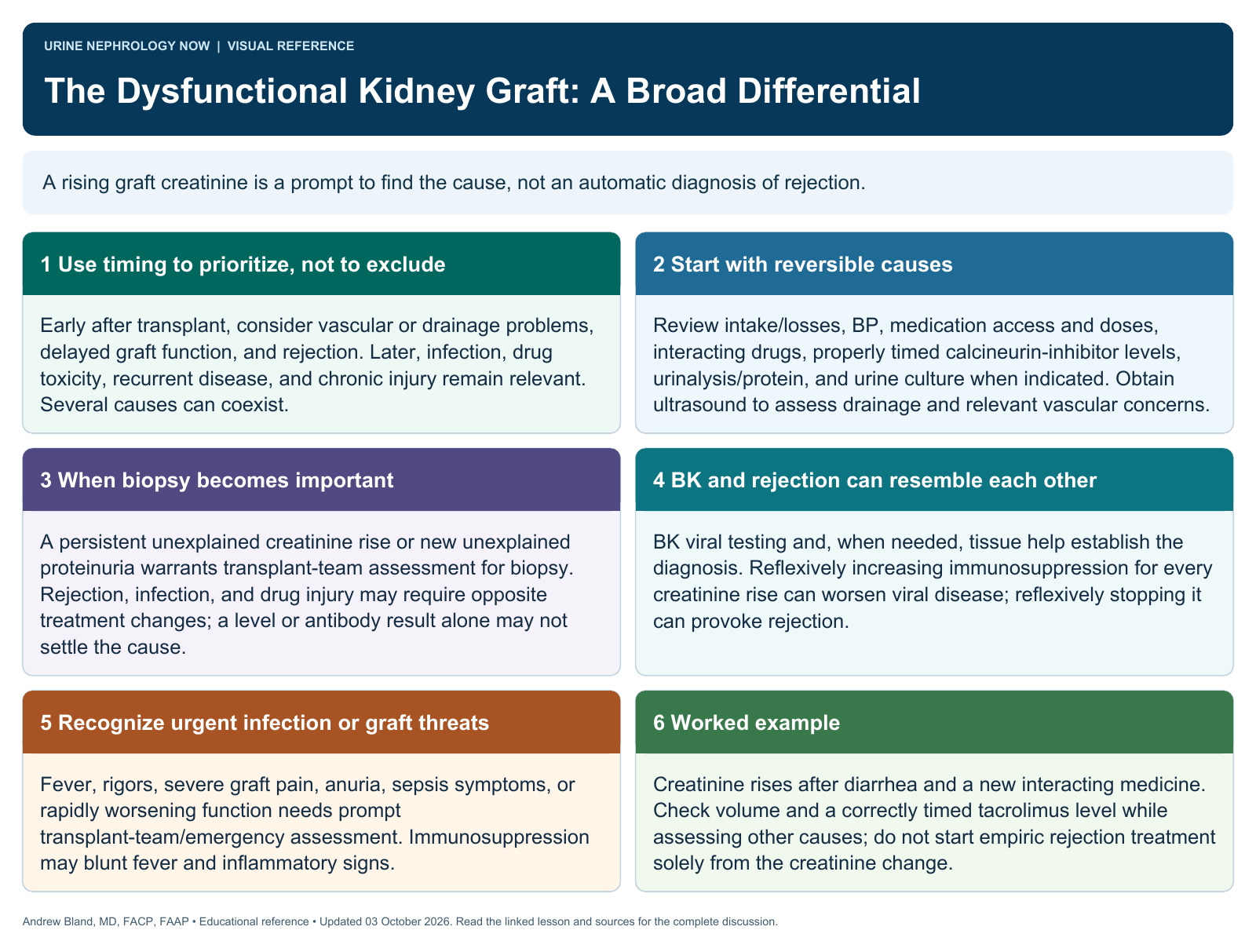
Text version
Several mechanisms threaten the graft
Rejection, infection, obstruction, vascular problems, drug toxicity, recurrent disease, and hemodynamic injury can impair allograft function. Timing after transplantation helps prioritize causes but does not make any diagnosis certain.
Recognize early warning signs
A creatinine rise, new proteinuria, fever, urinary symptoms, graft discomfort, or systemic deterioration warrants assessment. Immunosuppression can blunt typical symptoms, so absence of fever does not reliably exclude serious infection.
Evaluate with the transplant team
Review medication delivery and concentrations, laboratory trends, urine studies, imaging, and targeted infection testing. Antibody studies and biopsy may be needed to distinguish rejection from other causes before major treatment changes.
Separate infection from rejection
BK virus and other infections can resemble rejection but may require a different immunosuppression strategy. CMV can cause systemic or tissue disease; diagnosis and treatment depend on clinical and virologic context.
Monitor long-term health
Cardiovascular risk, diabetes, malignancy, recurrent kidney disease, and reproductive planning remain important after transplant. Prevention and surveillance should be individualized to therapy, prior disease, and current guidance.
Avoid reflexive escalation
Increasing immunosuppression without clarifying the cause can worsen infection, while stopping it abruptly can threaten the graft. Coordinate urgent problems promptly and do not interpret one drug level or viral result in isolation.
Continue learning
This graphic summarizes a topic. The full educational pages provide the broader discussion and references.