Visual summary
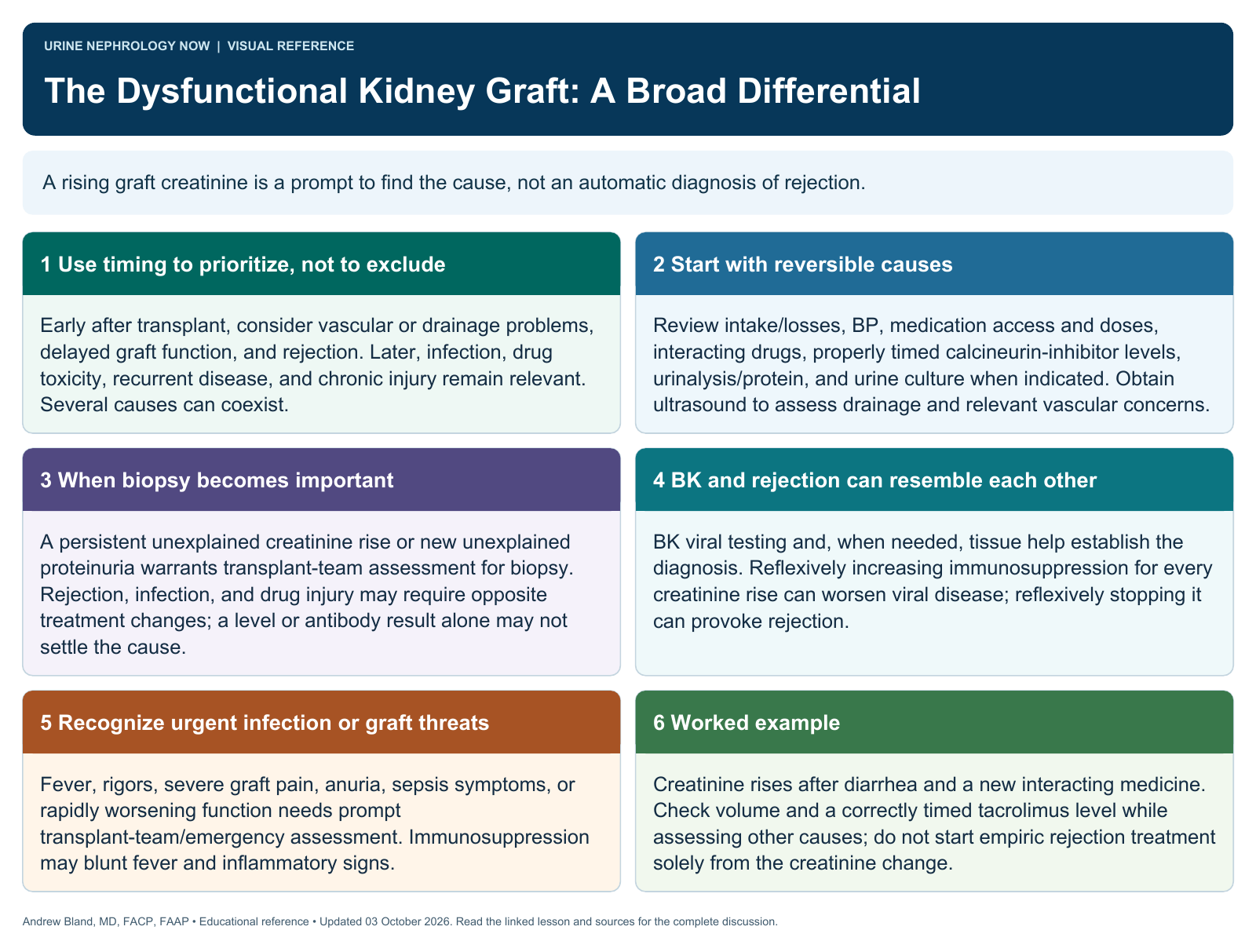
A rising graft creatinine is a prompt to find the cause, not an automatic diagnosis of rejection.
Text version
Use timing to prioritize, not to exclude
Early after transplant, consider vascular or drainage problems, delayed graft function, and rejection. Later, infection, drug toxicity, recurrent disease, and chronic injury remain relevant. Several causes can coexist.
Start with reversible causes
Review intake/losses, BP, medication access and doses, interacting drugs, properly timed calcineurin-inhibitor levels, urinalysis/protein, and urine culture when indicated. Obtain ultrasound to assess drainage and relevant vascular concerns.
When biopsy becomes important
A persistent unexplained creatinine rise or new unexplained proteinuria warrants transplant-team assessment for biopsy. Rejection, infection, and drug injury may require opposite treatment changes; a level or antibody result alone may not settle the cause.
BK and rejection can resemble each other
BK viral testing and, when needed, tissue help establish the diagnosis. Reflexively increasing immunosuppression for every creatinine rise can worsen viral disease; reflexively stopping it can provoke rejection.
Recognize urgent infection or graft threats
Fever, rigors, severe graft pain, anuria, sepsis symptoms, or rapidly worsening function needs prompt transplant-team/emergency assessment. Immunosuppression may blunt fever and inflammatory signs.
Worked example
Creatinine rises after diarrhea and a new interacting medicine. Check volume and a correctly timed tacrolimus level while assessing other causes; do not start empiric rejection treatment solely from the creatinine change.