Visual summary
Safe immunosuppression requires reliable delivery, correctly timed monitoring, and rapid coordination when toxicity or access problems arise.
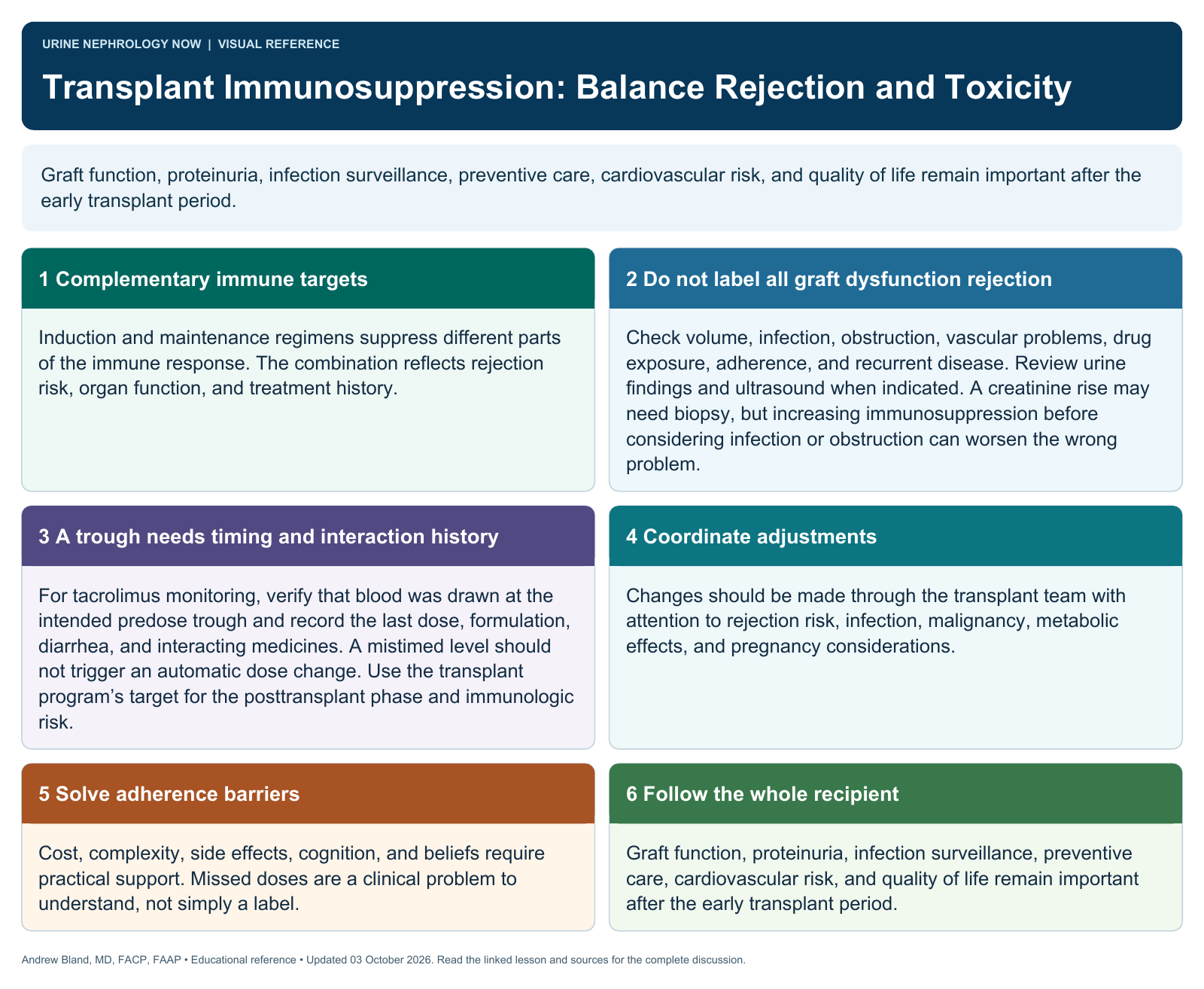
Text version
Prevent an alloimmune response
Induction, maintenance, and rejection treatment serve different purposes. Calcineurin inhibitors, antimetabolites, glucocorticoids, and selected alternatives act through distinct mechanisms and are combined according to immunologic risk and tolerance.
Recognize both sides of the balance
Too little effective immunosuppression can permit rejection, while excess increases infection and other toxicity. Kidney dysfunction can result from rejection, drug effects, obstruction, infection, recurrent disease, or another cause.
Monitor exposure correctly
For drugs requiring concentration monitoring, sample timing and formulation matter. Review interacting medications, diarrhea, adherence barriers, kidney and liver function, and recent dose changes before interpreting an unexpected level.
Use a coordinated regimen
Changes should be directed by the transplant team, with a clear medication list and follow-up plan. Infection prophylaxis, vaccination timing, reproductive counseling, and metabolic monitoring depend on the regimen and post-transplant context.
Recognize class-specific burdens
Nephrotoxicity, hypertension, diabetes, cytopenias, gastrointestinal effects, wound problems, and malignancy risks differ among agents. Monitor the predictable harms of the actual combination rather than using a generic transplant checklist alone.
Do not improvise substitutions
Agents are not interchangeable, and dose targets change with time and risk. Vomiting, inability to obtain medication, or a missed-dose problem needs prompt transplant-team advice rather than unsupervised stopping or doubling.
Continue learning
This graphic summarizes a topic. The full educational pages provide the broader discussion and references.