Visual summary
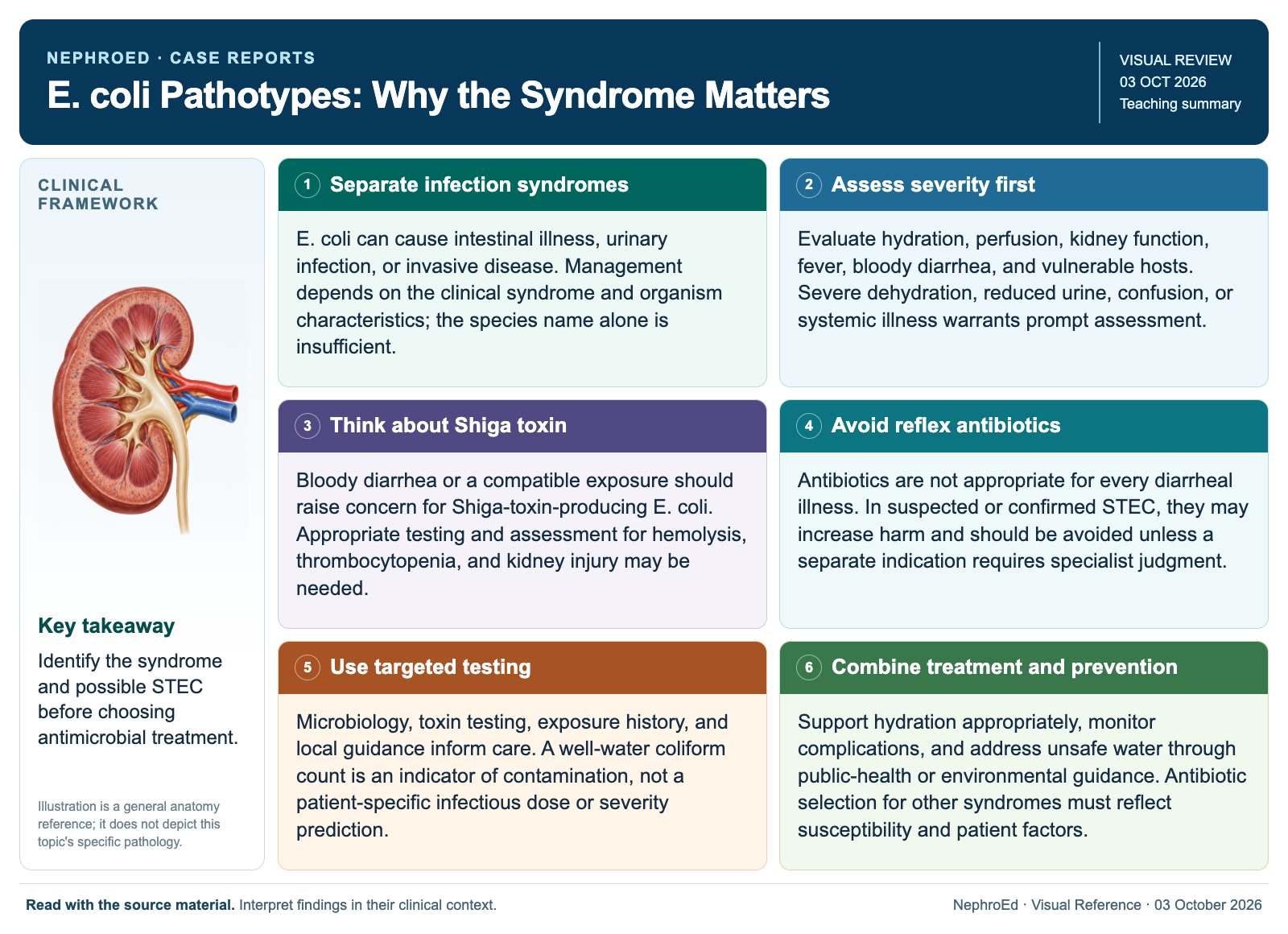
Identify the syndrome and possible STEC before choosing antimicrobial treatment.
Text version
Separate infection syndromes
E. coli can cause intestinal illness, urinary infection, or invasive disease. Management depends on the clinical syndrome and organism characteristics; the species name alone is insufficient.
Assess severity first
Evaluate hydration, perfusion, kidney function, fever, bloody diarrhea, and vulnerable hosts. Severe dehydration, reduced urine, confusion, or systemic illness warrants prompt assessment.
Think about Shiga toxin
Bloody diarrhea or a compatible exposure should raise concern for Shiga-toxin-producing E. coli. Appropriate testing and assessment for hemolysis, thrombocytopenia, and kidney injury may be needed.
Avoid reflex antibiotics
Antibiotics are not appropriate for every diarrheal illness. In suspected or confirmed STEC, they may increase harm and should be avoided unless a separate indication requires specialist judgment.
Use targeted testing
Microbiology, toxin testing, exposure history, and local guidance inform care. A well-water coliform count is an indicator of contamination, not a patient-specific infectious dose or severity prediction.
Combine treatment and prevention
Support hydration appropriately, monitor complications, and address unsafe water through public-health or environmental guidance. Antibiotic selection for other syndromes must reflect susceptibility and patient factors.
Continue learning
This graphic summarizes a topic. The full educational pages provide the broader discussion and references.