Visual summary
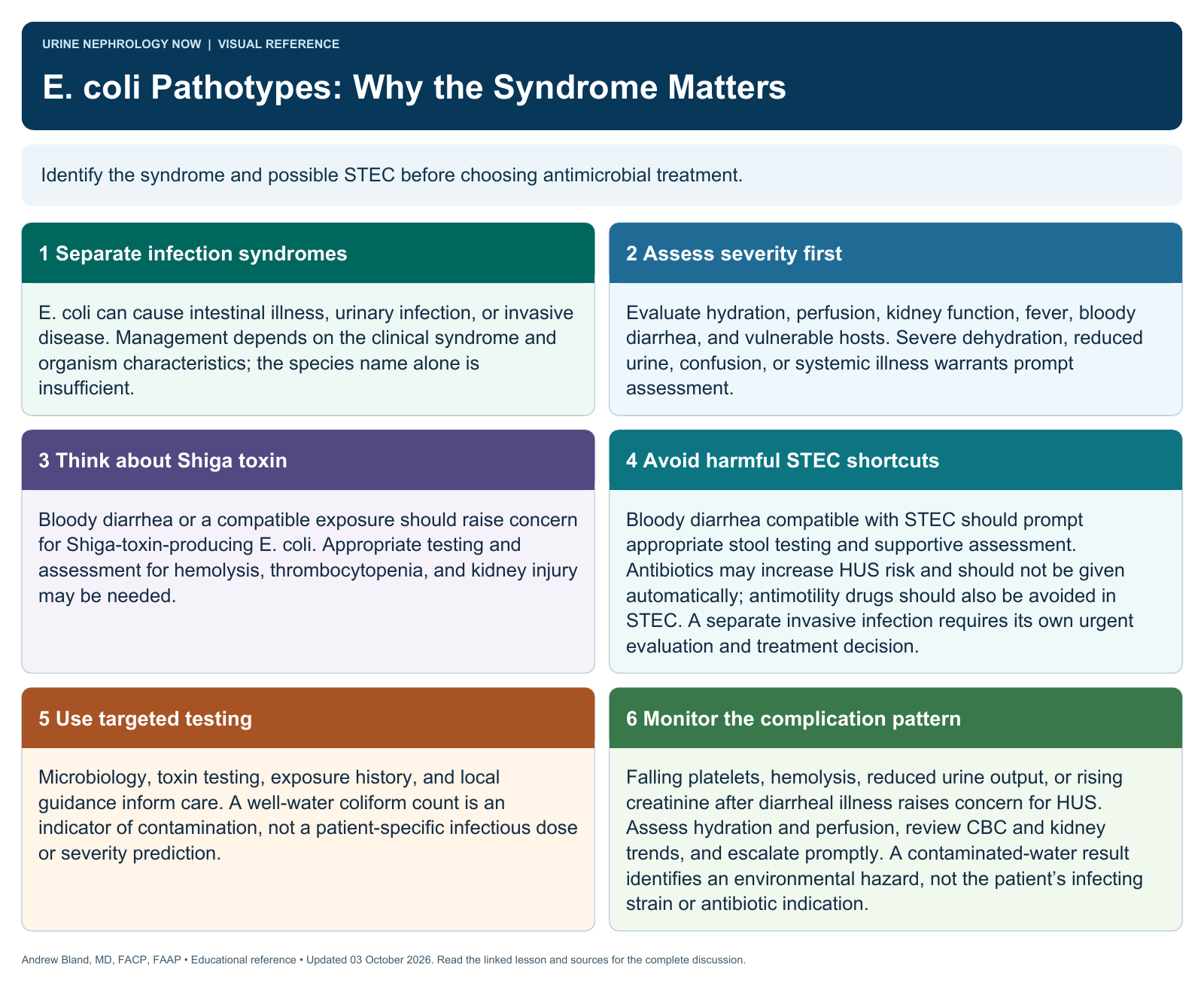
Identify the syndrome and possible STEC before choosing antimicrobial treatment.
Text version
Separate infection syndromes
E. coli can cause intestinal illness, urinary infection, or invasive disease. Management depends on the clinical syndrome and organism characteristics; the species name alone is insufficient.
Assess severity first
Evaluate hydration, perfusion, kidney function, fever, bloody diarrhea, and vulnerable hosts. Severe dehydration, reduced urine, confusion, or systemic illness warrants prompt assessment.
Think about Shiga toxin
Bloody diarrhea or a compatible exposure should raise concern for Shiga-toxin-producing E. coli. Appropriate testing and assessment for hemolysis, thrombocytopenia, and kidney injury may be needed.
Avoid harmful STEC shortcuts
Bloody diarrhea compatible with STEC should prompt appropriate stool testing and supportive assessment. Antibiotics may increase HUS risk and should not be given automatically; antimotility drugs should also be avoided in STEC. A separate invasive infection requires its own urgent evaluation and treatment decision.
Use targeted testing
Microbiology, toxin testing, exposure history, and local guidance inform care. A well-water coliform count is an indicator of contamination, not a patient-specific infectious dose or severity prediction.
Monitor the complication pattern
Falling platelets, hemolysis, reduced urine output, or rising creatinine after diarrheal illness raises concern for HUS. Assess hydration and perfusion, review CBC and kidney trends, and escalate promptly. A contaminated-water result identifies an environmental hazard, not the patient’s infecting strain or antibiotic indication.