Visual summary
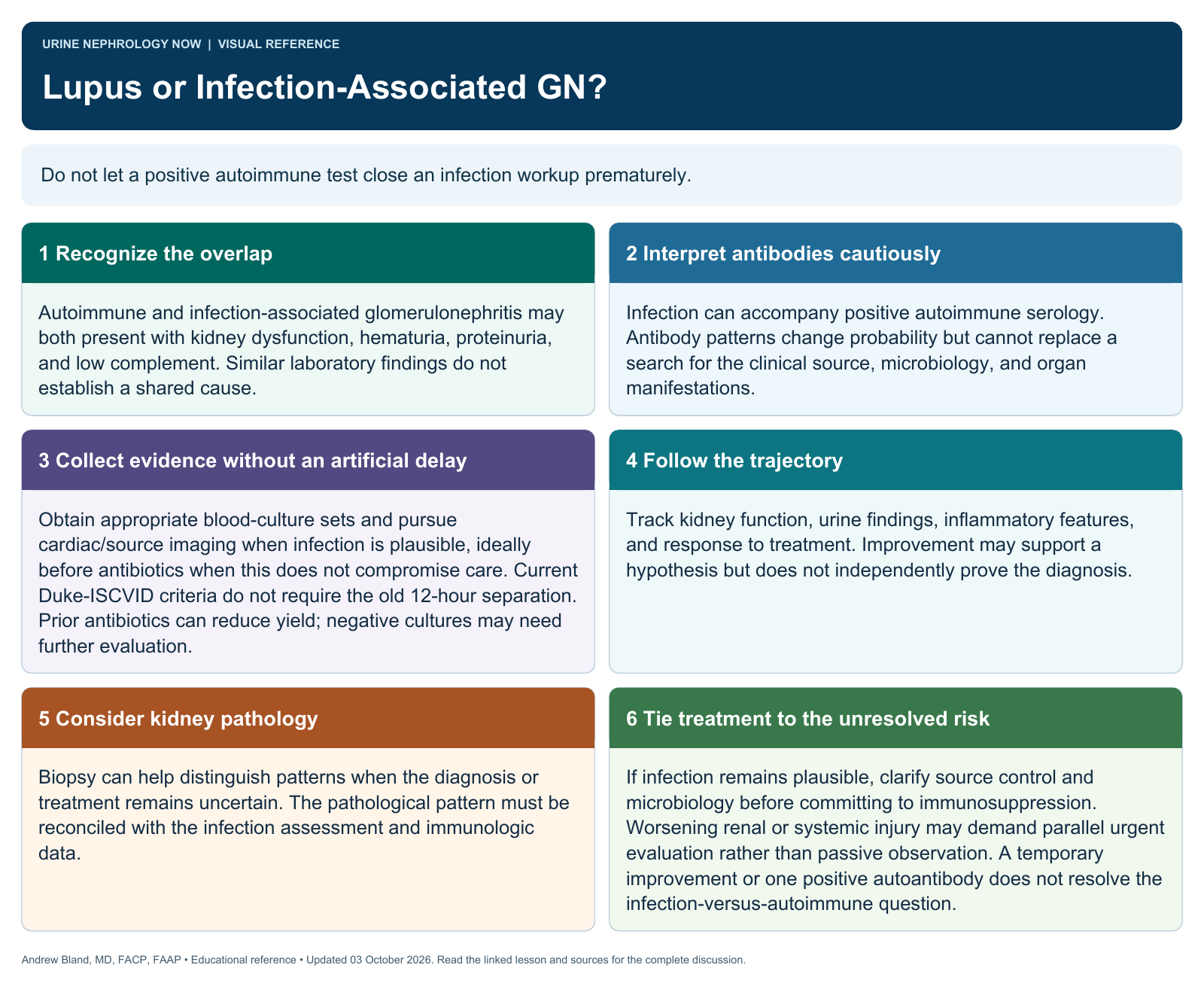
Do not let a positive autoimmune test close an infection workup prematurely.
Text version
Recognize the overlap
Autoimmune and infection-associated glomerulonephritis may both present with kidney dysfunction, hematuria, proteinuria, and low complement. Similar laboratory findings do not establish a shared cause.
Interpret antibodies cautiously
Infection can accompany positive autoimmune serology. Antibody patterns change probability but cannot replace a search for the clinical source, microbiology, and organ manifestations.
Evaluate infection
Obtain appropriate cultures and assess for endocarditis or other infection when indicated. Treatment timing and prior antibiotics influence test yield; repeat or alternative evaluation may be necessary.
Follow the trajectory
Track kidney function, urine findings, inflammatory features, and response to treatment. Improvement may support a hypothesis but does not independently prove the diagnosis.
Consider kidney pathology
Biopsy can help distinguish patterns when the diagnosis or treatment remains uncertain. The pathological pattern must be reconciled with the infection assessment and immunologic data.
Balance treatment risk
Immunosuppression can worsen uncontrolled infection. Coordinate nephrology, infectious disease, and relevant specialists before committing to a disease-specific treatment pathway.
Continue learning
This graphic summarizes a topic. The full educational pages provide the broader discussion and references.