Visual summary
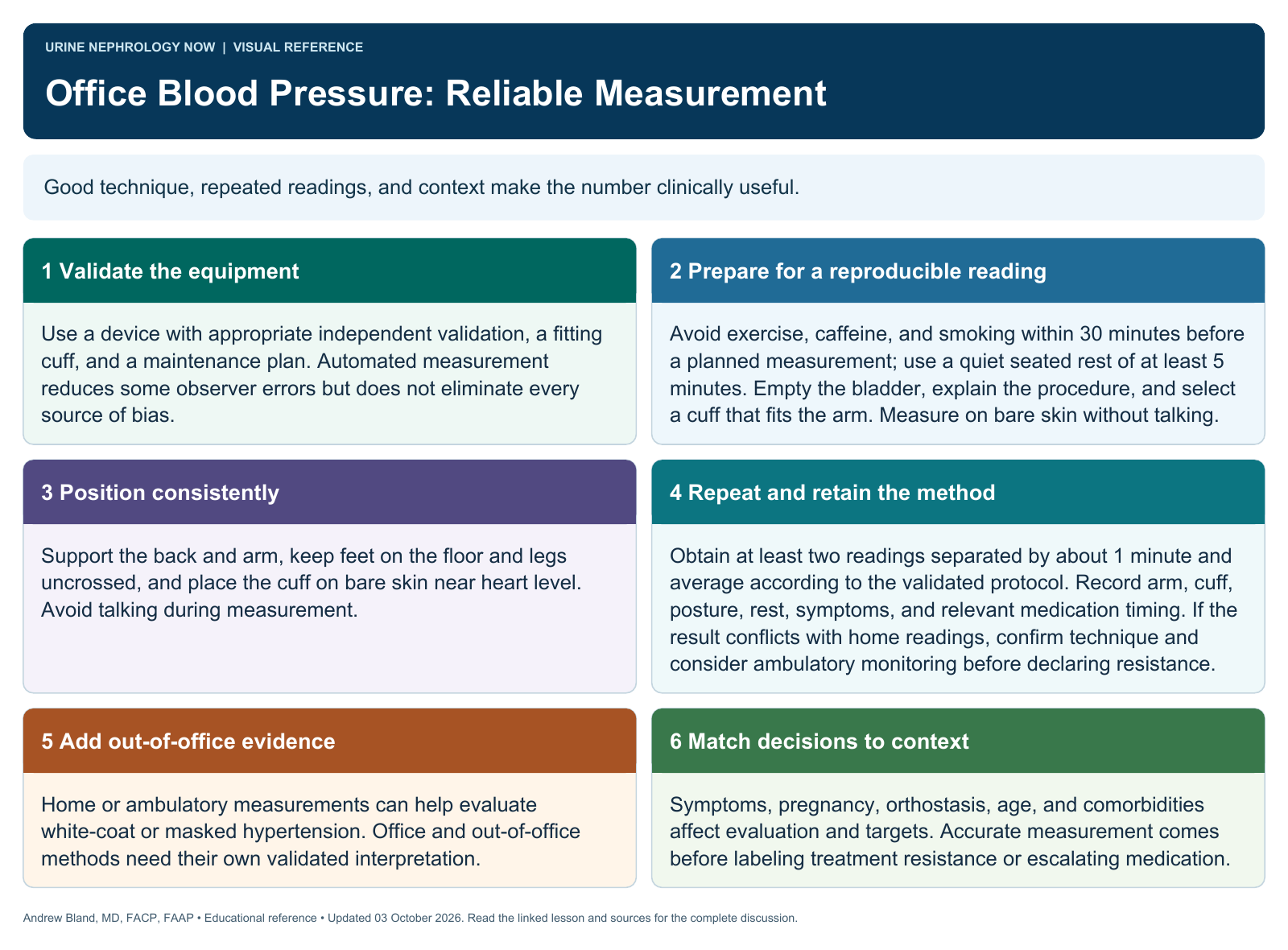
Good technique, repeated readings, and context make the number clinically useful.
Text version
Validate the equipment
Use a device with appropriate independent validation, a fitting cuff, and a maintenance plan. Automated measurement reduces some observer errors but does not eliminate every source of bias.
Prepare the patient
Allow an appropriate quiet rest, address recent activity and stimulants, and empty the bladder when needed. Explain the process before readings begin.
Position consistently
Support the back and arm, keep feet on the floor and legs uncrossed, and place the cuff on bare skin near heart level. Avoid talking during measurement.
Repeat and document
Use an agreed repeated-reading protocol. Record the technique, arm, cuff, and relevant symptoms. Avoid making major decisions from one potentially unrepresentative office reading.
Add out-of-office evidence
Home or ambulatory measurements can help evaluate white-coat or masked hypertension. Office and out-of-office methods need their own validated interpretation.
Match decisions to context
Symptoms, pregnancy, orthostasis, age, and comorbidities affect evaluation and targets. Accurate measurement comes before labeling treatment resistance or escalating medication.
Continue learning
This graphic summarizes a topic. The full educational pages provide the broader discussion and references.