Visual summary
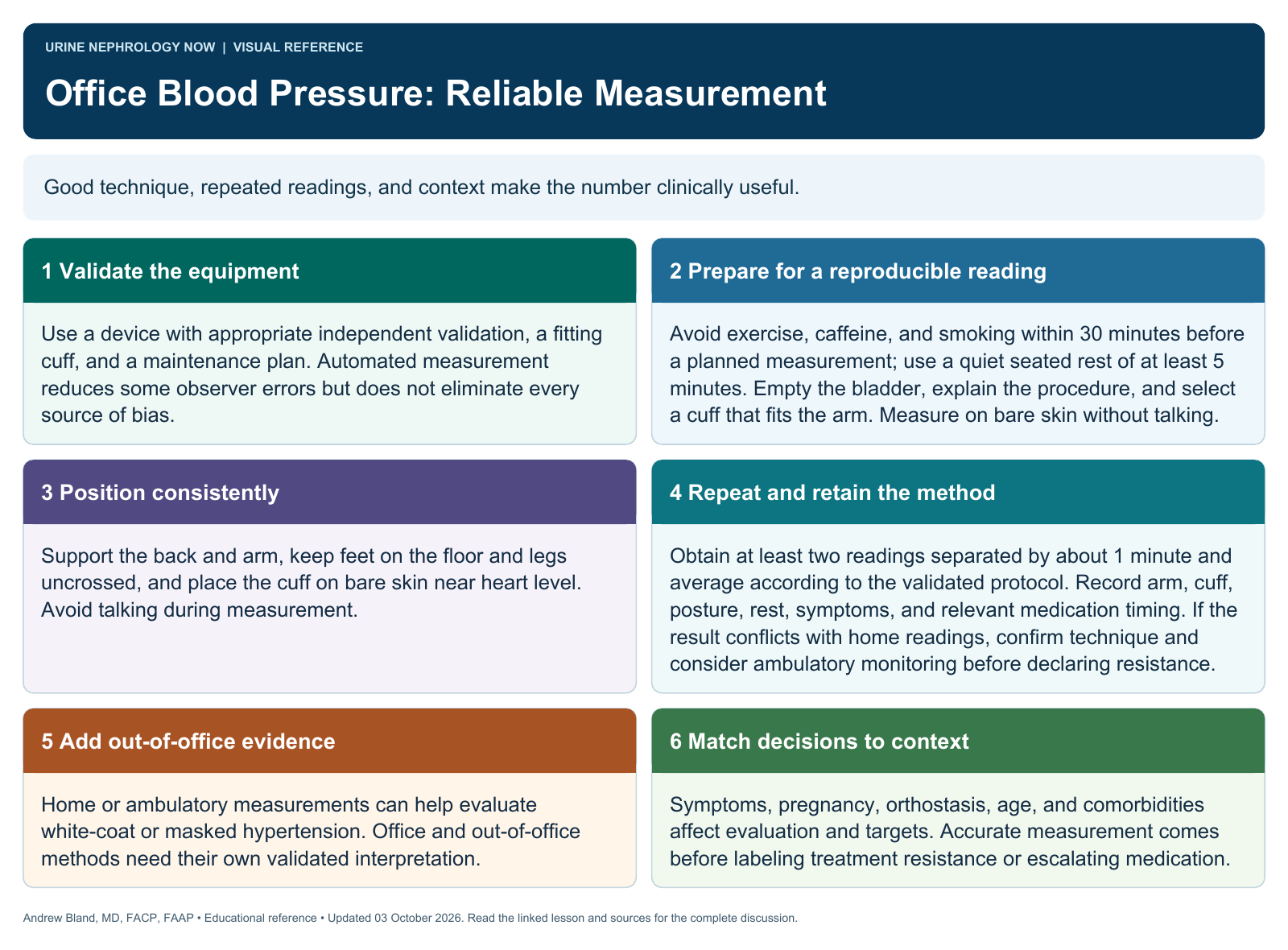
Good technique, repeated readings, and context make the number clinically useful.
Text version
Validate the equipment
Use a device with appropriate independent validation, a fitting cuff, and a maintenance plan. Automated measurement reduces some observer errors but does not eliminate every source of bias.
Prepare for a reproducible reading
Avoid exercise, caffeine, and smoking within 30 minutes before a planned measurement; use a quiet seated rest of at least 5 minutes. Empty the bladder, explain the procedure, and select a cuff that fits the arm. Measure on bare skin without talking.
Position consistently
Support the back and arm, keep feet on the floor and legs uncrossed, and place the cuff on bare skin near heart level. Avoid talking during measurement.
Repeat and retain the method
Obtain at least two readings separated by about 1 minute and average according to the validated protocol. Record arm, cuff, posture, rest, symptoms, and relevant medication timing. If the result conflicts with home readings, confirm technique and consider ambulatory monitoring before declaring resistance.
Add out-of-office evidence
Home or ambulatory measurements can help evaluate white-coat or masked hypertension. Office and out-of-office methods need their own validated interpretation.
Match decisions to context
Symptoms, pregnancy, orthostasis, age, and comorbidities affect evaluation and targets. Accurate measurement comes before labeling treatment resistance or escalating medication.