🎯 Key Concept: Water vs Sodium Balance
Sodium disorders reflect water balance, not sodium balance
ADH controls water retention → affects serum sodium concentration
Visual reference
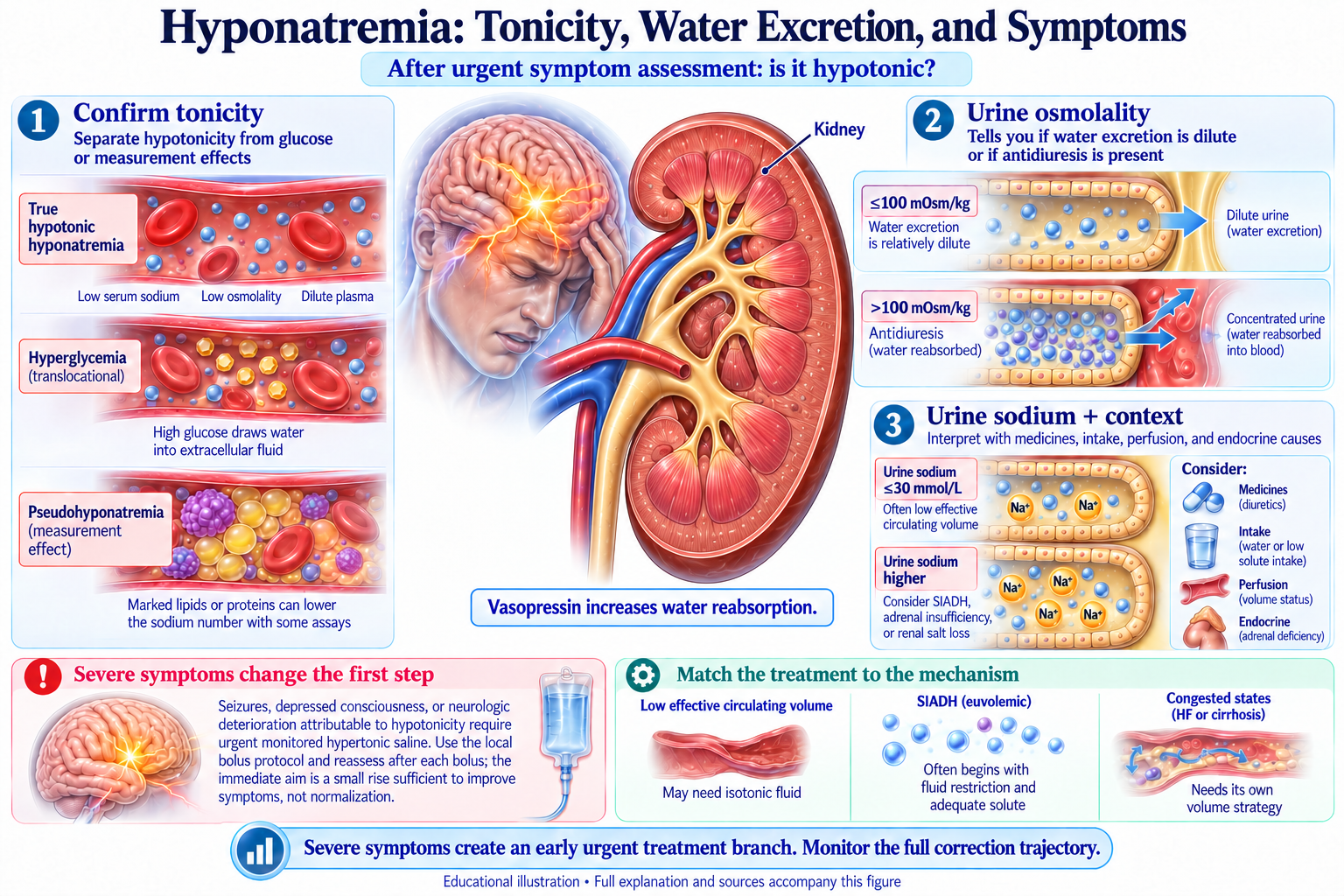
Browse the visual reference library · Download lesson Markdown
🌊 Sodium Disorder Overview
🌊 Hyponatremia
Na+ < 135 mEq/L - Most common electrolyte disorder
- Mechanism: Excess water relative to sodium
- Key Test: Urine osmolality (ADH activity)
- Emergency: RIB therapy for severe symptomatic
- Correction: 4-8 mEq/L per 24 hours (standard risk)
- Risk Factors: Chronic, alcoholism, liver disease
Common Causes: SIADH, volume depletion, heart failure, medications
🔥 Hypernatremia
Na+ > 145 mEq/L - Water deficit state
- Mechanism: Loss of free water or gain of sodium
- Formula: Water deficit = TBW × [(Na/140) - 1]
- Correction: ≤0.5 mEq/L per hour maximum
- Volume Status: Hypovolemic (most common)
- Risk: Cerebral edema with rapid correction
Common Causes: Diabetes insipidus, diarrhea, insensible losses, osmotic diuresis
🔄 Physiology Review
ADH System: The Master Water Controller
🧠 Central Control
- Osmoreceptors: Hypothalamic sensors
- Threshold: ~280-290 mOsm/kg
- Response: ADH release + thirst
- Fine-tuning: 1% osmolality change triggers response
🫘 Kidney Response
- Target: Collecting duct principal cells
- Mechanism: Aquaporin-2 (AQP2) insertion
- Result: Water reabsorption
- Range: 50-1200 mOsm/kg urine concentration
⚖️ Clinical Assessment
- Urine Osmolality: Reflects ADH activity
- Serum Osmolality: Confirms true hypo/hypernatremia
- Volume Status: Separate from ADH system
- Medications: Many affect ADH
🎯 Clinical Decision Framework
Systematic Approach to Sodium Disorders
1️⃣ Confirm the Value
- Rule out pseudohyponatremia
- Check serum osmolality
- Consider lab error
2️⃣ Assess Symptoms
- Neurologic manifestations
- Acute vs chronic onset
- Severity assessment
3️⃣ Volume Status
- Physical examination
- Hemodynamic assessment
- Urine sodium
4️⃣ Urine Studies
- Urine osmolality (key test)
- Urine sodium
- Urine volume
5️⃣ Medication Review
- Diuretics
- SSRIs, antiepileptics
- NSAIDs, ACE inhibitors
6️⃣ Treatment Plan
- Address underlying cause
- Safe correction rate
- Monitor response
🌊 Comprehensive Hyponatremia Guide Available!
For in-depth coverage including 2024 RIB protocols, emerging therapies, and risk stratification