Visual summary
Diagnose the water-handling problem, treat dangerous symptoms promptly, and manage the entire correction trajectory.
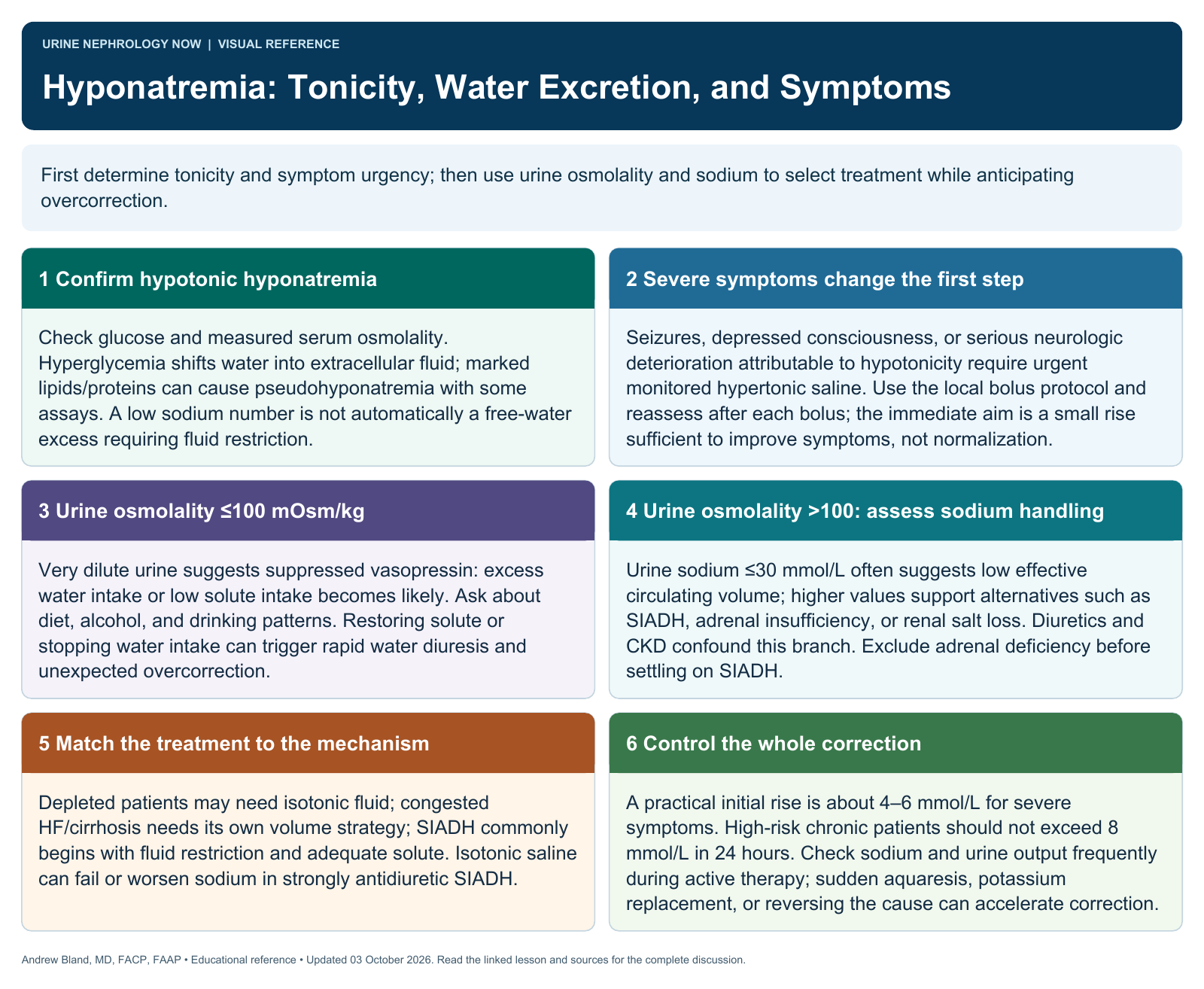
Text version
A water balance problem
Serum sodium reflects water relative to exchangeable body solute. Hyponatremia often arises when water intake exceeds excretory capacity, but hyperglycemia and laboratory artifacts can produce different mechanisms requiring a different interpretation.
Recognize symptomatic urgency
Seizures, severe confusion, depressed consciousness, and other concerning neurologic findings require urgent assessment. Treatment urgency depends on symptoms, acuity, and clinical context, while the risk of overcorrection must be anticipated from the start.
Confirm hypotonicity and mechanism
Review measured or estimated serum osmolality, glucose, urine osmolality, urine sodium, medications, and volume status. Consider adrenal insufficiency, thyroid disease when appropriate, low solute intake, and recent fluid or diuretic exposure.
Treat the cause safely
Severe symptomatic hypotonic hyponatremia may require monitored hypertonic saline. Other patients need cause-specific measures such as volume restoration, medication withdrawal, or management of impaired water excretion rather than a uniform saline prescription.
Track the correction trajectory
Check sodium and urine output frequently during active treatment. A sudden water diuresis can cause unplanned correction after the trigger resolves. Potassium replacement also affects sodium correction and must be included in the plan.
Prevent osmotic injury
Use conservative correction limits tailored to chronicity and risk factors, and obtain expert help if limits are being exceeded. Desmopressin and relowering strategies require a deliberate monitored protocol rather than improvised use.
Continue learning
This graphic summarizes a topic. The full educational pages provide the broader discussion and references.