Renal Pharmacology & Medication Safety
Drug dosing in CKD, nephrotoxin avoidance, steroid stewardship, sick day rules, and critical drug interactions in nephrology practice
KDIGO CKD 2024
AKI Best Practices
Medication Safety
Deprescribing
Visual reference
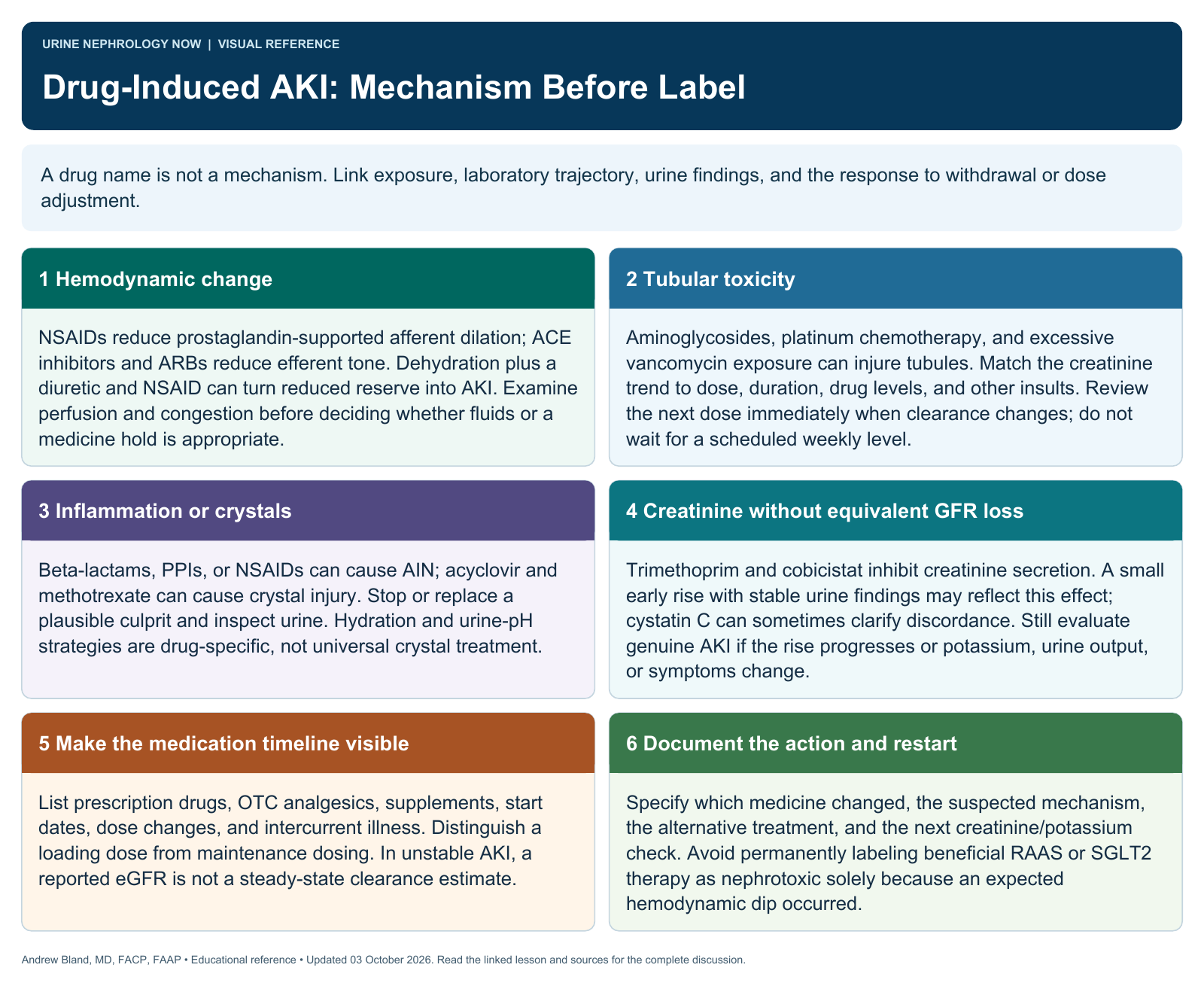
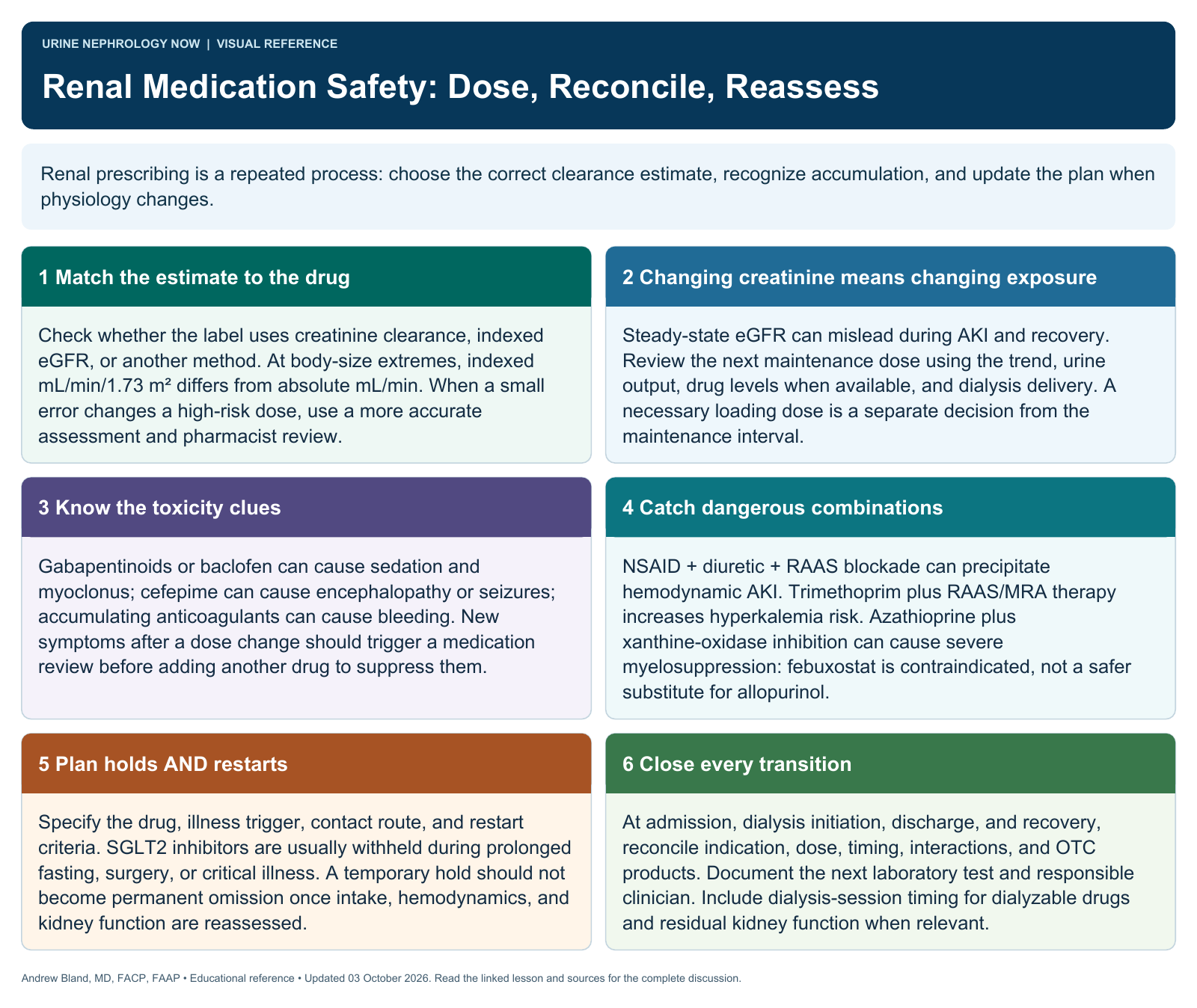
Browse the visual reference library · Download lesson Markdown
1. Drug Dosing in CKD: Principles of Renal Clearance
When to Adjust Drug Doses
- Renal elimination fraction: Adjust when ≥30% of active drug or active metabolites are eliminated renally
- Threshold for adjustment: Most adjustments begin at eGFR <60 mL/min/1.73 m2 (CKD stage 3); critical adjustments at eGFR <30 and <15
- AKI vs. CKD: In AKI, eGFR equations are unreliable (not at steady state); use clinical judgment, trends in serum creatinine, and urine output
Key Pharmacokinetic Principles
| Principle | Impact in CKD | Clinical Action |
|---|---|---|
| Reduced GFR | Decreased clearance of renally eliminated drugs → accumulation → toxicity | Reduce dose and/or extend interval; use Cockcroft-Gault for drug dosing (FDA convention) unless package insert specifies CKD-EPI |
| Altered protein binding | Uremia displaces drugs from albumin (e.g., phenytoin, warfarin) → higher free fraction | Measure free drug levels when available (free phenytoin); expect enhanced effect at "therapeutic" total levels |
| Volume of distribution | Fluid overload in CKD/nephrotic syndrome increases Vd for hydrophilic drugs | May need higher loading doses for aminoglycosides, vancomycin in fluid-overloaded patients |
| Tubular secretion | Decreased organic anion/cation transporter function in CKD | Affects metformin, TMP, creatinine secretion; trimethoprim raises creatinine without true GFR change |
| Dialyzability | Small, water-soluble, low protein-bound drugs are removed by dialysis | Use drug-specific postdialysis or supplemental dosing for dialyzable medicines (e.g., selected beta-lactams and aminoglycosides). Metformin is contraindicated at eGFR below 30 and is not a maintenance dialysis medicine. |
Cockcroft-Gault vs. CKD-EPI for Drug Dosing: Most FDA package inserts base renal dosing on creatinine clearance (Cockcroft-Gault), not eGFR (CKD-EPI). Cockcroft-Gault uses actual body weight (or adjusted body weight if obese) and is not normalized to BSA. In clinical practice, for most drugs, using CKD-EPI eGFR is a reasonable approximation, but for narrow therapeutic index drugs (vancomycin, aminoglycosides, DOACs), Cockcroft-Gault is preferred.
2. Nephrotoxic Medication Avoidance
| Category | Agents | Mechanism of Nephrotoxicity | Risk Level | Management |
|---|---|---|---|---|
| NSAIDs | Ibuprofen, naproxen, ketorolac, celecoxib | Afferent arteriolar vasoconstriction (inhibit prostaglandin-mediated vasodilation); reduce GFR; papillary necrosis with chronic use; interstitial nephritis | HIGH | Avoid in CKD 3–5; hold during AKI; see Section 6 for alternatives |
| Aminoglycosides | Gentamicin, tobramycin, amikacin | Direct proximal tubular toxicity; accumulates in renal cortex; non-oliguric AKI with granular casts | HIGH | Extended-interval dosing (once daily); monitor troughs (<1 μg/mL for gentamicin); limit duration to ≤5–7 days; avoid in CKD if alternatives exist |
| IV Contrast (iodinated) | Iohexol, iopamidol, ioversol | Direct tubular toxicity + medullary vasoconstriction; risk highest with eGFR <30, diabetes, heart failure, high contrast volume | MODERATE | Pre-hydration with isotonic saline (1–3 mL/kg/hr for 6–12 hours); minimize contrast volume; hold metformin 48 hours if eGFR <30; iso-osmolar contrast preferred |
| Vancomycin | IV vancomycin | Oxidative stress in proximal tubules; AKI risk increases with trough >20 mg/L, concomitant piperacillin-tazobactam, and duration >7 days | MODERATE | AUC/MIC-guided dosing (target AUC 400–600); avoid trough-based dosing; concomitant pip-tazo increases AKI risk 2–3x vs. vancomycin + cefepime (PMID: 29088001) |
| Calcineurin inhibitors | Tacrolimus, cyclosporine | Afferent arteriolar vasoconstriction (acute); chronic tubulointerstitial fibrosis ("striped fibrosis") with long-term use | MODERATE | Therapeutic drug monitoring; trough-based dosing; avoid supratherapeutic levels; monitor eGFR trend |
| Lithium | Lithium carbonate | Nephrogenic diabetes insipidus; chronic tubulointerstitial nephritis; CKD with prolonged use (>10–15 years) | MODERATE | Monitor SCr and eGFR every 6 months; urine osmolality annually; target trough 0.6–0.8 mEq/L (lower range); amiloride for NDI |
| PPIs | Omeprazole, pantoprazole, etc. | Acute interstitial nephritis (AIN); chronic use associated with CKD progression (observational data; causal link debated) | LOW-MOD | Deprescribe when possible (see Section 5); use lowest effective dose; monitor SCr |
| Tenofovir disoproxil (TDF) | Tenofovir DF (not TAF) | Proximal tubular toxicity; Fanconi syndrome (phosphaturia, glycosuria, aminoaciduria, RTA) | MODERATE | Monitor phosphorus, glucose, urine protein; switch to TAF (tenofovir alafenamide) if renal toxicity develops |
| Methotrexate | High-dose methotrexate | Crystal nephropathy (precipitation in tubules at low urine pH) | HIGH (high-dose) | Vigorous alkaline hydration (target urine pH >7.0); leucovorin rescue; avoid in eGFR <60 |
| Phosphate-based bowel preps | Oral sodium phosphate (OsmoPrep, Fleet Phospho-soda) | Acute phosphate nephropathy (calcium phosphate crystal deposition in tubules); often irreversible CKD | HIGH | Avoid entirely in CKD, elderly, volume-depleted, and those on ACEi/ARB/diuretics; use PEG-based preps instead |
"Triple Whammy": The combination of ACEi/ARB + diuretic + NSAID is a well-described cause of AKI. Each drug alone is manageable, but together they eliminate the kidney's compensatory mechanisms for maintaining GFR during volume depletion. Counsel patients to hold NSAIDs during acute illness. (Lapi F et al. BMJ 2013;346:e8525, PMID 23299844)
3. Antibiotic Dosing in AKI and CKD
Aminoglycosides
| Parameter | Normal Renal Function | CKD 3 (eGFR 30–59) | CKD 4–5 (eGFR <30) | Hemodialysis |
|---|---|---|---|---|
| Gentamicin | 5–7 mg/kg IV q24h (extended interval) | 5–7 mg/kg IV q36–48h; check levels | Avoid if possible; if required: loading dose 5–7 mg/kg, then re-dose based on level | Loading dose; re-dose after HD based on pre-HD level; not well removed by PD |
| Monitoring | Random level at 6–14 hours (Hartford nomogram); target trough <1 μg/mL; reassess q48–72h; BUN/SCr daily; audiometry if >5 days | |||
Vancomycin
| Parameter | Detail |
|---|---|
| Loading dose | 25–30 mg/kg IV (actual body weight; max 3 g for single dose) |
| Maintenance | 15–20 mg/kg IV q8–12h (normal renal function); extend to q24–48h in CKD 4–5 |
| Monitoring (2020 ASHP/IDSA consensus) | AUC/MIC-guided dosing preferred over trough-only; target AUC24 400–600 mg·h/L; Bayesian software recommended |
| Hemodialysis | Loading dose 25–30 mg/kg; re-dose 500–1000 mg after each HD session based on pre-HD level |
| AKI risk factors | Concomitant piperacillin-tazobactam (use cefepime instead when possible), AUC >600, ICU patients, obesity, prolonged courses (>7 days) |
Beta-Lactams in CKD
| Agent | Normal Function | eGFR 10–29 | eGFR <10 / HD | Key Notes |
|---|---|---|---|---|
| Piperacillin-tazobactam | 4.5 g IV q6h | 2.25 g IV q6h | 2.25 g IV q8h; dose after HD | Associated with higher AKI risk when combined with vancomycin vs. cefepime + vancomycin |
| Cefepime | 2 g IV q8h | 1–2 g IV q24h | 1 g IV q24h; dose after HD | Neurotoxicity (encephalopathy, seizures, myoclonus) in CKD if not dose-adjusted; check levels if available |
| Meropenem | 1–2 g IV q8h | 1 g IV q12h | 500 mg–1 g IV q24h; dose after HD | Lowers valproic acid levels (avoid combination); seizure threshold lower than imipenem |
| Amoxicillin-clavulanate | 875/125 mg PO q12h | 500/125 mg PO q12h | 500/125 mg PO q24h | Do not use 875 mg formulation if eGFR <30 (excess clavulanate) |
Cefepime Neurotoxicity: Under-recognized cause of altered mental status in CKD/ESRD patients. Presents as encephalopathy, myoclonus, or non-convulsive status epilepticus. Risk factors: eGFR <30, age >65, ICU admission. Always dose-adjust and consider cefepime levels if available. Resolves within 24–72 hours of dose adjustment or discontinuation.
4. Steroid Stewardship
Appropriate Indications in Nephrology
| Indication | Typical Regimen | Duration |
|---|---|---|
| RPGN / crescentic GN | Pulse methylprednisolone 500–1000 mg IV x 3 days → oral taper | Rapid taper over 3–6 months |
| Minimal change disease | Prednisone 1 mg/kg/day (max 80 mg) | 8–16 weeks full dose, then 6-month taper |
| IgA nephropathy (TESTING trial) | Reduced-dose steroid protocol: methylprednisolone 0.4 mg/kg/day (max 32 mg) x 2 months → wean by 4 mg/month | 6–9 months; only if proteinuria >1 g/day despite RAAS blockade (PMID: 35579642) |
| Lupus nephritis Class III/IV | Pulse IV → oral 0.5–1 mg/kg/day → taper to ≤5 mg/day by 12 months | Long-term low-dose; minimize with steroid-sparing agents (MMF, voclosporin) |
| ANCA vasculitis | Pulse IV → oral taper; consider avacopan for steroid-free regimen | 3–6 month taper (ADVOCATE protocol) |
| Acute interstitial nephritis | Prednisone 1 mg/kg/day for 1–3 weeks → taper over 2–3 months | 8–12 weeks total; benefit debated; remove offending agent first |
Steroid Tapering Principles
- Never abruptly discontinue if patient has been on ≥20 mg prednisone for ≥3 weeks (adrenal suppression risk)
- Taper increments: Reduce by no more than 10–20% every 1–2 weeks when above 20 mg; smaller decrements (2.5–5 mg) below 20 mg
- Flare monitoring: Check proteinuria and serum creatinine at each taper step; pause taper if disease flares
- Adrenal recovery: At physiologic dose (~5 mg prednisone), check AM cortisol; if <10 μg/dL, slow taper or provide stress-dose education
- Steroid card: Patients on chronic steroids should carry a steroid alert card and understand stress dosing
Monitoring for Adverse Effects
- Blood glucose: fasting glucose monthly; HbA1c every 3 months on therapy
- Bone density: DEXA at baseline if expected ≥3 months; calcium + vitamin D supplementation for all
- Ophthalmology: annual eye exam for cataracts/glaucoma if ≥6 months of steroids
- Weight and blood pressure: every visit
- Infection prophylaxis: PCP prophylaxis if prednisone ≥20 mg/day ≥4 weeks + additional immunosuppression
5. PPI Deprescribing
Why It Matters in Nephrology
- Acute interstitial nephritis: PPIs are a leading cause of drug-induced AIN; often granulomatous; can occur months to years after initiation
- CKD association: Observational studies show 10–20% increased risk of CKD incidence and progression with chronic PPI use (PMID: 26752337); causal mechanism debated (repeated subclinical AIN, hypomagnesemia)
- Hypomagnesemia: Chronic PPI use reduces intestinal magnesium absorption; worsens in CKD patients already prone to magnesium wasting
- Other risks: C. difficile infection (especially in hospitalized/immunosuppressed patients), bone fracture risk, B12 deficiency, fundic gland polyps
Step-Down Approach
| Step | Action | Duration |
|---|---|---|
| 1 | Assess indication: Is there an ongoing indication (Barrett's esophagus, severe erosive esophagitis, Zollinger-Ellison, chronic NSAID use with high GI risk)? If yes, continue at lowest effective dose. | Assessment |
| 2 | If no ongoing indication (empiric GERD, uncomplicated dyspepsia, or "started in hospital and never stopped"), initiate step-down. | — |
| 3 | Reduce to lowest PPI dose (e.g., omeprazole 20 mg daily → 10 mg daily, or switch to every other day) | 2–4 weeks |
| 4 | Switch to H2RA (famotidine 20 mg BID or 40 mg nightly) or on-demand PPI only | 2–4 weeks |
| 5 | Discontinue acid suppression; use antacids PRN; lifestyle modifications (elevate head of bed, avoid late meals, weight loss) | Ongoing |
Rebound Acid Hypersecretion: Occurs in approximately 30–40% of patients after abrupt PPI discontinuation (even after only 8 weeks of use). Symptoms peak at 2 weeks and resolve by 4–6 weeks. Gradual step-down over 2–4 weeks minimizes rebound. Counsel patients that transient worsening is expected and does not mean the PPI is "needed." PMID: 19362552
H2RA Alternatives
- Famotidine: Preferred H2RA; 20 mg BID or 40 mg nightly; dose-adjust in CKD (20 mg daily if eGFR <30)
- Avoid cimetidine: Inhibits creatinine secretion (falsely elevates SCr); multiple CYP450 drug interactions; anti-androgenic effects
- H2RAs have less association with AIN, hypomagnesemia, and CKD progression than PPIs
6. NSAID Alternatives for Pain Management in CKD
| Pain Type | Preferred Agents | Notes |
|---|---|---|
| Mild–moderate pain | Acetaminophen (up to 2 g/day in CKD; max 3 g/day with normal liver function) | First-line analgesic in CKD; no renal toxicity; avoid in severe liver disease |
| Neuropathic pain | Gabapentin (dose-adjust: 100–300 mg daily if eGFR <30); pregabalin (dose-adjust); duloxetine (avoid if eGFR <30) | Gabapentin accumulates in CKD → somnolence, myoclonus; start low, go slow; dialyzable (dose after HD) |
| Musculoskeletal pain | Topical diclofenac gel (minimal systemic absorption); capsaicin cream; lidocaine patches | Topical NSAIDs have negligible renal effects for localized joint/muscle pain |
| Moderate–severe pain | Tramadol (reduce dose and frequency in CKD; avoid if seizure risk); low-dose oxycodone (no active renal metabolites) | Avoid morphine in eGFR <30 (active metabolite morphine-6-glucuronide accumulates → respiratory depression); avoid codeine (unpredictable CYP2D6 metabolism) |
| Gout flare (CKD patient) | Colchicine 0.6 mg x 1, then 0.3 mg 1 hour later (dose-reduced if eGFR <30; avoid if on P-gp or CYP3A4 inhibitors); low-dose prednisone burst (30 mg x 5 days); intra-articular steroid injection | Avoid NSAIDs for gout in CKD; colchicine dose must be reduced; no colchicine with clarithromycin or azole antifungals |
| Chronic pain / multimodal | Physical therapy, cognitive behavioral therapy, acupuncture, TENS unit | Non-pharmacologic approaches are underutilized and effective; should be part of every chronic pain plan |
Short-course NSAID Exception: A single dose or 2–3 day course of an NSAID may be acceptable in CKD stage 3 for acute pain (e.g., renal colic, post-surgical) when alternatives are inadequate. Ensure adequate hydration, hold ACEi/ARB and diuretics, and monitor SCr. Avoid entirely in CKD 4–5, AKI, transplant recipients, and heart failure.
7. Sick Day Rules: Medications to Hold During Acute Illness
During acute illness with volume depletion risk (vomiting, diarrhea, febrile illness, poor oral intake, perioperative period), temporarily hold medications that can precipitate or worsen AKI. Use the mnemonic SADMANS.
S — SGLT2 Inhibitors
- Empagliflozin, dapagliflozin, canagliflozin
- Risk: volume depletion, euglycemic DKA (especially in type 1 DM or prolonged fasting)
- Resume when oral intake normalizes and euDKA excluded
A — ACE Inhibitors / ARBs
- Lisinopril, losartan, valsartan, etc.
- Risk: efferent arteriolar vasodilation reduces GFR in hypovolemia; hyperkalemia
- Resume when creatinine returns to baseline and volume status restored
D — Diuretics
- Furosemide, HCTZ, chlorthalidone, spironolactone
- Risk: exacerbate volume depletion; worsen pre-renal AKI; electrolyte derangements
- Resume when euvolemic and eating/drinking normally
M — Metformin
- Risk: lactic acidosis in AKI (metformin accumulates when GFR drops)
- Hold if unable to eat/drink, vomiting, eGFR drops acutely below 30
- Resume when SCr stable and oral intake adequate
A — Aldosterone Antagonists (MRAs)
- Spironolactone, eplerenone, finerenone
- Risk: life-threatening hyperkalemia in AKI
- Resume when potassium normal and eGFR stable
N — NSAIDs
- Ibuprofen, naproxen, celecoxib
- Risk: afferent arteriolar constriction; "triple whammy" with ACEi + diuretic
- Use acetaminophen instead during illness
Patient Education is Key: Every CKD patient should receive written sick day rules at diagnosis and at medication changes. Routine sick-day counseling for CKD patients is widely under-implemented; temporary medication holds during acute illness are a foundational AKI-prevention strategy.
What NOT to Hold
- Statins: Safe to continue during acute illness
- Beta-blockers: Continue unless severe hypotension/bradycardia (rebound tachycardia/hypertension with abrupt withdrawal)
- Thyroid replacement: Continue
- Chronic steroids: Do NOT hold; may need stress dosing (hydrocortisone 50–100 mg IV q8h) during acute illness if on chronic prednisone ≥5 mg/day
- Anticoagulants: Case-by-case; generally continue unless active bleeding or procedural need
- Immunosuppressants (transplant): Do NOT hold without transplant team guidance; risk of rejection outweighs most acute illness risks
8. Medication Reconciliation at Transitions of Care
High-Risk Transitions for Nephrology Patients
- Hospital discharge after AKI: Review every medication; dose-adjust for new baseline eGFR; do not automatically restart all pre-admission medications
- CKD progression (stage change): Re-evaluate all renally cleared drugs when eGFR crosses thresholds (60, 45, 30, 15)
- Dialysis initiation: Discontinue medications no longer needed (phosphate binders dose changes, EPO/ESA, vitamin D changes); adjust dialyzable drug timing
- Post-transplant: Complex immunosuppression interactions; coordinate with transplant pharmacy
Reconciliation Checklist
| Step | Action | Common Findings |
|---|---|---|
| 1 | Obtain complete medication list (patient, pharmacy, EHR, pill bottles) | Average discrepancy: 3–5 medications per patient at hospital discharge |
| 2 | Check each medication for renal dose adjustment at current eGFR | 30–40% of CKD 4–5 patients have at least one inappropriately dosed medication |
| 3 | Identify nephrotoxins for removal or substitution | NSAIDs, combination analgesics with NSAIDs, herbal supplements (aristolochic acid) |
| 4 | Check for dangerous drug interactions | CNI + azole, allopurinol + azathioprine, TMP + methotrexate, K-sparing diuretic + ACEi + NSAID |
| 5 | Review OTC medications and supplements | Magnesium-containing antacids in CKD 4–5; potassium-containing salt substitutes; high-dose vitamin C (oxalate risk) |
| 6 | Counsel patient on sick day rules | Provide written instructions; document in chart |
| 7 | Communicate changes to PCP and pharmacy | Discharge summary should explicitly list renally adjusted doses and rationale |
9. Key Drug Interactions in Nephrology
| Drug Combination | Interaction | Clinical Consequence | Management |
|---|---|---|---|
| CNI + azole antifungals (tacrolimus/cyclosporine + fluconazole, voriconazole, itraconazole) |
Azoles inhibit CYP3A4 and P-glycoprotein; increase CNI levels 2–5x | Nephrotoxicity, neurotoxicity (tremor, seizures), hyperkalemia | Reduce CNI dose by 50–75% when starting azole; check trough within 3–5 days; fluconazole has less effect than voriconazole; use micafungin/anidulafungin if possible (minimal CYP interaction) |
| Allopurinol + azathioprine | Allopurinol inhibits xanthine oxidase, blocking azathioprine/6-MP metabolism; 3–5x increase in active metabolite levels | Severe pancytopenia, potentially fatal bone marrow suppression | Febuxostat is contraindicated with azathioprine or mercaptopurine; it is not a safer substitute for this interaction. Avoid unplanned co-prescribing. If allopurinol and a thiopurine are deliberately combined, an experienced prescriber must make a major thiopurine dose adjustment and arrange close CBC monitoring using the relevant drug labels and specialist protocol. |
| TMP-SMX + methotrexate | TMP inhibits renal tubular secretion of methotrexate; SMX is a weak DHFR inhibitor (additive antifolate effect) | Methotrexate toxicity: pancytopenia, mucositis, renal failure | Avoid combination; if both required, monitor methotrexate levels and CBC closely |
| ACEi/ARB + K-sparing diuretic + NSAID ("Triple Whammy") |
ACEi/ARB: reduce aldosterone → hyperkalemia; K-sparing diuretic: hyperkalemia; NSAID: reduce GFR + reduce K excretion | Severe hyperkalemia, AKI | Avoid triple combination; hold NSAID; monitor K+ and SCr when any two are combined |
| Colchicine + CYP3A4/P-gp inhibitors (clarithromycin, ketoconazole, cyclosporine) |
Markedly increased colchicine levels; colchicine has narrow therapeutic index | Fatal colchicine toxicity: multi-organ failure, pancytopenia, rhabdomyolysis | Contraindicated in combination if eGFR <30; reduce colchicine dose to 0.3 mg x 1 if combination unavoidable with normal renal function |
| SGLT2i + insulin / sulfonylureas | Additive glucose-lowering effect; SGLT2i may cause euglycemic DKA | Hypoglycemia; euglycemic DKA (especially perioperative or fasting) | Assess hypoglycemia risk and individualize insulin/sulfonylurea adjustment; avoid excessive insulin reduction. Before scheduled surgery, hold empagliflozin/dapagliflozin/canagliflozin at least 3 days and ertugliflozin at least 4 days, following the product label and treating team. |
| Meropenem + valproic acid | Carbapenems reduce valproic acid levels by 60–90% via multiple mechanisms (enhanced glucuronidation, impaired reabsorption) | Seizures from subtherapeutic valproic acid levels | Avoid combination; use alternative antibiotic or alternative antiepileptic; interaction persists 2 weeks after carbapenem discontinued |
| Lithium + ACEi/ARB or diuretics | Reduced lithium clearance due to volume depletion and proximal tubule sodium reabsorption | Lithium toxicity: tremor, ataxia, seizures, renal failure | Monitor lithium levels closely when starting/adjusting ACEi/ARB/diuretics; reduce lithium dose preemptively; check level within 5–7 days |
The Allopurinol-Azathioprine Interaction is one of the most dangerous drug interactions in nephrology and transplant medicine. It is frequently tested on board examinations. Always check uric acid-lowering therapy before prescribing azathioprine, and vice versa. Coordinate any change in urate-lowering or immunosuppressive therapy with the treating specialist; immunosuppressants are not interchangeable without reviewing the indication, efficacy, and adverse effects. Official febuxostat labeling: thiopurine contraindication.
References
- KDIGO 2024 Clinical Practice Guideline for the Evaluation and Management of Chronic Kidney Disease. Kidney Int. 2024;105(4S):S117-S314. PMID: 38490803
- Matzke GR, Aronoff GR, Atkinson AJ Jr, et al. Drug dosing consideration in patients with acute and chronic kidney disease. Kidney Int. 2011;80(11):1122-1137. PMID: 21918498
- Rybak MJ, Le J, Lodise TP, et al. Therapeutic monitoring of vancomycin for serious methicillin-resistant Staphylococcus aureus infections: a revised consensus guideline. Am J Health Syst Pharm. 2020;77(11):835-864. PMID: 32191793
- Luther MK, Timbrook TT, Caffrey AR, et al. Vancomycin plus piperacillin-tazobactam and acute kidney injury in adults: a systematic review and meta-analysis. Crit Care Med. 2018;46(1):12-20. PMID: 29088001
- Lazarus B, Chen Y, Wilson FP, et al. Proton pump inhibitor use and the risk of chronic kidney disease. JAMA Intern Med. 2016;176(2):238-246. PMID: 26752337
- Lapi F, Azoulay L, Yin H, Nessim SJ, Suissa S. Concurrent use of diuretics, angiotensin converting enzyme inhibitors, and angiotensin receptor blockers with non-steroidal anti-inflammatory drugs and risk of acute kidney injury: nested case-control study. BMJ. 2013;346:e8525. PMID: 23299844
- Luyckx VA, Tonelli M, Stanifer JW. The global burden of kidney disease and the sustainable development goals. Bull World Health Organ. 2018;96(6):414-422D. PubMed
- Pazhayattil GS, Shirali AC. Drug-induced impairment of renal function. Int J Nephrol Renovasc Dis. 2014;7:457-468. PubMed
- Kidney Disease: Improving Global Outcomes (KDIGO) Glomerular Diseases Work Group. KDIGO 2021 Clinical Practice Guideline for the Management of Glomerular Diseases. Kidney Int. 2021;100(4S):S1-S276. PMID: 34556256
- Lv J, Wong MG, Hladunewich MA, et al. Effect of oral methylprednisolone on decline in kidney function or kidney failure in patients with IgA nephropathy: the TESTING randomized clinical trial. JAMA. 2022;327(19):1888-1898. PMID: 35579642
- Reimer C, Sondergaard B, Hilsted L, et al. Proton-pump inhibitor therapy induces acid-related symptoms in healthy volunteers after withdrawal of therapy. Gastroenterology. 2009;137(1):80-87. PMID: 19362552
- Naughton CA. Drug-induced nephrotoxicity. Am Fam Physician. 2008;78(6):743-750. PubMed
Andrew Bland, MD, FACP, FAAP | University of Dubuque PA Program | urinenephrology.org
© 2025. For educational use only. Not a substitute for clinical judgment.