Visual reference
Browse the visual reference library · Download lesson Markdown
SGLT2 Inhibitors, Loop Diuretics, and the Macula Densa
🎯 Why This Lecture Matters
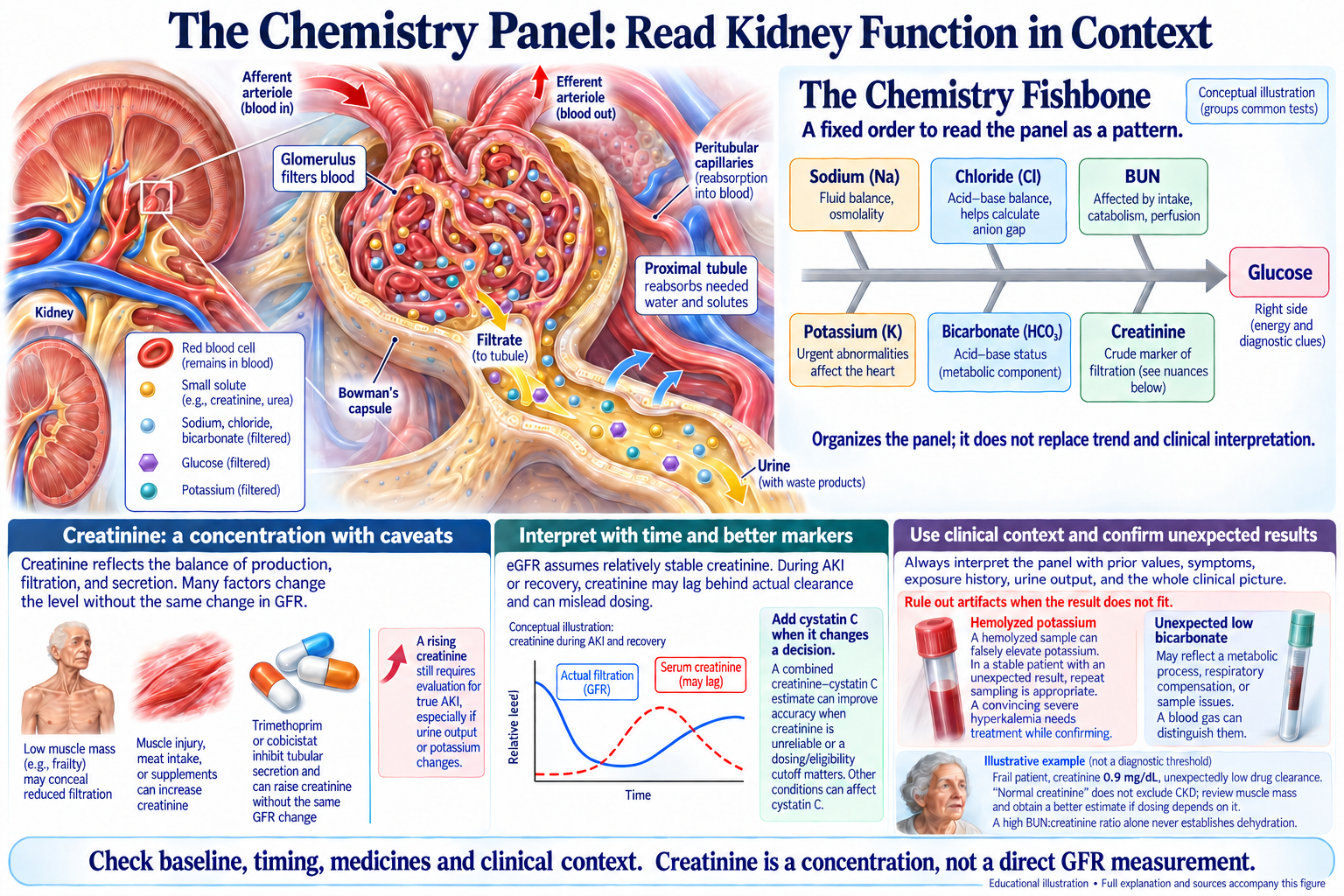
Serum creatinine is the single most frequently used biomarker in clinical medicine to assess kidney function. Yet it is profoundly misunderstood.
The dominant clinical reality — and the basis for eGFR equations.
Drugs, diet, muscle mass, and tubular handling can all change creatinine independent of filtration.
A concept explored in our AKI module that has profound clinical implications.
🔬 Interactive Glomerular Hemodynamics
Explore how arteriolar tone, drug effects, and glomerular pressure determine GFR and albuminuria. Click the condition buttons on the right panel to interact.
Return to the opening lecture: creatinine and kidney function →
📐 The Determinants of GFR
GFR is governed by the Starling forces across the glomerular capillary wall. The fundamental equation is:
GFR = Kf × PUF
GFR = Kf × (PGC − PBS − πGC)
Where PUF = net ultrafiltration pressure
Kf — Ultrafiltration Coefficient
Product of capillary surface area and hydraulic permeability.
- Surface area regulated by mesangial cells — contraction reduces Kf
- Permeability determined by the 3-layer filtration barrier: fenestrated endothelium → GBM → podocyte slit diaphragms
- Diseases that destroy glomeruli (e.g., GN, DKD) reduce Kf
- Mesangial contraction by Angiotensin II, endothelin → ↓Kf
PGC — Glomerular Capillary Pressure
The dominant driving force for filtration. ~60 mmHg normally.
- Afferent arteriolar dilation → ↑PGC (more inflow)
- Efferent arteriolar constriction (Ang II) → ↑PGC (backs up pressure)
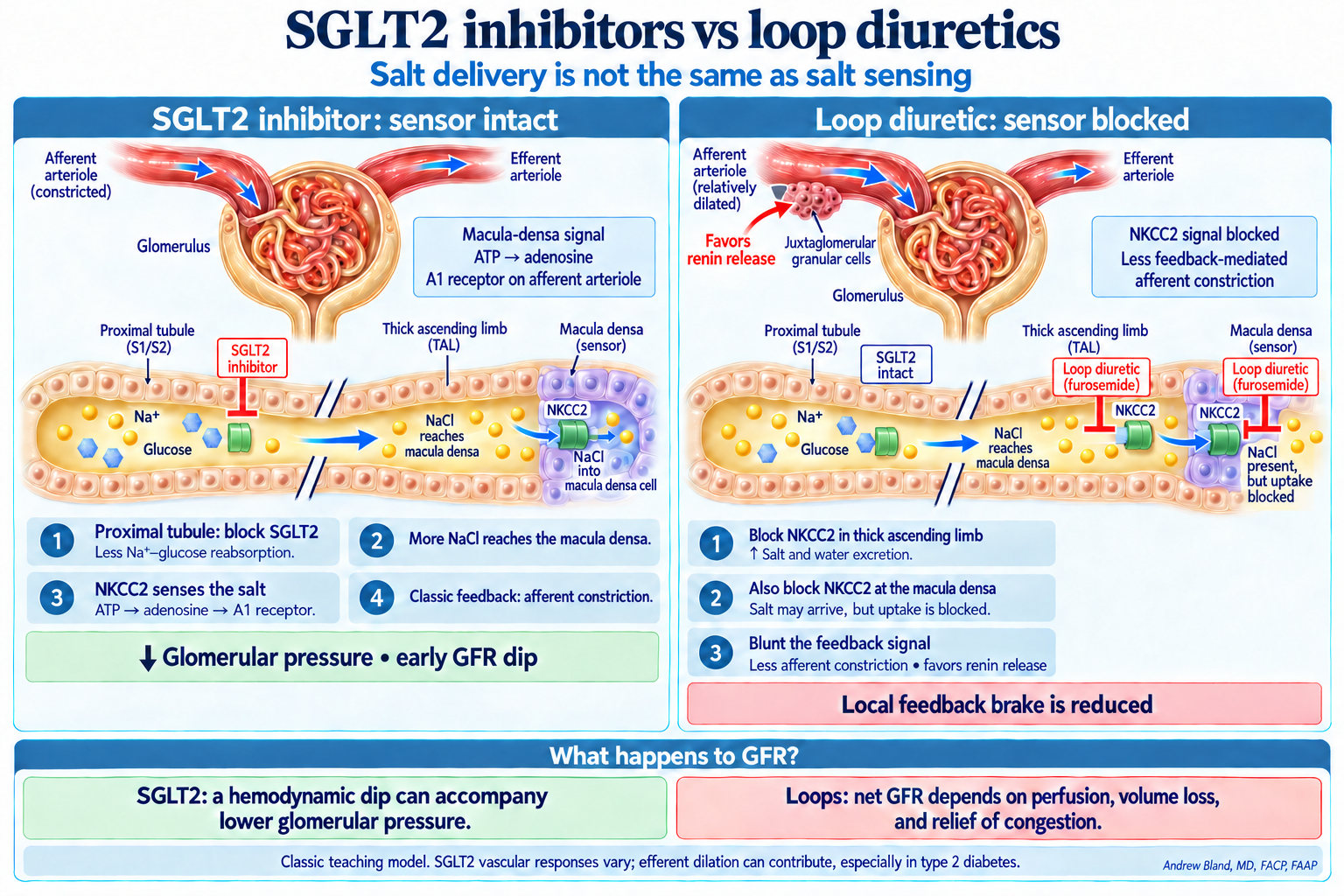
- Afferent constriction (NSAIDs, SGLT2i via TGF) → ↓PGC
- Efferent dilation (ACEi/ARB) → ↓PGC
- Systemic hypotension below autoregulatory range → ↓PGC
PBS — Bowman's Space Pressure
Opposes filtration. Normally ~15 mmHg.
- Elevated in urinary obstruction (BPH, stones, tumors)
- Tubular obstruction (cast nephropathy, crystal nephropathy)
- Interstitial edema compressing tubules
- Rarely significant unless obstruction is present
πGC — Glomerular Oncotic Pressure
Opposes filtration. Rises along the capillary length.
- At afferent end: ~25 mmHg (plasma protein concentration)
- As filtrate leaves, protein concentrates in remaining plasma
- At efferent end: may reach ~35 mmHg → filtration equilibrium
- Hypoalbuminemia (nephrotic syndrome, liver failure) → ↓πGC → may increase GFR transiently but does not increase net filtration long-term due to compensatory mechanisms
- Filtration fraction (FF) = GFR/RPF — higher FF means more rapid rise in oncotic pressure along the capillary
🎛️ Arteriolar Tone: The Master Controller of GFR
The afferent and efferent arterioles are the principal regulators of glomerular hemodynamics. Understanding their independent effects is the key to understanding drug effects on GFR.
| Change | RBF | PGC | GFR | FF | Clinical Example |
|---|---|---|---|---|---|
| Afferent Dilation | ↑↑ | ↑ | ↑ | ↓ or → | Prostaglandins (PGE₂/PGI₂), early DKD |
| Afferent Constriction | ↓↓ | ↓ | ↓ | → | NSAIDs, SGLT2i (via TGF), cyclosporine |
| Efferent Constriction | ↓ | ↑ | ↑ (mild) | ↑↑ | Angiotensin II |
| Efferent Dilation | ↑ | ↓ | ↓ | ↓ | ACEi/ARB (block Ang II) |
| Afferent Constriction + Efferent Dilation | ↓↓ | ↓↓↓ | ↓↓↓ | ↓ | Triple Whammy: NSAID + ACEi/ARB + Diuretic |
⚠️ The "Triple Whammy" — A Predictable Catastrophe
NSAID (afferent constriction) + ACEi/ARB (efferent dilation) ± Diuretic (volume depletion) → catastrophic loss of glomerular capillary pressure.
Teaching point: This is hemodynamic AKI — entirely predictable from first principles. Explore this in the interactive graphic above by selecting "NSAID + ARB (Triple Whammy)."
🛡️ Renal Autoregulation
The kidney maintains GFR across a wide range of systemic blood pressures through two mechanisms:
1. Myogenic Response
Afferent arteriolar smooth muscle contracts in response to increased intraluminal pressure (Bayliss effect).
- Rapid response (seconds)
- Intrinsic vascular smooth muscle property
- Protects glomerulus from hypertensive injury
- Impaired in diabetes → permits barotrauma → hyperfiltration injury
2. Tubuloglomerular Feedback (TGF)
The macula densa of the JGA senses NaCl delivery to the distal tubule and adjusts afferent arteriolar tone.
- ↑NaCl delivery → adenosine release → afferent constriction → ↓GFR
- ↓NaCl delivery → ↓adenosine → afferent dilation → ↑GFR
- Also modulates renin release from JGA granular cells
- SGLT2 inhibitors restore TGF: by blocking proximal Na/glucose reabsorption → ↑NaCl at macula densa → afferent constriction → ↓PGC → nephroprotection
📊 Autoregulatory Range
GFR remains relatively constant between MAP of ~80–180 mmHg. Below this range, GFR falls linearly with pressure. NSAIDs and calcineurin inhibitors impair autoregulation, making the kidney more vulnerable to hypotension.
In CKD, the autoregulatory curve shifts rightward — patients become "dependent" on higher perfusion pressures and are more vulnerable to hypotension-induced AKI.
🔥 Hyperfiltration — When GFR Is Too High
Paradoxically, an elevated GFR is one of the earliest markers of progressive kidney disease. This is the physiology that drives diabetic kidney disease.
Mechanism in Diabetes (Early DKD)
- Hyperglycemia → ↑proximal tubular glucose/Na reabsorption via SGLT2
- ↓NaCl delivery to macula densa → TGF interprets this as "low GFR"
- TGF response: afferent dilation + Ang II-mediated efferent constriction
- Result: markedly elevated PGC (~78 mmHg vs normal 60 mmHg)
- High PGC → elevated shear stress → podocyte injury
- Podocyte foot process effacement → slit diaphragm widening → albuminuria
- Tubular exposure to filtered albumin → tubular injury → interstitial fibrosis
✅ Therapeutic Targets
Modern nephroprotection directly targets glomerular hemodynamics:
- ACEi/ARB: Efferent dilation → ↓PGC → ↓albuminuria 40–50%
- SGLT2i: Restores TGF → afferent constriction → ↓PGC → ↓albuminuria 30–40%
- Finerenone (MRA): Anti-fibrotic + anti-inflammatory → ↓albuminuria 30%
- GLP-1 RA: Additional nephroprotection via hemodynamic and metabolic pathways
The initial GFR "dip" seen with ACEi/ARBs and SGLT2i is hemodynamic (reducing PGC) and is a sign of nephroprotection, not injury — as long as it is modest (<30%) and stabilizes.
🧬 The Three Fates of Creatinine
Creatinine is a 113-dalton molecule produced from the non-enzymatic degradation of creatine and phosphocreatine in skeletal muscle at a nearly constant rate (~20 mg/kg/day). It is handled by the kidney in three ways:
1️⃣ Glomerular Filtration (~85–90%)
Creatinine is freely filtered at the glomerulus — it is small (113 Da), not protein-bound, and not charged. This is why it serves as a GFR marker. At steady state, the amount filtered ≈ the amount excreted.
This is the dominant pathway and is the basis for all eGFR equations.
2️⃣ Tubular Secretion (~10–15%)
Creatinine is actively secreted by the proximal tubule via the organic cation transporter 2 (OCT2) on the basolateral membrane, and MATE1/MATE2-K on the apical membrane.
Because of secretion, creatinine clearance (CrCl) overestimates true GFR by ~10–15%. This becomes proportionally more significant as GFR falls.
3️⃣ Tubular Reabsorption (minimal in health)
Under normal conditions, creatinine reabsorption is negligible. However, at very low urine flow rates (severe dehydration, prerenal states), back-diffusion of creatinine from the tubular lumen into peritubular capillaries can occur.
This is why CrCl may falsely underestimate GFR in severely volume-depleted patients — more creatinine leaks back.
📊 Why This Matters Clinically
At normal GFR, tubular secretion contributes ~10–15% of total creatinine excretion, so CrCl only slightly overestimates GFR. But as GFR declines in CKD, tubular secretion becomes a proportionally larger share of total creatinine clearance — meaning CrCl may overestimate true GFR by 50% or more in advanced CKD. This is one reason eGFR equations were developed to replace CrCl.
💊 Drugs That Raise Creatinine WITHOUT Changing GFR
These medications inhibit tubular secretion of creatinine at OCT2 or MATE transporters, causing serum creatinine to rise even though GFR is unchanged. This is a pseudo-AKI that must be recognized.
| Drug | Brand/Class | Mechanism | Expected ΔCr | Clinical Pearl |
|---|---|---|---|---|
| Trimethoprim | Bactrim (TMP-SMX) | Blocks OCT2 and MATE1 → inhibits Cr secretion | ↑ 0.2–0.5 mg/dL | Most common clinical scenario. Dose-dependent. Reversible on discontinuation. |
| Cimetidine | Tagamet (H2 blocker) | Competitive inhibitor of OCT2 → blocks Cr secretion | ↑ 0.2–0.4 mg/dL | Historically used therapeutically to block Cr secretion when measuring CrCl to better approximate true GFR. |
| Triamterene | Dyrenium (K-sparing diuretic) | Inhibits tubular Cr secretion | ↑ 0.1–0.3 mg/dL | Less commonly used today. Also seen with amiloride to lesser degree. |
| Dolutegravir | Tivicay (INSTI for HIV) | Inhibits OCT2 → blocks Cr secretion | ↑ 0.1–0.2 mg/dL | Consistent effect seen in clinical trials. Occurs within first 2–4 weeks and stabilizes. GFR unaffected. |
| Cobicistat | CYP3A4 booster (HIV regimens) | Inhibits MATE1 → blocks Cr secretion | ↑ 0.1–0.3 mg/dL | Seen with all cobicistat-containing HIV regimens. Predictable, stable rise. |
| Dronedarone | Multaq (antiarrhythmic) | Inhibits tubular Cr secretion | ↑ 0.1 mg/dL | Mild effect. Stabilizes within a week. |
| Fenofibrate | Tricor (fibrate) | Increases creatinine production AND may inhibit secretion | ↑ 0.1–0.2 mg/dL | Paradoxically may also have renal-protective properties in DKD. |
✅ How to Recognize Pseudo-AKI
- Cr rises modestly (0.1–0.5 mg/dL) after starting the drug
- Rise occurs within days to 2 weeks and then stabilizes
- Patient is clinically well — no oliguria, no symptoms
- Urine sediment is bland
- If available, cystatin C will be unchanged (not affected by tubular secretion)
- Cr returns to baseline on drug discontinuation
⚠️ The Clinical Danger
Misinterpreting a Trimethoprim-induced Cr rise as true AKI can lead to unnecessary drug discontinuation, needless imaging, inappropriate fluid boluses, or even nephrology consultation for a non-existent problem. Conversely, assuming a Cr rise is from the drug when true AKI is occurring is equally dangerous.
Key: Pattern recognition + cystatin C confirmation when uncertain.
📝 The Historical Cimetidine Trick
Before modern eGFR equations, clinicians sometimes administered cimetidine prior to a timed urine collection to block tubular creatinine secretion. This made CrCl a better approximation of true GFR (since the secreted component was eliminated). While this practice is largely obsolete, it beautifully illustrates that creatinine clearance = filtration + secretion, and that blocking secretion brings CrCl closer to GFR.
⚖️ Non-GFR Factors That Affect Serum Creatinine
Remember: serum creatinine at steady state = production / excretion. Anything that changes production or non-GFR excretion changes creatinine without changing GFR.
↑ Increased Creatinine (Without ↓GFR)
- High muscle mass — bodybuilders, young muscular males
- High-meat diet — particularly cooked red meat (contains creatine → creatinine)
- Creatine supplements — directly increases substrate for creatinine production
- Drugs inhibiting secretion — Trimethoprim, Cimetidine, etc. (see above)
- Rhabdomyolysis — massive release from damaged muscle (though GFR often falls too)
↓ Decreased Creatinine (Without ↑GFR)
- Low muscle mass — elderly, cachectic, amputees, paraplegia
- Vegetarian diet — less dietary creatine intake
- Liver disease — impaired creatine synthesis (creatine is made in the liver)
- Pregnancy — increased plasma volume (dilution) + increased GFR (40–50%)
- Malnutrition — sarcopenia and reduced creatinine production
⚠️ The Sarcopenia Trap
An elderly, frail patient with a serum creatinine of 1.0 mg/dL may have a true GFR of only 30–40 mL/min. Their low muscle mass generates so little creatinine that even severe renal impairment cannot raise it above the "normal range." This is why eGFR equations incorporate age and sex — but they still may overestimate GFR in cachectic patients.
Clinical pearl: Always interpret creatinine in the context of the patient's body habitus and muscle mass. A "normal" creatinine in a small, elderly patient is not reassuring.
📉 Limitations of eGFR
The estimated GFR is a regression equation derived from populations with stable kidney function. It has important limitations.
CKD-EPI 2021 Equation
- Uses creatinine, age, and sex
- Removed race coefficient (2021 update)
- Most accurate for stable CKD
- Validated for eGFR 15–90 mL/min/1.73m²
CKD-EPI Cystatin C (or Combined)
- Cystatin C is not affected by muscle mass, diet, or tubular secretion
- More accurate in extremes of body composition
- Combined creatinine-cystatin C equation is the most accurate
- Recommended by KDIGO when confirmatory testing is needed
When eGFR Fails — Known Limitations
| Limitation | Explanation | Solution |
|---|---|---|
| Non-steady state (AKI) | Creatinine is changing — eGFR formula assumes stability. In AKI, eGFR dramatically overestimates true GFR. | Do not use eGFR in AKI. Follow Cr trends. See AKI module. |
| Extremes of body size | Very muscular or very cachectic patients have abnormal creatinine production. | Use cystatin C–based eGFR or 24-hour CrCl. |
| Drugs affecting Cr secretion | Trimethoprim, cimetidine, dolutegravir → false ↑Cr → false ↓eGFR. | Recognize pattern. Confirm with cystatin C. |
| High-protein diet / creatine supplements | Increased creatinine production → false ↑Cr → false ↓eGFR. | Dietary history. Cystatin C if uncertain. |
| Extremes of age | Not well validated in very young or very elderly (>85 years). | Clinical judgment. Combined equation. |
| Pregnancy | GFR increases 40–50% in pregnancy; normal values differ. | eGFR equations not validated in pregnancy. Use measured CrCl. |
| Amputees / Paraplegia | Markedly reduced muscle mass → low Cr production → falsely high eGFR. | Cystatin C essential. Do not rely on creatinine-based eGFR. |
| Hyperfiltration | High eGFR (>120) may represent early DKD, not health. | Check ACR. Evaluate for hyperfiltration etiology. |
⏱️ Creatinine Kinetics & the AKI Disconnect
The rate of rise of serum creatinine is disconnected from the actual GFR in AKI. This is a foundational concept covered in our AKI module. Here we expand on the why.
The Steady-State Assumption
At steady state: Creatinine production = Creatinine excretion. Serum Cr is constant. eGFR is valid.
When GFR abruptly drops (AKI), production continues at the same rate (~20 mg/kg/day from muscle), but excretion falls. Creatinine accumulates — but it takes time to accumulate enough to raise serum levels.
Why 3–5 Days?
Think of creatinine like filling a bathtub with a constant-rate faucet (production) and a partially closed drain (reduced GFR). The tub fills gradually, not instantly.
The time constant ≈ volume of distribution / new clearance rate. At normal body water (~42L) and severely reduced clearance, it takes ~3–5 half-lives to reach a new steady state — roughly 3–5 days.
📊 Clinical Implications Reviewed
- Day 0 of complete renal failure: GFR = 0, but Cr may still be 1.0 mg/dL and eGFR = 90
- Day 1: GFR = 0, Cr = 2.0, eGFR ≈ 38 — still dramatically wrong
- Day 3–5: Cr finally plateaus near 8–12 mg/dL and eGFR "catches up"
- The maximum rate of rise of creatinine in anuric patients is approximately 1.0–1.5 mg/dL per day (depending on muscle mass)
- A Cr rise of only 0.3 mg/dL in 48 hours (KDIGO Stage 1) may represent a massive GFR drop
- Declining Cr after AKI does NOT mean GFR has normalized — it means creatinine is being cleared faster than it is being produced, but the system may not yet be at steady state
📊 BUN/Creatinine Ratio — Context Matters
BUN (blood urea nitrogen) and creatinine are both markers of kidney function, but they are handled differently by the kidney:
Creatinine
- Freely filtered + secreted
- Not significantly reabsorbed
- Production relatively constant
BUN (Urea)
- Freely filtered
- Significantly reabsorbed (40–60%), especially in volume-depleted states under ADH influence
- Production varies with protein intake, GI bleeding, steroids, catabolic states
| BUN/Cr Ratio | Interpretation | Common Causes |
|---|---|---|
| 10:1 – 20:1 | Normal | Normal renal function |
| >20:1 | Prerenal pattern (BUN rises disproportionately) | Volume depletion, CHF, GI bleed, high-protein diet, steroids, catabolic states |
| <10:1 | Intrinsic renal damage or decreased urea production | ATN, rhabdomyolysis (Cr disproportionately elevated), liver failure (low BUN production), low-protein diet |
🧪 Cystatin C — The Creatinine Complement
When creatinine cannot be trusted, cystatin C provides an independent GFR estimate.
✅ Advantages
- Produced by all nucleated cells at a constant rate
- Not affected by muscle mass, diet, or sex
- Not significantly secreted by tubules
- Freely filtered at the glomerulus
- Combined Cr-CysC equation is most accurate eGFR
⚠️ Limitations
- Affected by high-dose corticosteroids (↑ production)
- Thyroid dysfunction: hyperthyroid ↑, hypothyroid ↓ cystatin C
- Obesity and inflammation may affect levels
- More expensive and less widely available than creatinine
- Still has the same steady-state requirement for eGFR
🎯 When to Order Cystatin C
- Suspected drug-induced creatinine elevation (trimethoprim, dolutegravir)
- Extremes of body composition (amputees, bodybuilders, cachectic patients)
- eGFR near critical decision thresholds (e.g., 15 mL/min for dialysis planning, 45 for referral)
- Discrepancy between creatinine-based eGFR and clinical assessment
- KDIGO recommends confirmatory cystatin C testing when eGFR 45–59 without other markers of kidney damage
🏅 Measured GFR — The Gold Standard
Measured GFR (mGFR) using exogenous filtration markers provides the most accurate assessment. The ideal marker is freely filtered, not reabsorbed, not secreted, not metabolized, and not protein-bound.
Inulin Clearance
Historical gold standard. Fructose polymer meeting all ideal filtration marker criteria. Requires continuous IV infusion, timed urine collections, and multiple blood samples — impractical for routine use.
Iohexol Plasma Clearance
Non-ionic, non-radioactive contrast agent. Single injection + plasma sampling. Excellent correlation with inulin. Preferred in many centers. Used in the landmark Stockholm cohort studies.
Nuclear Medicine (⁹⁹ᵐTc-DTPA, ⁵¹Cr-EDTA)
Radioactive markers with similar accuracy. ¹²⁵I-iothalamate used in many US research centers. Avoid timed urine collections with plasma clearance techniques.
📜 Evolution of Creatinine-Based eGFR Equations
Understanding the evolution of equations helps appreciate their limitations and appropriate application.
| Equation | Year | Variables | Limitations | Status |
|---|---|---|---|---|
| Cockcroft-Gault | 1976 | Age, weight, sex, Cr | Estimates CrCl (not GFR). Not standardized to BSA. Overestimates in obesity. | Largely replaced |
| MDRD | 1999 | Age, sex, race, Cr | Developed in CKD population. Systematically underestimates GFR >60. Race coefficient. | Replaced |
| CKD-EPI 2009 | 2009 | Age, sex, race, Cr | Improved accuracy at higher GFR. Still included race coefficient. | Replaced |
| CKD-EPI 2021 | 2021 | Age, sex, Cr | Race-free. Now standard for clinical reporting. ~87–88% P30 accuracy. | Current Standard |
| CKD-EPI 2012 CysC | 2012 | Age, sex, Cystatin C | Race-free. More accurate in extremes of body composition. Affected by steroids, thyroid, inflammation. | Confirmatory |
| CKD-EPI 2021 Cr-CysC | 2021 | Age, sex, Cr, Cystatin C | Race-free. ~91–92% P30 accuracy. Most accurate available equation. | Most Accurate |
📊 Comprehensive: What Makes eGFR Wrong?
Beyond the basics covered above, here are systematic tables of all conditions that cause eGFRcr and eGFRcys to deviate from measured GFR.
Conditions Where eGFRcr OVERESTIMATES True GFR (Falsely Reassuring)
| Condition | Mechanism | Clinical Significance |
|---|---|---|
| Sarcopenia / Low muscle mass | ↓Cr generation | Common in elderly, chronic illness; may mask CKD |
| Cachexia / Wasting | Severe ↓muscle mass | Cancer, HF, COPD; significantly overestimates GFR |
| Amputations | Proportional loss of muscle | Cystatin C essential for accurate assessment |
| Paraplegia / Quadriplegia | Atrophy and denervation | May have very low Cr despite significant CKD |
| Advanced cirrhosis | ↓Hepatic creatine synthesis + muscle wasting + ↑tubular secretion | eGFRcr very unreliable; use CysC or measured GFR |
| Vegetarian / Low-protein diet | ↓Dietary creatine | May lower Cr by 10–15% |
| Advanced CKD (GFR <15–20) | ↑↑Tubular secretion (up to 50% of excretion); extrarenal clearance via gut creatininase | eGFRcr may overestimate true GFR by 20–30% in Stage 5 |
| Pregnancy | ↑GFR, ↑plasma volume, ↑tubular secretion | Equations not validated; use measured CrCl |
Conditions Where eGFRcr UNDERESTIMATES True GFR (Falsely Alarming)
| Condition | Mechanism | Clinical Significance |
|---|---|---|
| High muscle mass / Bodybuilders | ↑Cr generation | May appear to have CKD when GFR is normal |
| High dietary meat intake | Exogenous Cr from cooked meat | Acute Cr increase post-meal |
| Creatine supplements | Direct Cr precursor | Common in athletes |
| Trimethoprim, Cimetidine, Cobicistat, Dolutegravir, Dronedarone | Inhibit OCT2/MATE tubular secretion | Reversible; establish new baseline after 2–4 weeks |
| Fenofibrate | ↑Cr production + ↓secretion | Reversible; may also be nephroprotective |
| Jaffe assay interference | Chromogens (bilirubin, ketones) react with picrate | Use enzymatic assay for specificity |
| DKA | Acetoacetate interferes with Jaffe reaction | Falsely ↑Cr during DKA; resolves with treatment |
| Acute rhabdomyolysis | Massive Cr release from damaged muscle | Cr may rise before AKI develops |
Factors Affecting Cystatin C–Based eGFR
eGFRcys UNDERESTIMATES GFR (↑CysC)
- Hyperthyroidism — ↑cellular metabolic rate (62% have elevated CysC)
- Glucocorticoids — stimulate CysC gene expression (dose-dependent)
- Obesity (Class II–III) — ↑production from adipose + inflammation
- Systemic inflammation / High CRP — sepsis, autoimmune disease
- Malignancy — ↑cell turnover (especially hematologic)
- HIV (uncontrolled) — immune activation
- Smoking, diabetes, heart failure — chronic low-grade inflammation
eGFRcys OVERESTIMATES GFR (↓CysC)
- Hypothyroidism — ↓cellular production (eGFRcys ↑ when treated)
- Some immunosuppressive therapy — variable effect
- Much fewer confounders than Cr in this direction
📈 The eGFRcys / eGFRcr Ratio — Beyond GFR Estimation
When both markers are measured, their ratio provides diagnostic and prognostic information beyond either marker alone. A ratio <0.7 independently predicts mortality.
🔬 Shrunken Pore Syndrome
First described in 2015, SPS is defined by an eGFRcys/eGFRcr ratio below 0.60–0.70 in the absence of known confounders (steroids, sarcopenia). The syndrome reflects selective impairment of filtration of mid-sized molecules (10–30 kDa, including cystatin C at 13 kDa) while preserving filtration of smaller molecules (creatinine at 113 Da).
SPS is associated with hazard ratios of 3.0–7.3 for mortality depending on the population studied. The 2024 KDIGO guidelines recommend measuring both markers; the ratio adds prognostic information beyond GFR alone.
💡 Prognostic Value Beyond GFR Accuracy
The CKD Prognosis Consortium meta-analysis (JAMA 2025) showed individuals with eGFRcys at least 30% lower than eGFRcr had significantly higher risks of all-cause mortality, cardiovascular mortality, heart failure hospitalization, and kidney failure — even after adjusting for eGFRcr and albuminuria. The ratio captures cardiovascular/metabolic health information beyond filtration function.
🎯 When Markers Disagree: Which Is Closer to Truth?
Evidence from the Stockholm Iohexol Cohort (Fu et al., JASN 2023)
6,185 adults with 9,404 concurrent measurements of creatinine, cystatin C, and iohexol plasma clearance — including patients with CVD, HF, diabetes, liver disease, and cancer.
Key Finding: When eGFRcys < eGFRcr, Creatinine Has the Larger Error
In the 47% of samples where eGFRcys was >20% lower than eGFRcr (the common cardiorenal pattern):
- Creatinine overestimated true GFR by +15.0 mL/min/1.73m²
- Cystatin C underestimated by only −8.5 mL/min/1.73m²
- Combined equation (eGFRcr-cys) bias: only +0.8 mL/min/1.73m²
Creatinine's error was nearly TWICE the magnitude of cystatin C's error.
Performance Metrics by Discordance Pattern
| Metric | eGFRcys < eGFRcr (47%) | eGFRcys ≈ eGFRcr (45%) | eGFRcys > eGFRcr (8%) |
|---|---|---|---|
| Median mGFR (iohexol) | 47 | 71 | 74 |
| Median eGFRcr | 62 (overestimates) | 73 | 67 |
| Median eGFRcys | 38 | 71 | 83 |
| Median eGFRcr-cys | 49 (closest to 47) | 72 | 75 |
| eGFRcr Bias (eGFR − mGFR) | +15.0 | +3.0 | −4.5 |
| eGFRcys Bias | −8.5 | −2.0 | +8.4 |
| eGFRcr-cys Bias | +0.8 | +0.5 | +1.4 |
| P30 (eGFRcr) | 50% | 88% | 70% |
| P30 (eGFRcys) | 73% | 89% | 66% |
| P30 (eGFRcr-cys) | 84% | 93% | 84% |
| Correct CKD Stage (eGFRcr) | 38% | 68% | 61% |
| Correct CKD Stage (eGFRcr-cys) | 62% | 74% | 72% |
P30 = proportion of estimates within 30% of measured GFR. Bias = median (eGFR − mGFR) in mL/min/1.73m². Data: Fu et al., JASN 2023.
Why Creatinine Overestimates in Cardiorenal Patients
In HF, diabetes with complications, cancer, and advanced age, muscle mass is frequently reduced (sarcopenia, cardiac cachexia). Less muscle → less creatinine → equations interpret low Cr as preserved GFR. The patient has both reduced muscle mass AND reduced kidney function.
The Reframing
When eGFRcys is substantially lower than eGFRcr in a cardiorenal patient, do not assume cystatin C is wrong. mGFR-validated data shows creatinine is typically further from truth. Use eGFRcr-cys. The patient likely has more kidney disease than creatinine suggests.
📉 Creatinine Sensitivity at Low GFR: The Advanced CKD Paradox
In patients with GFR below 20 mL/min/1.73m², several factors cause creatinine-based equations to systematically overestimate true GFR:
- ↑Tubular secretion — accounts for up to 50% of urinary creatinine excretion in advanced CKD (vs. 10–15% at normal GFR)
- Extrarenal clearance — gut bacterial creatininase becomes clinically significant
- Sarcopenia and cachexia — common in advanced CKD, reducing creatinine generation
👥 Special Populations
Elderly Patients
Age-related sarcopenia reduces Cr generation → eGFRcr overestimates. Combined with age-related GFR decline, this masks significant CKD. eGFRcr-cys is preferred when accuracy matters.
Cirrhosis
↓Hepatic creatine synthesis + muscle wasting + ↑tubular secretion → eGFRcr markedly overestimates. CysC performs better but may be affected by inflammation. Measured GFR with iohexol recommended for liver transplant evaluation.
Kidney Transplant Recipients
Altered Cr metabolism from immunosuppressants + prior chronic illness muscle loss. CysC may be affected by glucocorticoids early post-transplant. Combined equation preferred; interpret trends over time.
Acute Kidney Injury
Neither Cr nor CysC equations are validated in AKI. Both lag behind true GFR changes. Interpret absolute values and trends — not calculated eGFR. See our AKI module.
💰 Cystatin C: Cost, Availability & Coverage
Laboratory Costs
- CysC reagent: ~$5–10/test
- Creatinine reagent: ~$0.50/test
- Cost differential decreasing with ↑test volumes
Medicare Coverage (CPT 82610)
- Reimbursement: ~$18.52/test
- Requires documentation of medical necessity
- Coverage criteria: uncertain eGFRcr range, known Cr confounders, or management impact
🧭 Clinical Approach to GFR Assessment
- Start with eGFRcr (CKD-EPI 2021) — appropriate for routine monitoring in stable patients without known confounders.
- Add cystatin C (calculate eGFRcr-cys) when: eGFRcr is near decision thresholds (60, 45, 30, 15), Cr reliability is in question (sarcopenia, cirrhosis, drug effects), clinical findings are discordant with eGFRcr, or accurate GFR is needed for drug dosing.
- Calculate the eGFRcys/eGFRcr ratio when both markers are available. Ratio <0.7 warrants investigation for sarcopenia, steroid use, or Shrunken Pore Syndrome, and conveys independent prognostic information.
- Consider measured GFR (iohexol/iothalamate clearance) for living kidney donor evaluation, when both eGFR markers are unreliable, or when the highest accuracy is required.
- Always interpret in clinical context. 80–90% of eGFR values fall within 30% of measured GFR — meaning 10–20% of patients will have significant discrepancies. No equation is infallible.
📋 High-Yield Summary: Most vs. Some
MOST Changes in Cr = GFR Changes
- AKI (prerenal, intrinsic, postrenal)
- CKD progression
- Hemodynamic changes (ACEi/ARB, NSAIDs, SGLT2i)
- Volume depletion / overload
- Sepsis, cardiorenal syndrome
→ These are true GFR changes and warrant clinical action.
SOME Changes in Cr ≠ GFR Changes
- Drugs blocking Cr secretion (TMP, cimetidine, dolutegravir, triamterene)
- Changes in muscle mass / diet
- Creatine supplements
- Rhabdomyolysis (massive Cr release from muscle)
- Lab interference (e.g., high bilirubin, ketoacidosis with Jaffe assay)
→ These are "pseudo" changes. Use cystatin C, clinical context, and drug history to differentiate.
🎓 Key Learning Points
- GFR is determined by Kf × (PGC − PBS − πGC). Afferent and efferent arteriolar tone are the principal regulators of PGC.
- Creatinine is handled three ways: filtered (~85–90%), secreted (~10–15% via OCT2/MATE), and minimally reabsorbed.
- Because of secretion, CrCl overestimates GFR — this error grows as GFR falls (up to 50% of Cr excretion via secretion in Stage 5 CKD).
- Multiple drugs (trimethoprim, cimetidine, triamterene, dolutegravir, cobicistat, dronedarone) raise creatinine by blocking tubular secretion, not by reducing GFR.
- Muscle mass, diet, and supplements alter creatinine production independent of GFR. A "normal" creatinine in a sarcopenic patient may mask severe CKD.
- eGFR assumes steady state — it is invalid in AKI, where the rate of rise of Cr is disconnected from the actual GFR.
- The CKD-EPI 2021 race-free equation is the current standard. The combined eGFRcr-cys equation is the most accurate (~91–92% P30).
- Cystatin C provides an independent GFR estimate. When eGFRcys < eGFRcr in cardiorenal patients, creatinine is typically further from truth than cystatin C (Stockholm cohort).
- The eGFRcys/eGFRcr ratio <0.7 independently predicts mortality, even after adjusting for eGFR and albuminuria.
- Hyperfiltration (elevated PGC) drives early DKD — ACEi/ARBs and SGLT2 inhibitors are nephroprotective because they reduce PGC.
- The "Triple Whammy" (NSAID + ACEi/ARB + diuretic) is a predictable hemodynamic catastrophe.
- Most changes in creatinine reflect GFR changes — but the clinician must recognize the exceptions.
📚 References
- Levey AS, Stevens LA, Schmid CH, et al. A new equation to estimate glomerular filtration rate. Ann Intern Med. 2009;150(9):604-612. PubMed
- Stevens LA, Coresh J, Greene T, et al. Assessing kidney function--measured and estimated glomerular filtration rate. N Engl J Med. 2006;354(23):2473-2483. PubMed
- Inker LA, Eneanya ND, Coresh J, et al. New Creatinine- and Cystatin C-Based Equations to Estimate GFR without Race. N Engl J Med. 2021;385(19):1737-1749. PubMed
- Delgado C, Baweja M, Crews DC, et al. A Unifying Approach for GFR Estimation: Recommendations of the NKF-ASN Task Force on Reassessing the Inclusion of Race in Diagnosing Kidney Disease. J Am Soc Nephrol. 2021;32(12):2994. PubMed
- Levey AS, Coresh J, Tighiouart H, et al. Measured and estimated glomerular filtration rate: current status and future directions. Nat Rev Nephrol. 2020;16(1):51-64. PubMed
- Soveri I, Berg UB, Björk J, et al. Measuring GFR: a systematic review. Am J Kidney Dis. 2014;64(3):411-424. PubMed
- Shlipak MG, Matsushita K, Ärnlöv J, et al. Cystatin C versus creatinine in determining risk based on kidney function. N Engl J Med. 2013;369(10):932. PubMed
- Inker LA, Schmid CH, Tighiouart H, et al. Estimating glomerular filtration rate from serum creatinine and cystatin C. N Engl J Med. 2012;367(1):20-29. PubMed
- Kidney Disease: Improving Global Outcomes (KDIGO) CKD Work Group. KDIGO 2024 Clinical Practice Guideline for the Evaluation and Management of Chronic Kidney Disease. Kidney Int. 2024;105(4S):S117. PubMed
- Grubb A, Lindström V, Jonsson M, et al. Reduction in glomerular pore size is not restricted to pregnant women. Evidence for a new syndrome: 'Shrunken pore syndrome'. Scand J Clin Lab Invest. 2015;75(4):333-340. PubMed
- Purde MT, Nock S, Risch L, et al. Ratio of cystatin C and creatinine-based estimates of the glomerular filtration rate predicts mortality in healthy seniors independent of kidney function. Scand J Clin Lab Invest. 2016;76(4):341-343. PubMed
- Shemesh O, Golbetz H, Kriss JP, et al. Limitations of creatinine as a filtration marker in glomerulopathic patients. Kidney Int. 1985;28(5):830-838. PubMed
- Delanaye P, Cavalier E, Pottel H. Serum Creatinine: Not So Simple!. Nephron. 2017;136(4):302-308. PubMed
- Fu EL, Levey AS, Coresh J, et al. Accuracy of GFR Estimating Equations in Patients with Discordances between Creatinine and Cystatin C-Based Estimations. J Am Soc Nephrol. 2023;34(7):1241-1251. PubMed
- Estrella MM, Ballew SH, Sang Y, et al. Discordance in Creatinine- and Cystatin C-Based eGFR and Clinical Outcomes: A Meta-Analysis. JAMA. 2025;334(21):1915. PubMed
- Heerspink HJL, Stefánsson BV, Correa-Rotter R, et al. Dapagliflozin in Patients with Chronic Kidney Disease. N Engl J Med. 2020;383(15):1436. PubMed
- The EMPA-KIDNEY Collaborative Group, Herrington WG, Staplin N, et al. Empagliflozin in Patients with Chronic Kidney Disease. N Engl J Med. 2023;388(2):117. PubMed
- Breyer MD, Harris RC. Cyclooxygenase 2 and the kidney. Curr Opin Nephrol Hypertens. 2001;10(1):89-98. PubMed
- Yu ASL, Chertow GM, Luyckx VA, et al., eds. Brenner & Rector’s The Kidney. 11th ed. Elsevier; 2020. Publisher.
- Francoz C, Glotz D, Moreau R, et al. The evaluation of renal function and disease in patients with cirrhosis. J Hepatol. 2010;52(4):605-613. PubMed
- Pinsino A, Carey MR, Husain S, et al. The Difference Between Cystatin C- and Creatinine-Based Estimated GFR in Heart Failure With Reduced Ejection Fraction: Insights From PARADIGM-HF. Am J Kidney Dis. 2023;82(5):521-533. PubMed