🌊 Hyponatremia Management
2024 Evidence-Based Approach with RIB Therapy & Emerging Treatments
Visual reference
Hyponatremia: follow the water
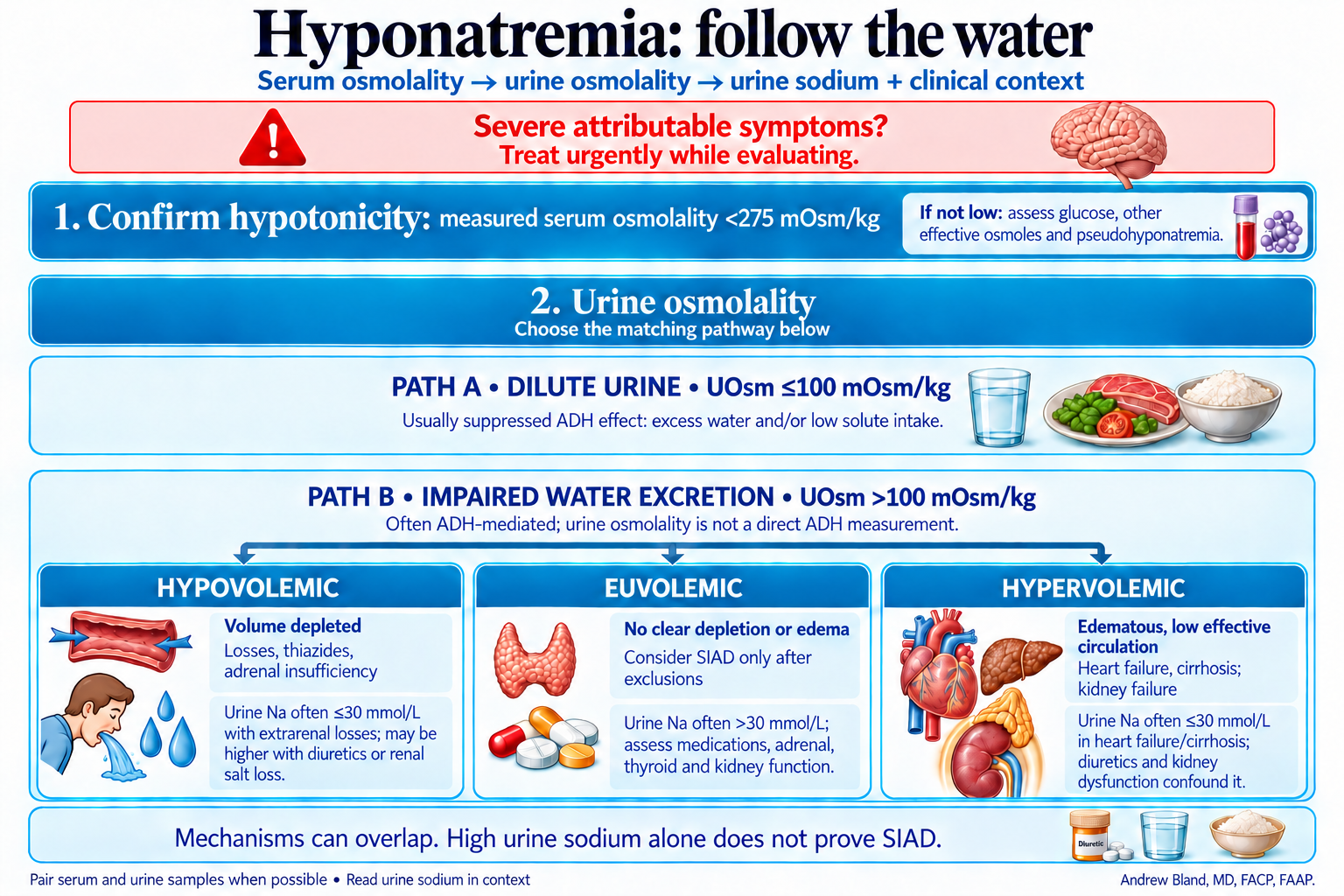
Follow the original lecture lanes: tonicity, urine dilution, then volume and urine sodium.
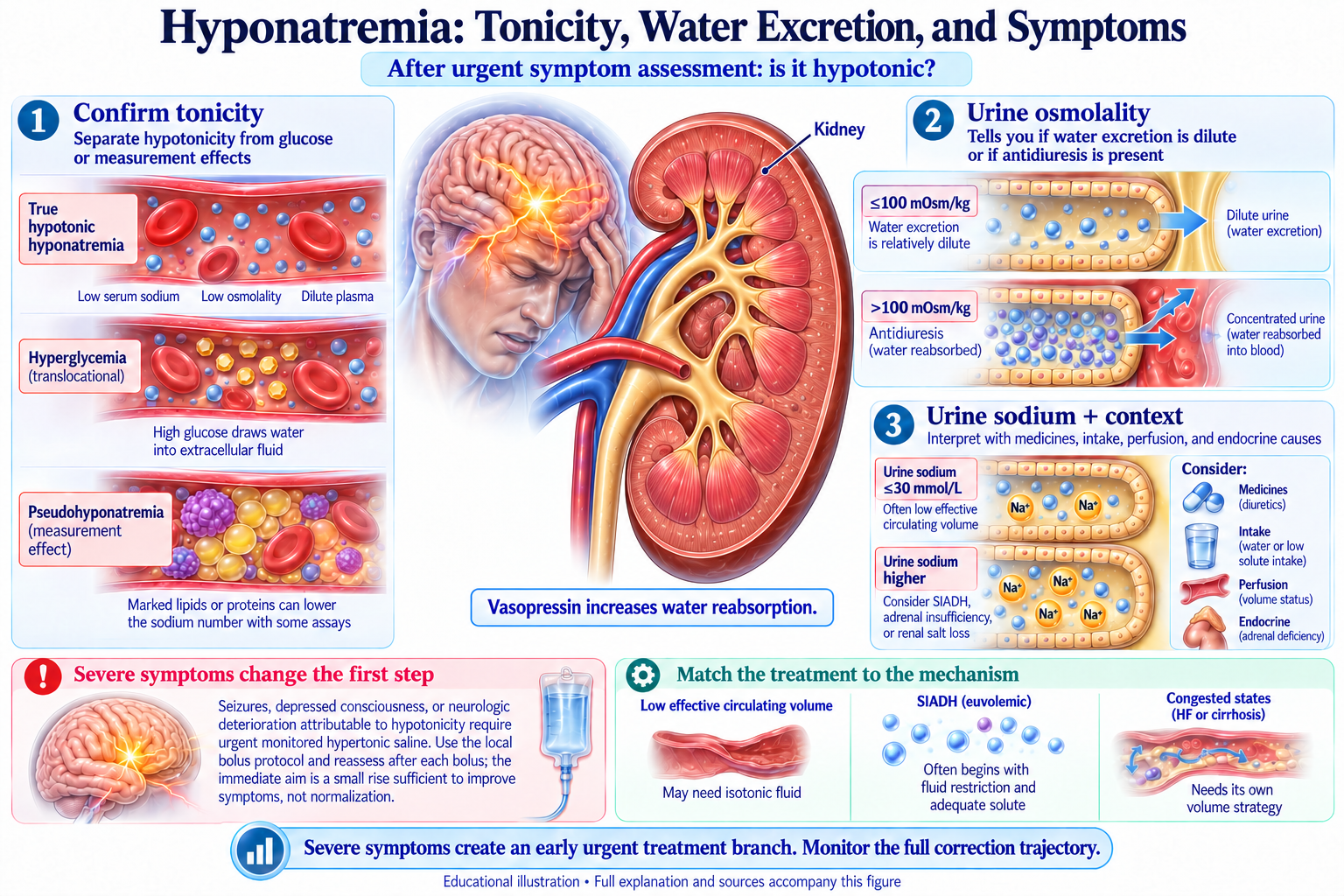
Confirm tonicity and identify urgent symptoms
Measured serum osmolality below 275 mOsm/kg confirms hypotonic hyponatremia. If it is not low, assess glucose, other osmoles and possible laboratory artifact; normal measured osmolality does not automatically prove pseudohyponatremia. Urea contributes to measured osmolality but little to effective tonicity. Obtain paired serum and urine samples when practical without delaying urgent care.
Choose the urine-osmolality pathway
Urine osmolality ≤100 mOsm/kg usually indicates appropriately suppressed ADH effect; consider excess water intake and low solute availability. Above 100, water excretion is impaired: follow the three volume lanes below. Urine osmolality is not a direct ADH assay, and thiazides or kidney dysfunction can impair dilution.
Hypovolemic lane
Look for losses, poor intake, orthostasis and weight loss. Urine sodium ≤30 mmol/L supports sodium conservation from low effective circulation; higher values may reflect diuretics, renal salt loss or adrenal insufficiency. A thiazide can raise urine sodium despite depletion.
Euvolemic lane
Consider SIAD when there is no convincing depletion or edema, but review medications and exclude adrenal insufficiency, relevant thyroid disease and impaired kidney function. Urine sodium often exceeds 30 mmol/L with adequate intake; that result alone does not establish SIAD.
Hypervolemic lane
Heart failure and cirrhosis can combine edema with low effective arterial circulation and persistent ADH release. Urine sodium is often low, but diuretics and kidney dysfunction complicate interpretation. Advanced kidney failure can also limit water excretion.
Apply the lanes to Case 2
Serum sodium 118 mEq/L with measured osmolality 248 mOsm/kg establishes hypotonicity. Urine osmolality 420 mOsm/kg shows impaired dilution. Urine sodium 55 mmol/L during thiazide use does not erase the clinical evidence of depletion. Thiazide exposure, low intake, nausea and ADH-mediated water retention can coexist.
Supporting evidence
Browse the visual reference library · Download lesson Markdown
Three routes to a sodium disorder
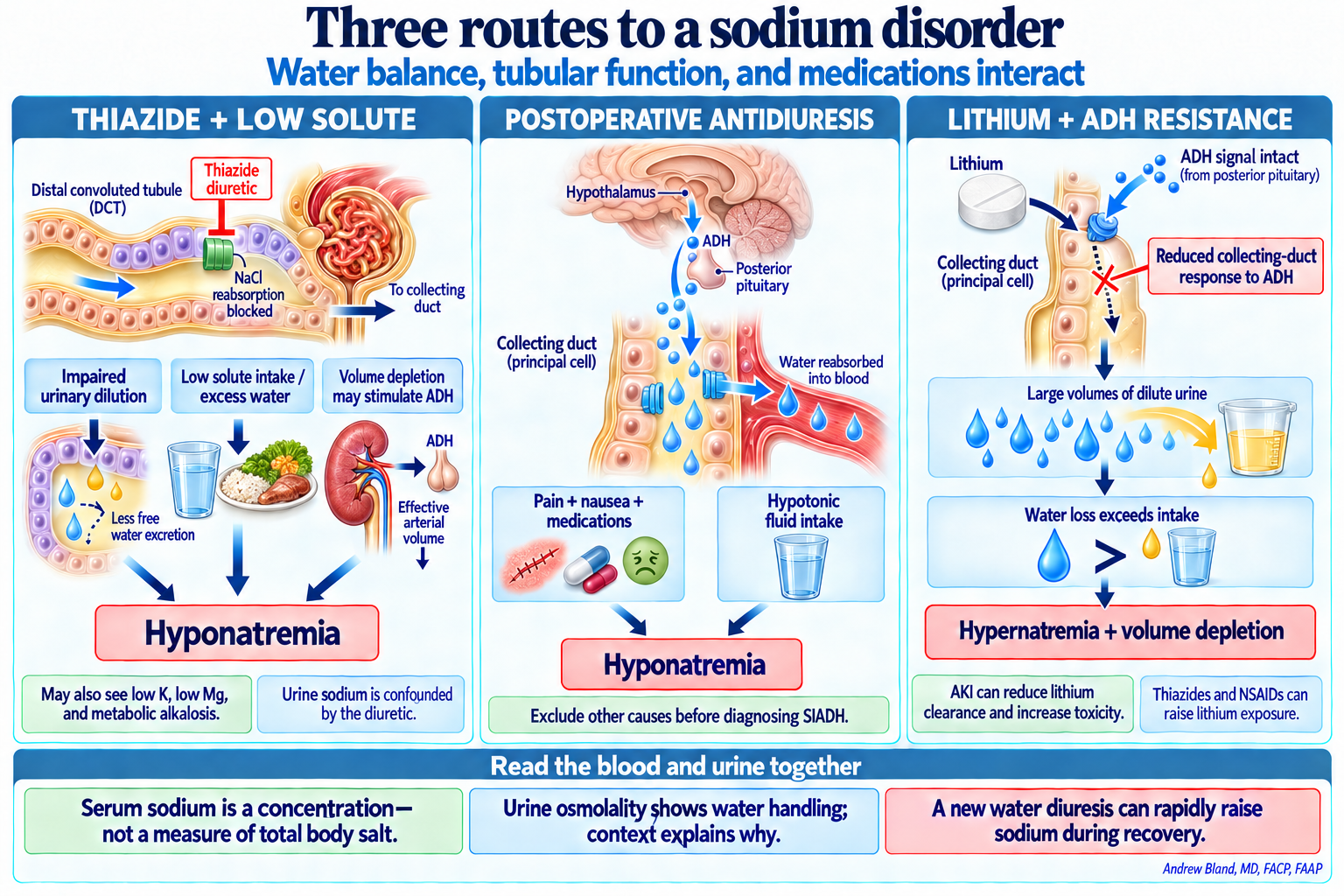
Compare thiazide-associated hyponatremia, postoperative antidiuresis, and lithium-associated ADH resistance.
ADH: How the Kidney Conserves Water
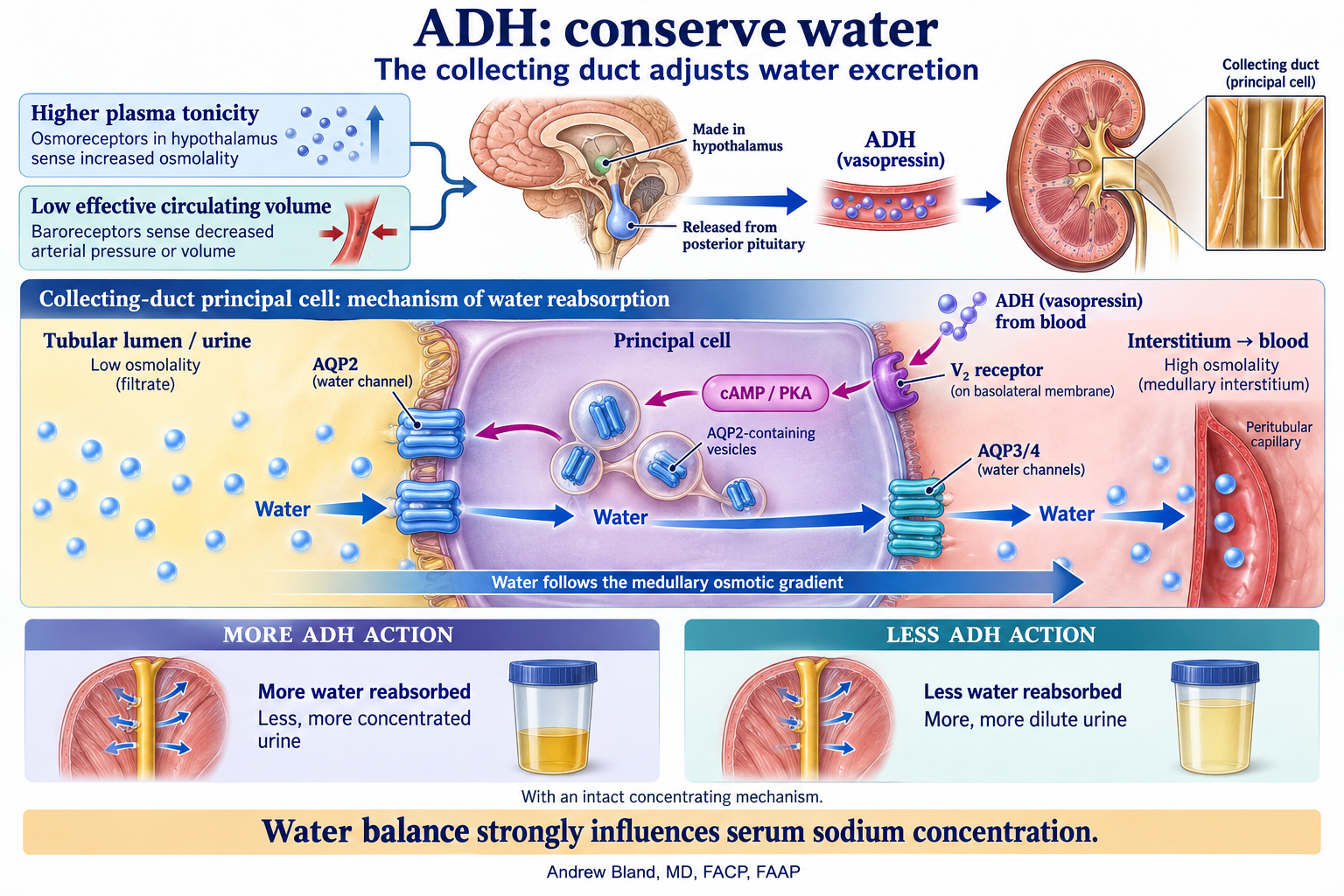
🔍 Etiology & Workup: The ADH-Centric Diagnostic Approach
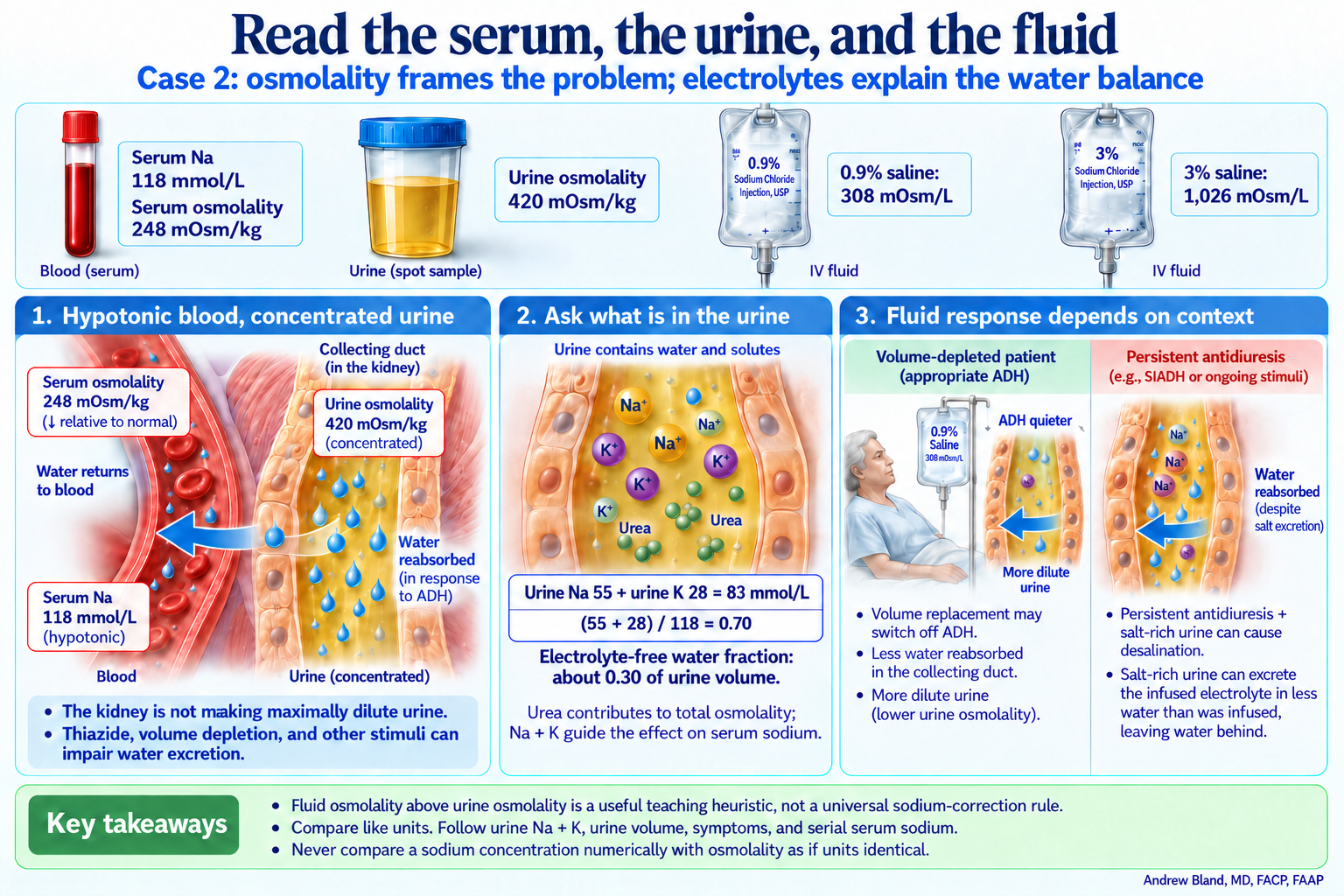
Case 2: osmolality frames the problem; electrolytes explain the water balance
Case 2: compare serum, urine and IV fluid without mixing units
Pair the specimens
Serum sodium 118 mEq/L and measured serum osmolality 248 mOsm/kg establish hypotonic hyponatremia. Urine osmolality 420 mOsm/kg shows that the kidney is not producing maximally dilute urine. The thiazide, volume depletion, nausea and other medications help explain the pattern; urine sodium alone does not diagnose SIAD.
Ask which solutes account for urine osmolality
Urine Na 55 + K 28 = 83 mEq/L. The urine-to-plasma electrolyte ratio is 83/118 = 0.70, giving electrolyte-free water clearance of about 0.30 × urine flow at this sampling point. Positive clearance can still be too small for the patient's water intake. Urea contributes to total urine osmolality but does not enter this electrolyte-free water calculation.
Compare like units and follow the response
Normal saline contains 154 mEq/L sodium and has an osmolarity near 308 mOsm/L; 3% saline contains 513 mEq/L sodium and is about 1,026 mOsm/L. Do not compare sodium concentration directly with osmolality. Fluid osmolality above urine osmolality is a useful heuristic, not a universal requirement for sodium to rise. With persistent antidiuresis, sufficiently electrolyte-rich urine can excrete the infused salt in less water than was infused, leaving water behind (desalination). In volume depletion, saline may instead suppress ADH and release a water diuresis. Follow serial serum sodium, urine Na + K and urine volume.
Urine Osmolality vs Serum Osmolality Tells the Story
Measure Serum Osmolality
├─ Low (<275 mOsm/kg) → Confirmed hypotonicity → Proceed to Step 2
└─ Not low → Assess glucose, other osmoles and pseudohyponatremia;
   interpret effective tonicity (urea contributes to measured osmolality)
STEP 2: Assess Severity & Chronicity
Symptoms
├─ LIFE-THREATENING → Emergency RIB Protocol
│   ├─ Seizures, Coma (GCS <8)
│   ├─ Respiratory arrest
│   └─ Cerebral edema
├─ MODERATE-SEVERE → Urgent evaluation
│   └─ Confusion, severe nausea, headache
└─ MILD/ASYMPTOMATIC → Systematic workup

Chronicity (Critical for ODS risk)
├─ ACUTE (<48 hours) → Faster correction tolerated
└─ CHRONIC (>48 hours) → Slower correction (ODS risk)
STEP 3: Measure Urine Osmolality (THE MASTER TEST)
Urine Osmolality
├─ ≤100 mOsm/kg → Usually suppressed ADH effect → See dilute urine causes
└─ >100 mOsm/kg → Impaired water excretion → Proceed to volume assessment
   Urine osmolality is not a direct ADH measurement; drugs and kidney dysfunction matter.
📊 ADH ON Pathway: Volume Status Determines Etiology
🔵 HYPOVOLEMIC (Volume Depleted) - ADH Appropriately ON
Clinical Assessment
- Orthostatic hypotension: BP drop >20 systolic
- Tachycardia: HR rise >20 with standing
- Dry mucous membranes
- Poor skin turgor
- Flat neck veins (JVP <5 cm)
Laboratory Findings
- BUN/Cr ratio >20:1 (hallmark)
- UNa <20 mEq/L (typically <10 if extrarenal)
- Uric acid >6 mg/dL (elevated)
- Hematocrit elevated (hemoconcentration)
- UOsm >300 mOsm/kg (concentrated)
Treatment Direction: Normal saline corrects BOTH volume AND sodium. As volume is restored, ADH appropriately turns off.
🟢 EUVOLEMIC (Normal Volume) - ADH Inappropriately ON
Volume Assessment for Euvolemia
- No edema (peripheral, pulmonary, or sacral)
- Normal JVP (5-8 cm H₂O)
- No orthostatic hypotension
- Normal skin turgor
- Moist mucous membranes
Primary Diagnosis: SIADH (Syndrome of Inappropriate Antidiuretic Hormone)
SIADH Diagnostic Criteria (Must Meet All)
- True hyponatremia (<135 mEq/L)
- Decreased serum osmolality (<275 mOsm/kg)
- Inappropriately concentrated urine (UOsm >100, usually >300)
- Elevated urine sodium (>20-30 mEq/L on normal diet)
- Clinical euvolemia
- Normal thyroid function (TSH normal)
- Normal adrenal function (cortisol >18-20 μg/dL)
- Normal renal function (or corrected for GFR)
🔍 SIADH Etiologies by Category
Other Euvolemic Causes (Non-SIADH)
Hypothyroidism (SEVERE Only)
- TSH typically >50-100 mIU/L (not just "elevated")
- Free T4 significantly low
- Cortisol often also low (check!)
- Mechanism: Reduced cardiac output + GFR → ADH activation
Adrenal Insufficiency
- AM cortisol <3 μg/dL
- ACTH stimulation test abnormal
- Mechanism: Cortisol inhibits ADH; without cortisol → ADH elevated
- Often with hyperkalemia, hypoglycemia
🟡 HYPERVOLEMIC (Volume Overload) - ADH Inappropriately ON Despite Excess Total Body Water
⚠️ Critical Prognostic Information
Hyponatremia in heart failure and cirrhosis with ascites is a VERY POOR PROGNOSTIC INDICATOR
Heart Failure Data (2024 Evidence):
- Mortality Rates: Hyponatremic patients 15-31% vs normal sodium 5-16%
- Hazard Ratio: On-admission hyponatremia HR 1.43-1.50 for all-cause mortality
- Na <135 mEq/L: 2× increased mortality vs Na >135 mEq/L
- Na <130 mEq/L: 3-4× increased mortality, very poor prognosis
- Disease Severity Marker: Reflects neurohumoral activation, not just sodium problem
- CRITICAL: Sodium correction does NOT improve mortality - marker, not treatment target
Cirrhosis with Ascites Data (2024 Evidence):
- Na <135 mEq/L: Strong predictor of mortality and transplant-free survival
- Na <130 mEq/L: Very high mortality rate (varies by Child-Pugh and MELD score)
- Complications: Increased risk of hepatorenal syndrome, infections, hepatic encephalopathy
- MELD-Na Score: Incorporates sodium for transplant priority (sodium <135 increases score)
- Wald 2010 hospitalized cohort (n=53,236, PMID 20142578): Community-acquired hyponatremia adjusted OR 1.52 (95% CI 1.36-1.69) for in-hospital mortality; hospital-acquired hyponatremia OR 1.66; severity gradient observed across multiple disease states
- CRITICAL: Correction rate confounded by illness severity - sicker patients get more aggressive correction
🏥 Clinical Implications:
- Goals of Care Discussion: Hyponatremia signals advanced disease - time to reassess goals
- Hospice Consideration: May be appropriate if refractory symptoms, NYHA Class IV, Child-Pugh C
- Treatment Futility: Correcting sodium doesn't change mortality in end-stage disease
- Focus on Comfort: Symptom management may take priority over sodium correction
- Transplant Evaluation: If candidate, expedite workup; sodium <130 increases MELD priority
- Research Insight (2024): Recent large studies suggest relationship between correction rate and mortality may be confounded by illness severity - sicker patients receive more aggressive treatment, leading to apparent association
When encountering hypervolemic hyponatremia, ALWAYS assess:
✓ Prognosis and expected trajectory
✓ Patient/family understanding of disease severity
✓ Goals of care alignment with treatment intensity
✓ Appropriateness of palliative care consultation
Volume Assessment for Hypervolemia
- Peripheral edema (2+ pitting or more)
- Elevated JVP (>8 cm H₂O)
- Ascites (shifting dullness, fluid wave)
- Pulmonary crackles (basilar or diffuse)
- Weight gain (>5 lbs in week)
- S3 gallop (heart failure)
"Effective Arterial Underfilling" Paradox
Despite total body volume excess:
- Total body sodium: ↑↑↑ (edema, ascites present)
- Total body water: ↑↑↑↑ (water excess > sodium excess)
- Effective circulating volume: ↓ (sensed by baroreceptors)
- Result: Both RAAS AND ADH maximally activated
- Outcome: Dilutional hyponatremia despite sodium/water excess
Laboratory Findings in Hypervolemic Hyponatremia
Urine Sodium
Variable depending on cause and diuretic use:
- <20 mEq/L: Severe CHF, advanced cirrhosis (no diuretics) - kidneys maximally retaining sodium
- >20 mEq/L: On diuretics OR nephrotic syndrome
Other Labs
- UOsm: Usually >300-400 (concentrated)
- BNP/NT-proBNP: Elevated in CHF
- Albumin: Low in cirrhosis, nephrotic
- INR: Elevated in cirrhosis
- Protein/Cr ratio: >3.5 in nephrotic
📊 ADH OFF Pathway: Dilute Urine (UOsm <100 mOsm/kg)
🔴 Dilute Urine Causes - ADH Appropriately OFF
Primary (Psychogenic) Polydipsia
- Water intake: >15-20 L/day (exceeds kidney excretion capacity)
- UOsm: Typically <50-100 mOsm/kg (maximally dilute)
- Psychiatric history: Schizophrenia, OCD, anxiety disorders
- Medications: Anticholinergics (dry mouth), lithium (thirst center stimulation)
- Water restriction test: Normalizes (UOsm >600, Na corrects) - differentiates from SIADH
- Treatment: Behavioral modification, treat underlying psychiatric condition
Low Solute Intake States
Beer Potomania:
- High beer intake (>4-6 L/day) with minimal food
- Beer = very low protein, very low salt
- Mechanism: low daily solute excretion limits water clearance, even when urine can dilute to about 50 mOsm/kg.
- UOsm variable (50-300 mOsm/kg)
- DANGER: Restoring solute can permit a brisk water diuresis and rapid overcorrection, even with low ADH.
Tea and Toast Diet:
- Elderly, poor nutrition, social isolation
- High fluid (tea) intake + low protein/salt
- Similar mechanism to beer potomania
- Treatment: Nutritional repletion with CAREFUL monitoring
Reset Osmostat
- Definition: ADH threshold shifted to lower set point
- Chronic settings: Pregnancy (Na 130-135 "normal"), chronic illness, malnutrition
- Function: Responds appropriately to water load/restriction around NEW set point
- Serum Na: Stable at lower level (e.g., always 130-132)
- Symptoms: Usually asymptomatic
- Treatment: NONE needed - appropriate homeostasis at new baseline
🔬 Special Situations
Pseudohyponatremia
Definition: Factitious low sodium due to lab artifact
KEY FINDING: Serum Osmolality NORMAL (280-295 mOsm/kg)
Causes:
- Hyperlipidemia: Triglycerides >1500 mg/dL, cholesterol >800 mg/dL
- Hyperproteinemia: Multiple myeloma (paraproteins >10 g/dL)
Mechanism: Lipids/proteins displace plasma volume, reducing aqueous phase where sodium is measured (indirect ISE method)
Diagnosis:
- Measure serum osmolality (will be normal)
- Direct ISE method gives true sodium (if available)
Treatment: NONE needed - not true hyponatremia
Hypertonic (Translocational) Hyponatremia
Definition: Osmotically active solute draws water from cells → dilutes sodium
KEY FINDING: Serum Osmolality HIGH (>295 mOsm/kg)
Most Common Cause: HYPERGLYCEMIA
- Hillier 1999 (PMID 10225241): Na drops 1.6 mEq/L per 100 mg/dL when glucose ≤400; 4.0 mEq/L per 100 mg/dL when glucose >400 (overall average 2.4)
- Severe DKA: Glucose 800-1000 → measured Na may appear 120-125 — apply the 4.0 factor in this range, not 1.6
- TRUE sodium may be normal or HIGH!
Other Causes:
- Mannitol administration
- IV contrast (hyperosmolar)
- Glycerol/sorbitol (rare)
Treatment: Treat hyperglycemia; sodium will auto-correct
🔄 Cerebral Salt Wasting vs SIADH: The Classic Diagnostic Dilemma
The Problem: Both present identically in many ways:
- UNa >20 mEq/L (often >100)
- Concentrated urine (UOsm >300)
- Hyponatremia with low serum osmolality
- CNS pathology (SAH, TBI, neurosurgery)
Key Differences to Distinguish:
| Finding | Cerebral Salt Wasting (CSW) | SIADH |
|---|---|---|
| Volume Status | TRUE depletion (orthostatic) | Euvolemic |
| Uric Acid | >6 mg/dL (HIGH) | <4 mg/dL (LOW) |
| BUN/Cr Ratio | >20:1 (elevated) | Normal (10-15:1) |
| Hematocrit | Elevated (hemoconcentration) | Normal to low |
| CVP/PCWP | Low (<5 mmHg) | Normal (8-12 mmHg) |
| Response to NS | Improves | Worsens |
Diagnostic Strategy:
- Clinical volume assessment (MOST IMPORTANT) - true orthostasis?
- Uric acid - single best lab discriminator
- BUN/Cr ratio - elevated suggests volume depletion
- Trial of volume - CSW improves with NS, SIADH worsens
- Chronicity - CSW typically resolves 2-4 weeks post-injury
Treatment Approach:
- If uncertain: Treat as CSW first (volume safer than restriction)
- CSW: Aggressive NS or hypertonic saline + salt tablets (5-10g/day)
- SIADH: Fluid restriction ± salt tablets
🎯 Interactive Case Studies
Case 1: Post-Operative SIADH
Presentation:
- 68-year-old woman, POD#2 after total hip replacement
- Na 128 mEq/L (was 138 pre-op)
- Confused, nauseous
- Received 3L NS post-op, now clinically euvolemic
- Medications: Morphine PCA, ondansetron PRN
Laboratory Workup:
- Serum Osm: 265 mOsm/kg → TRUE hyponatremia ✓
- Urine Osm: 485 mOsm/kg → ADH is ON ✓
- Volume status: EUVOLEMIC (no edema, no orthostasis) ✓
- UNa: 68 mEq/L → Concentrated urine, inappropriately high sodium ✓
- TSH: 2.1 mIU/L → Normal thyroid ✓
- AM Cortisol: 22 μg/dL → Normal adrenal ✓
Diagnosis: Post-Operative SIADH
Etiology: Combination of pain + opioids (morphine) + nausea (ondansetron given) → all stimulate ADH release
Learning Points:
- Post-op SIADH very common (combination of stress, pain, opioids, nausea)
- High UNa with euvolemia = SIADH (not volume overload)
- Hypotonic fluids given post-op worsen hyponatremia if SIADH present
- Treatment: Reduce IV fluids, minimize opioids, treat nausea aggressively
Case 2: Heart Failure - Hypovolemic vs Hypervolemic?
Presentation:
- 75-year-old man with HFrEF (EF 25%)
- On furosemide 80mg BID
- Na dropped from 138 to 126 mEq/L over 2 weeks
- "More tired than usual, feel weak"
Key Question: Is this hypovolemic (over-diuresed) or hypervolemic (worsening HF)?
Physical Examination:
- BP: 90/60 sitting (was 120/70 last visit)
- Orthostatic: Drop 20 mmHg systolic standing ✓
- JVP: 4 cm (was 8 cm, now LOW) ✓
- Edema: None (previously had 2+ bilateral) ✓
- Mucous membranes: Dry ✓
Laboratory Results:
- BUN: 48 mg/dL, Cr: 1.8 mg/dL → BUN/Cr = 27:1 (ELEVATED) ✓
- Uric acid: 8.2 mg/dL → HIGH (volume depleted) ✓
- UNa: 12 mEq/L → Kidneys avidly retaining sodium ✓
- UOsm: 620 mOsm/kg → ADH appropriately activated for volume depletion ✓
Diagnosis: Hypovolemic Hyponatremia from Over-Diuresis (NOT worsening HF)
Learning Points:
- PARADOX: CHF patient can be over-diuresed → hypovolemic hyponatremia
- BUN/Cr >20:1 + low UNa + high uric acid = volume depletion
- JVP was LOW (4 cm), edema resolved = volume depleted, not overloaded
- Treatment: REDUCE diuretic dose, gentle volume repletion
- Counter-intuitive: Giving saline to "volume overload" patient!
Case 3: Cerebral Salt Wasting vs SIADH After SAH
Presentation:
- 52-year-old woman, day 5 post-aneurysmal SAH (surgically clipped)
- Na dropped from 140 to 129 mEq/L
- Alert, no new neurological deficits
- UNa: 145 mEq/L (very high)
- UOsm: 550 mOsm/kg (concentrated)
Key Question: CSW or SIADH? (Both can have high UNa, concentrated urine, CNS pathology)
Physical Examination (CRITICAL):
- BP: 100/65 sitting → 85/55 standing (orthostatic drop 15 mmHg) ✓
- HR: 85 sitting → 105 standing (tachycardic response) ✓
- JVP: Not visible (<5 cm, LOW) ✓
- Skin turgor: Decreased ✓
- Mucous membranes: Dry ✓
Discriminating Labs:
- BUN: 32 mg/dL, Cr: 1.2 mg/dL → BUN/Cr = 27:1 (ELEVATED) ✓
- Uric acid: 7.8 mg/dL → ELEVATED (volume depleted, NOT low like SIADH) ✓
- Hematocrit: 42% (was 38% on admission) → Hemoconcentrated ✓
- CVP measured: 3 mmHg (normal 8-12, LOW confirms volume depletion) ✓
Diagnosis: TRUE Cerebral Salt Wasting (Rare but Real in This Case)
Evidence Supporting CSW:
- OBJECTIVE volume depletion: Orthostatic hypotension with compensatory tachycardia
- Uric acid >6 mg/dL: Strongly suggests volume depletion (SIADH would be <4)
- Elevated BUN/Cr ratio: 27:1 indicates prerenal state
- Hemoconcentration: Hct rose from 38% to 42%
- Low CVP: 3 mmHg objective evidence of reduced intravascular volume
Treatment:
- Aggressive volume replacement: 2-3L NS per day
- Salt tablets: 5-10 g/day
- Hypertonic saline: If symptomatic or Na <125
- Fludrocortisone: 0.1-0.2mg daily (mineralocorticoid replacement)
Learning Points:
- CSW requires PROOF of volume depletion, not just assumption
- Uric acid >6 with elevated BUN/Cr strongly suggests CSW over SIADH
- Orthostatic hypotension + hemoconcentration = objective volume depletion
- CNS pathology alone doesn't mean CSW - most post-SAH hyponatremia is SIADH
- This case had all the objective markers needed to diagnose true CSW
🎯 Top 15 Diagnostic Pearls for Hyponatremia Workup
- Urine osmolality is THE master test - Single most important value; tells if ADH on or off
- MEDICATIONS FIRST - 40-50% of SIADH is drug-induced. Review med list before CT scans
- UNa >20 ≠ Volume Overload - High urine sodium with euvolemia = SIADH, not fluid overload
- Uric Acid: The Secret Weapon - <4 mg/dL → SIADH; >6 mg/dL → Volume depletion
- Symptoms = RATE not absolute value - Na 115 over 2 days worse than Na 115 over 2 weeks
- CSW is RARE - <5% of post-SAH hyponatremia. Requires CNS pathology + proven volume depletion
- Serum Osm rules out pseudohyponatremia - If Osm low, it's real hyponatremia (not artifact)
- Low-solute intake limits water clearance. About 50 mOsm/kg describes achievable dilute urine, not a minimum daily solute intake.
- Thiazides = delayed hyponatremia - Can occur weeks to months after starting, especially elderly women
- SSRIs: 2-week window - Most SSRI-induced hyponatremia occurs in first 2 weeks; check Na at week 2
- BUN/Cr Ratio: Volume status clue - >20:1 → Volume depletion likely; Normal (10-15:1) → Euvolemic/hypervolemic
- Hypothyroid causing hyponatremia = SEVERE only - Need TSH >50-100, not just "high TSH"
- Post-op Hyponatremia = SIADH until proven otherwise - Pain, nausea, opioids, stress → ADH release
- SIADH is diagnosis of exclusion - Must rule out volume depletion, hypothyroid, adrenal insufficiency
- When in doubt: Give volume first - Safer to give NS to potential CSW than restrict fluids in volume-depleted patient
⚠️ Critical Diagnostic Errors to Avoid
- ❌ Assuming high UNa = fluid overload → Miss SIADH diagnosis
- ❌ Ordering CT chest for SIADH without checking meds first → Waste resources
- ❌ Treating overcorrection with D5W when ADH is OFF → Won't work (no ADH to suppress)
- ❌ Diagnosing CSW without proving volume depletion → Incorrect treatment (fluid restriction vs volume repletion)
- ❌ Giving hypotonic fluids in hyperglycemic "hyponatremia" → Dangerous; calculate corrected sodium first
- ❌ Aggressively correcting Na in end-stage CHF/cirrhosis without goals of care discussion → May be futile; consider palliative approach
Next Steps After Diagnosis
Once etiology is determined, proceed to treatment:
🌊 Hyponatremia Management: 2024 Evidence-Based Approach
Treat urgent threats while you evaluate
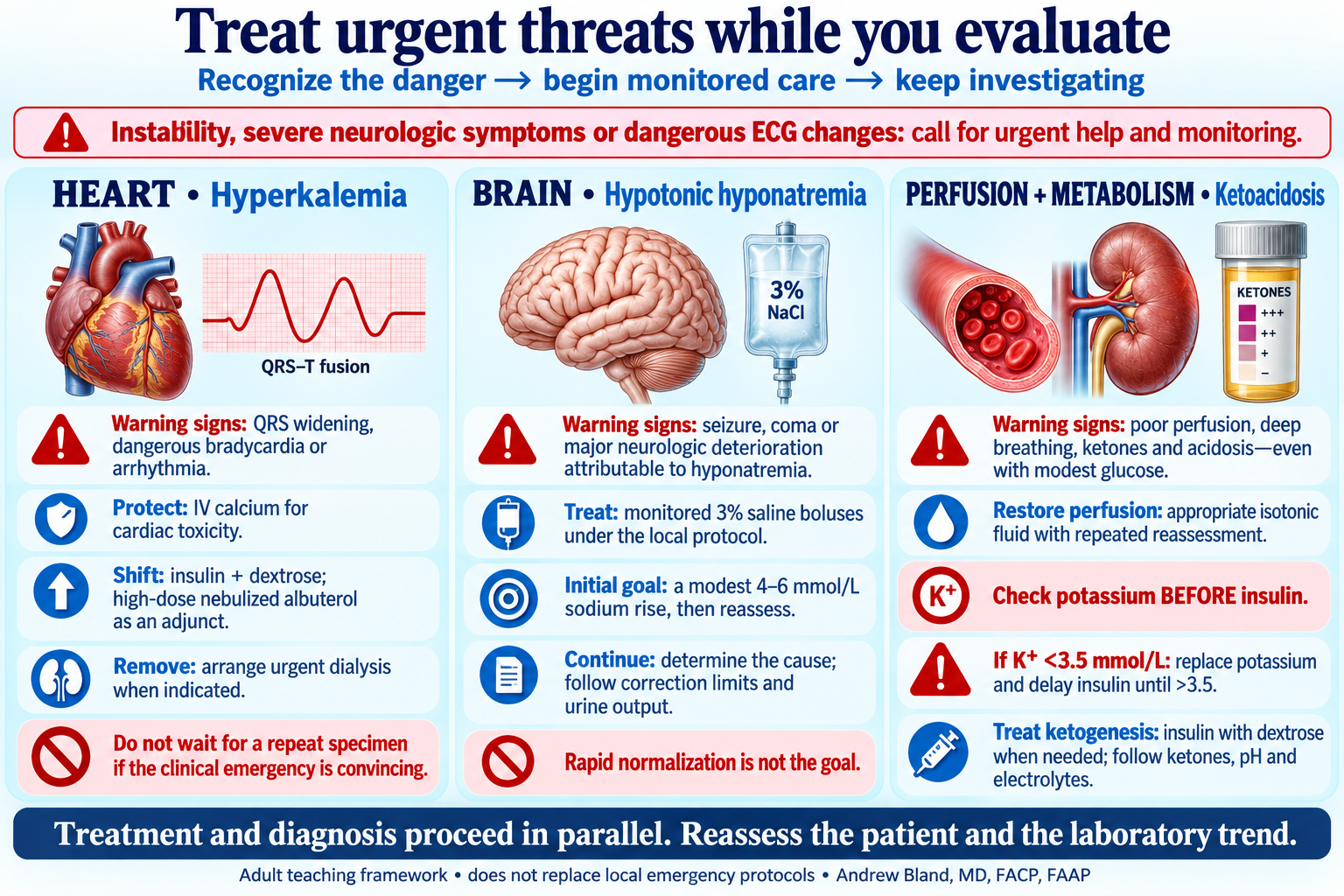
Recognize danger, begin monitored care and keep investigating in parallel.
Treat hypotonic hyponatremia
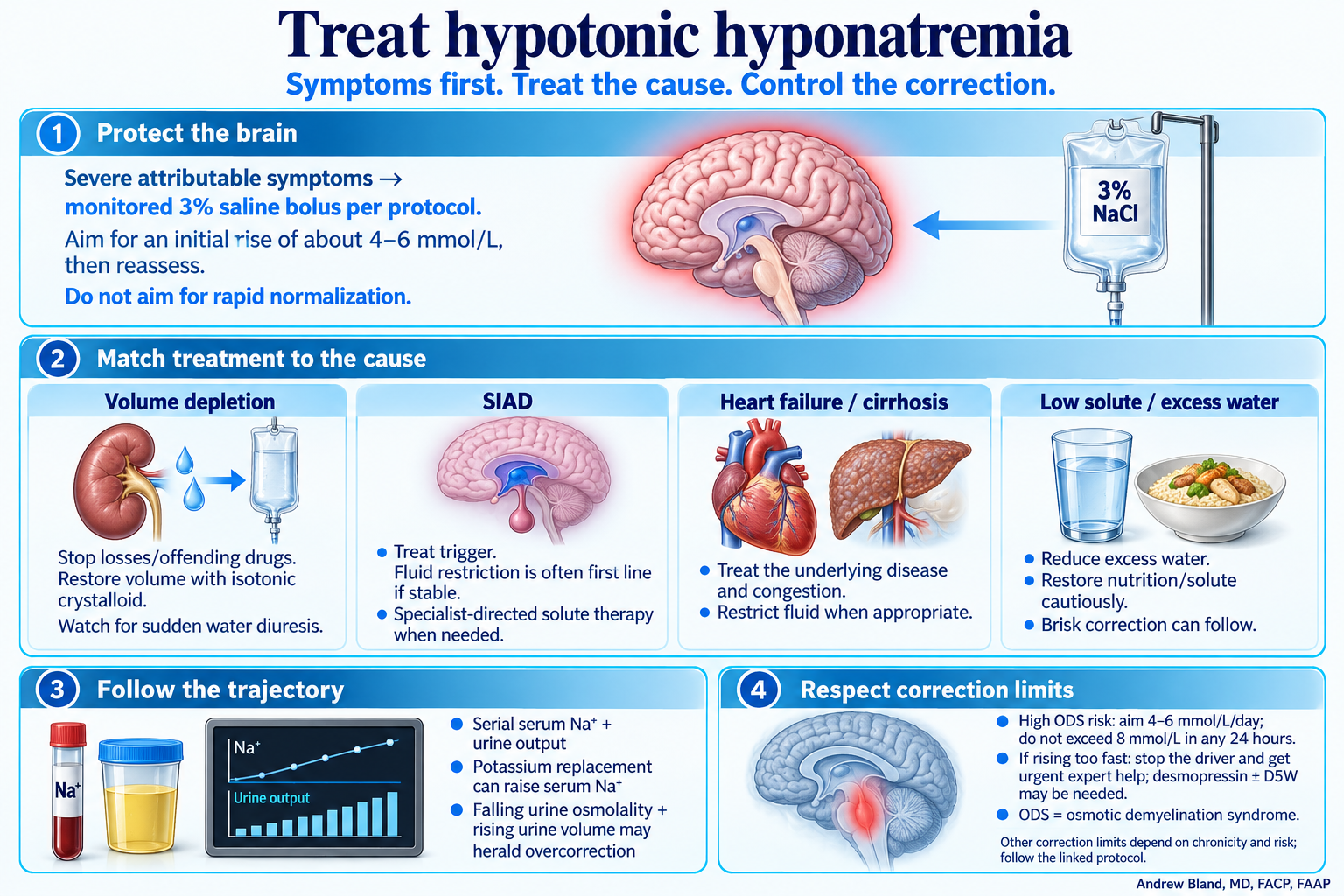
Symptoms first, cause-directed treatment, and control of the correction.
Protect the brain, then reassess
Severe attributable symptoms such as seizure, coma or major neurologic deterioration call for monitored 3% saline boluses under the local protocol while evaluating the cause. An initial sodium rise of about 4–6 mmol/L often provides useful symptom relief; rapid normalization is not the goal. Moderately severe attributable symptoms also warrant urgent assessment and may justify a monitored bolus.
Follow the same diagnostic lanes
Hypovolemic: stop offending drugs and losses, replace volume with an appropriate isotonic crystalloid and reassess. Euvolemic/SIAD: treat the trigger; fluid restriction is often initial therapy when stable, with specialist-directed solute therapy when needed. Hypervolemic: address the underlying disease and congestion, with fluid restriction when appropriate. Dilute urine/low solute: reduce excess water and restore nutrition or solute cautiously. These categories can overlap.
Set a correction plan before treatment
For chronic or uncertain-duration disease at high risk of osmotic demyelination, aim for approximately 4–6 mmol/L over 24 hours and avoid exceeding 8 mmol/L in any 24 hours. Major risk factors include very low sodium, hypokalemia, malnutrition, alcohol use disorder and advanced liver disease. For other patients, the European guideline limits correction to 10 mmol/L in the first 24 hours and 8 mmol/L per 24 hours thereafter. Limits are ceilings, not targets; account for all treatment and spontaneous changes.
Monitor water output as well as serum sodium
During active correction, follow serial sodium, urine output and clinical status frequently; monitoring intervals must shorten when the trajectory changes. Potassium replacement contributes to the rise in serum sodium. Volume restoration, thiazide withdrawal or solute replacement may suddenly permit a dilute water diuresis. If correction is running ahead of plan, stop the driver and obtain urgent expert help; desmopressin and electrolyte-free water such as D5W may be needed for controlled relowering.
Supporting evidence
🎯 2024 Treatment Standard: Rapid Intermittent Bolus (RIB) Therapy
• Protocol: 100-150 mL of 3% saline over 10-20 minutes
• Assessment: Check response after each bolus
• Repeat: Up to 3 times based on clinical improvement
• Target: Symptom resolution OR 4-6 mEq/L increase
• Evidence: SALSA trial showed superior outcomes vs continuous infusion
Na+ < 135
Serum Osm?
Contributing to hyponatremia
Not contributing
Na+ rising too quickly
ADH System: Water Controller
- Primary Function: Water balance regulation
- Stimulus: Osmolality changes (>280-290 mOsm/kg)
- Mechanism: Aquaporin-2 water channels
- Assessment: Urine osmolality (master parameter)
- No ADH: Urine 50-100 mOsm/kg
- Max ADH: Urine 1000-1200 mOsm/kg
Aldosterone System: Sodium Controller
- Primary Function: Sodium/volume balance
- Stimulus: Effective blood volume changes
- Mechanism: RAAS activation cascade
- Assessment: Volume status, urine sodium
- Volume depletion: UNa <20 mEq/L
- Volume normal/excess: UNa >20 mEq/L
2024 Key Evidence Updates
- SALSA Trial: RIB superior to continuous infusion
- EMPAHYPO Study: SGLT2i effective for chronic SIADH
- Urea Meta-analysis: 9.08 mEq/L mean improvement
- Protein-Urea Ratio: 0.35g urea per 1g protein
- Risk Stratification: U-shaped mortality curve validated
Treatment Calculator
📊 Hyponatremia Correction Rate: Evidence-Based Guidelines
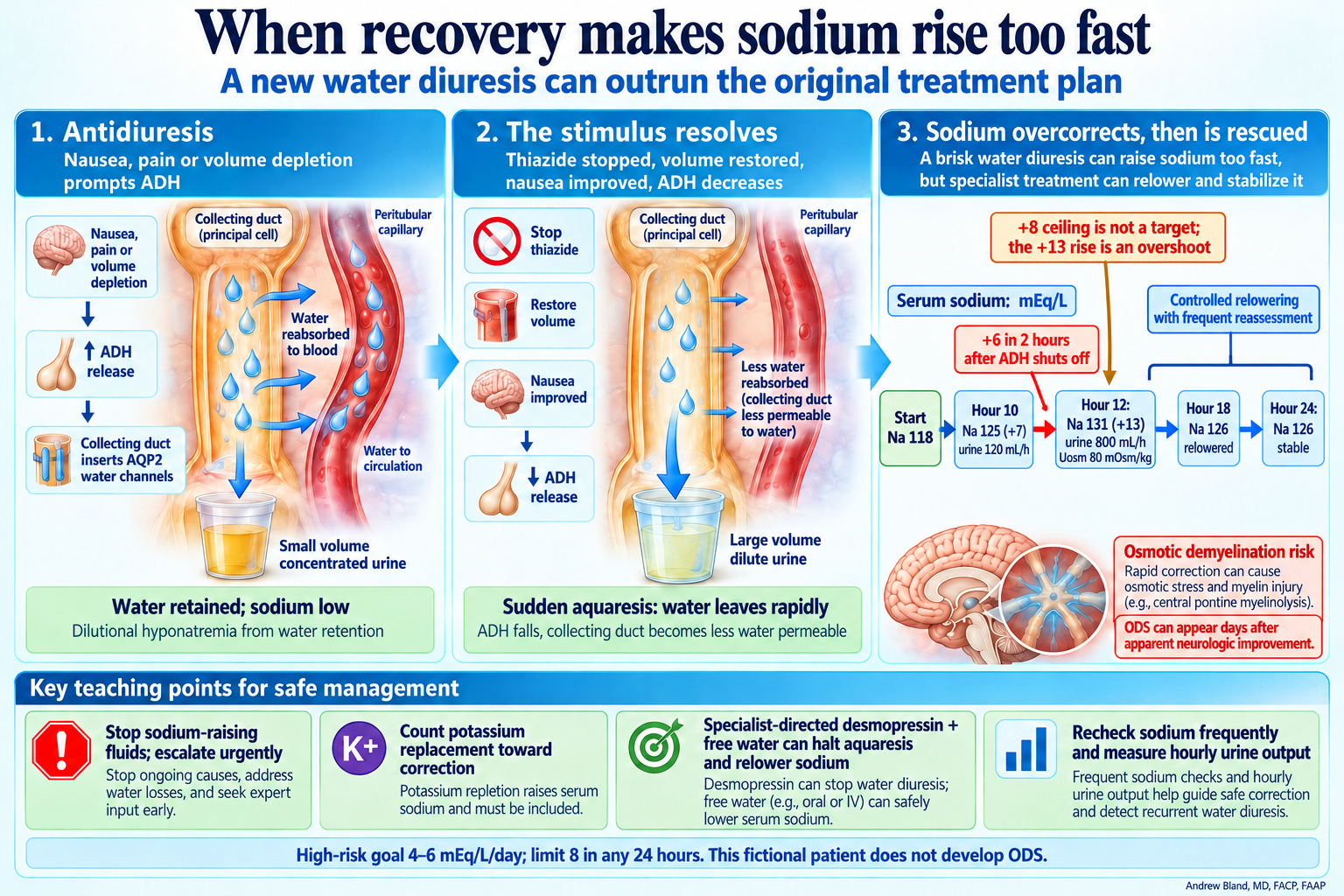
A new water diuresis can outrun the original treatment plan
| Correction Speed (mEq/L/24h) |
ODS Risk (qualitative) | Clinical Context | Anchor Source |
|---|---|---|---|
| <4 | Very low | May be insufficient for symptomatic patients with severe hyponatremia; for chronic asymptomatic disease, slower correction is preferred | Spasovski 2014 ESH/ESE/ERA-EDTA guideline (PMID 24569496): target rise of approximately 5 mmol/L in first hour for severe symptoms; otherwise 8 mmol/L per 24h max in most patients |
| 4-8 | Low | Recommended range. High-risk patients (Na <105, hypokalemia, malnutrition, alcohol use, advanced liver disease) should target the lower end (4-6). | Spasovski 2014 (PMID 24569496); Sterns et al. (UpToDate, multiple iterations) |
| 8-10 | Moderate | Upper acceptable limit per most guidelines; SALSA trial used 12 mEq/L/24h overcorrection threshold for primary outcome | Spasovski 2014 (PMID 24569496); SALSA trial Baek 2021 JAMA Intern Med (PMID 33104189) |
| >10-12 | Elevated | Overcorrection threshold per SALSA primary endpoint. SALSA found 17.2% (RIB) vs 24.2% (SCI) overcorrection at 24/48h, NOT significantly different (p=0.26); RIB favored on secondary endpoint (relowering treatment 41.4% vs 57.1%, p=0.04) | SALSA Baek 2021 (PMID 33104189) |
| >12-18 | High | Risk of osmotic demyelination, especially in chronic hyponatremia and high-risk patients. Consider relowering treatment with hypotonic fluids ± dDAVP per Sterns/Hoorn dDAVP-clamp protocol | Spasovski 2014 (PMID 24569496); ODS risk discussed without specific HRs in primary literature given confounding by illness severity |
Note on mortality data: large cohort studies have associated overly-rapid correction with increased mortality, but the relationship is confounded by illness severity (sicker patients receive more aggressive correction). The 2024-era research insight in the Goals-of-Care section above flags this confounding explicitly. Specific hazard ratios should not be quoted without anchoring to a verifiable primary source.
🟢 Standard Risk Patients
Target: 6-8 mEq/L per 24 hours
- No major comorbidities
- Sodium >115 mEq/L
- No alcohol use disorder
- Normal potassium
- No liver disease
🟡 High-Risk Patients
Target: 4-6 mEq/L per 24 hours
- Chronic severe hyponatremia (<115)
- Alcoholism or malnutrition
- Hypokalemia present
- Liver disease
- Multiple risk factors
🔴 Emergency Situations
Initial: Symptom control, then 4-6 mEq/L
- Seizures or coma
- Severe neurological symptoms
- Respiratory arrest risk
- Cerebral edema signs
- Life-threatening presentation
🔄 Understanding the Dual Hormonal Control System
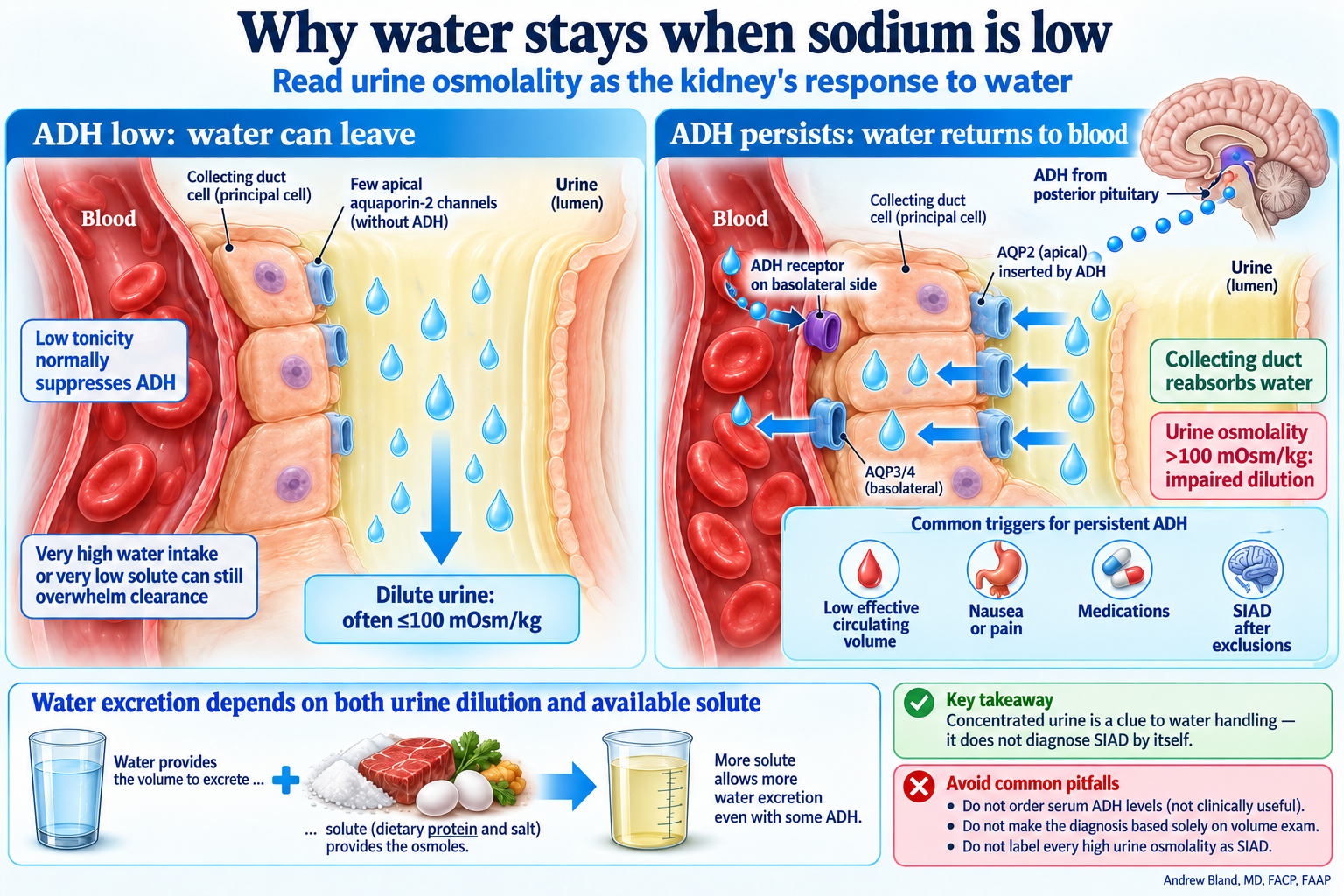
Read urine osmolality as the kidney's response to water
ADH (Water Balance) ≠ Aldosterone (Sodium Balance)
💧 ADH System: Water Controller
Primary Function: Water balance regulation
Stimulus: Osmolality changes (>280-290 mOsm/kg)
Mechanism: Aquaporin-2 water channels
Assessment: Urine osmolality (master parameter)
Response Range:
- No ADH: Urine 50-100 mOsm/kg
- Max ADH: Urine 1000-1200 mOsm/kg
Clinical Relevance: Directly affects hyponatremia pathophysiology
🧂 Aldosterone System: Sodium Controller
Primary Function: Sodium/volume balance
Stimulus: Effective blood volume changes
Mechanism: RAAS activation cascade
Assessment: Volume status, urine sodium
Response Pattern:
- Volume depletion: UNa <20 mEq/L
- Volume normal/excess: UNa >20 mEq/L
Clinical Relevance: Guides volume status assessment
Clinical Application of Dual System
- Separate Assessment: Volume status ≠ ADH activity
- Urine Osm: Reflects ADH effect, not volume
- Urine Na: Reflects aldosterone, not ADH
- Mixed Disorders: Can have both systems activated
- Diagnostic Key: Prevents misinterpretation
Diagnostic Integration
- Step 1: Assess symptoms and chronicity
- Step 2: Check serum osmolality
- Step 3: Measure urine osmolality (ADH)
- Step 4: Assess volume status (aldosterone)
- Step 5: Integrate findings for diagnosis
Common Misunderstandings
- Myth: High urine Na = volume overload
- Reality: High urine Na in SIADH with euvolemia
- Myth: Concentrated urine = dehydration
- Reality: Concentrated urine can occur in SIADH
- Key: Separate assessment prevents errors
🚀 Emerging Therapies and Novel Approaches
SGLT2 Inhibitors for Hyponatremia
- Refardt 2020 RCT (PMID 32019783): Empagliflozin 25 mg/day for 4 days, n=88 SIAD patients on background fluid restriction. Median plasma sodium increase 10 vs 7 mmol/L vs placebo (p=0.04). Greater response when baseline Na <125 mmol/L.
- Mechanism: Osmotic diuresis (urinary glucose excretion) → free water loss
- Heart Failure Patients: Potential dual benefit (CV outcomes per DAPA-HF / EMPEROR-Reduced + Na correction) — note: SGLT2i for hyponatremia in HF is off-label; use established HF indications
- Diabetes Patients: Possible triple benefit (glucose, Na+, CV) — same off-label caveat
- Safety: Monitor for DKA (especially type 1 DM, low-carb states), genital mycotic infection, volume depletion
Protein-Urea Conversion Therapy
- Conversion Ratio: 0.35g urea per 1g protein
- Therapeutic Equivalent: 43g protein = 15g urea
- CorePower 42 gram supplement: Available in 3 flavors, about $3.50 per bottle, can be frozen for shake-like consistency - Optimal protein source
- Malnourished Patients: Dual nutritional benefit
- Combination: Lower urea doses + protein
Modern Oral Urea Evidence
- Meta-analysis: 9.08 mEq/L mean improvement
- Dosing: 15-60g daily, start 30g
- Palatability: Mix with sweet beverages
- Cost: $75-150/month, often not covered
- Safety: Minimal adverse effects
Enhanced dDAVP Clamp Protocols
- Standard Risk: 1-2 μg IV/SC
- High Risk: 2-4 μg for better suppression
- Highest Risk: Up to 6 μg (severe chronic cases)
- Prophylactic Use: Prevention vs reaction
- Integration: Combines with RIB therapy
Combined Saline + Furosemide
- Indication: Hypervolemic hyponatremia
- Mechanism: Na+ delivery + free water excretion
- Fluid response: urine Na + K and urine flow matter; urine osmolality alone does not establish desalination.
- Monitoring: Volume status, electrolytes
- Application: Heart failure, cirrhosis
Future Directions
- Continuous Na+ Monitoring: Like CGM systems
- AI Predictive Models: Overcorrection risk
- Novel V2 Antagonists: Self-limiting properties
- Precision Medicine: Genetic testing
- Combination Approaches: Synergistic mechanisms