Visual reference
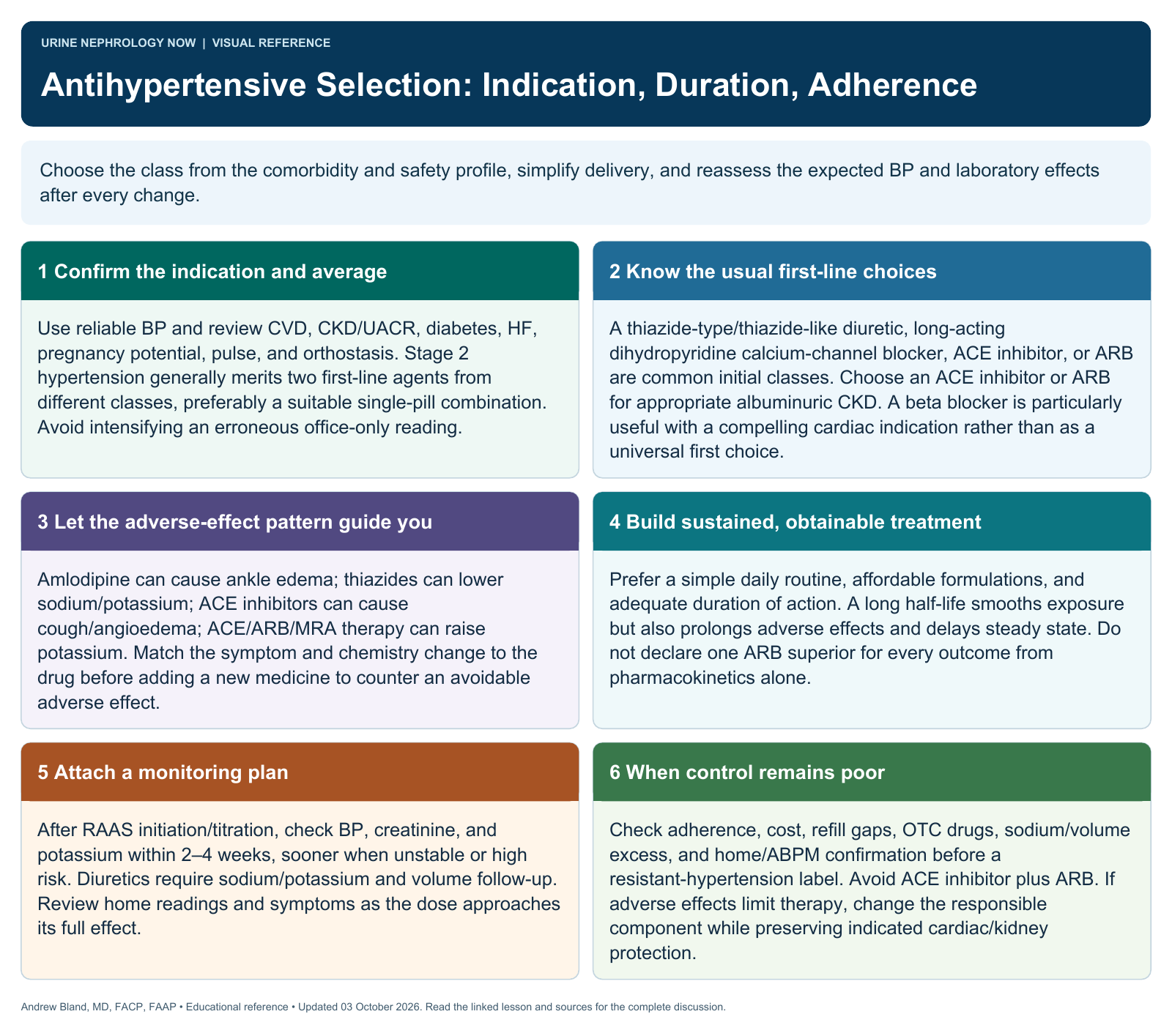
Browse the visual reference library · Download lesson Markdown
🎯 24-Hour Coverage Advantages
1
Morning Surge Protection: Sustained efficacy during vulnerable early morning hours
2
Adherence Enhancement: Once-daily dosing improves compliance by 23% absolute
3
Missed Dose Buffer: Maintains effectiveness beyond 24-hour mark
4
Smoother Control: Higher trough-to-peak ratios reduce BP variability
🌅 Importance of 24-Hour Coverage
🕰️ Circadian Blood Pressure Patterns
- Morning Surge Risk: BP rises 20-40 mmHg upon awakening
- Cardiovascular Events: Peak incidence 6-12 AM (40% of events)
- Nocturnal Dipping: Normal 10-20% decrease during sleep
- Non-Dippers: Higher cardiovascular risk with <10% nocturnal fall
- 24-Hour Mean: Superior prognostic value vs office readings
📊 Outcomes Evidence
- Nighttime Control: 29% CV event reduction (ARR 4.3% over 5 years)
- Independent Benefit: Significant after adjusting for daytime BP
- Morning Protection: Reduces peak event timing risk
- Stroke Prevention: Particularly effective for cerebrovascular events
- Heart Failure: Improved outcomes with sustained BP control
💊 Agents with Superior 24-Hour Coverage
🎯 Telmisartan - Longest-Acting ARB
- Half-Life: Approximately 24 hours (longest among ARBs)
- Trough-to-Peak Ratio: 77% at 24 hours, 65% at 36 hours
- Elimination: >97% hepatobiliary (minimally affected by CKD)
- Forgiveness Factor: Maintains efficacy beyond missed dose
- Evidence: Superior 24-hour ABPM control vs other ARBs
- Clinical Advantage: Ideal for adherence-challenged patients
💎 Amlodipine - Ultra-Long Acting CCB
- Half-Life: 35-50 hours (exceptionally long duration)
- Trough-to-Peak Ratio: 85-90% (highest among CCBs)
- Metabolism: 90% hepatic (unchanged in renal dysfunction)
- Extended Efficacy: Effective BP reduction at 48-72 hours post-dose
- Steady State: Achieved in 7-8 days
- Clinical Use: Excellent choice for 24-hour coverage
🌊 Chlorthalidone - Superior Thiazide-Like
- Half-Life: 40-60 hours (vs HCTZ 6-15 hours)
- Duration: Tissue binding provides gradual release
- 24-Hour Efficacy: 45% greater effect than HCTZ
- Evidence Base: More outcome trial data than HCTZ
- Limitation: Reduced efficacy in advanced CKD (eGFR <30)
- Advantage: Superior cardiovascular outcomes
🔒 Olmesartan - High Receptor Affinity
- Half-Life: 12-18 hours (but sustained effect >24 hours)
- Receptor Binding: Highest AT1 affinity among ARBs
- Dissociation: Exceptionally slow from AT1 receptors
- Trough-to-Peak: 70% at 24 hours, 50% at 36 hours
- Elimination: 40% renal, 60% hepatobiliary
- Clinical Effect: Sustained pharmacodynamic action
🧬 Pharmacokinetic Impact of Renal Dysfunction
| Medication | Normal Half-Life | Severe CKD Half-Life | Dosing Adjustment | Primary Elimination | CKD Advantage |
|---|---|---|---|---|---|
| Telmisartan | 24 hours | 24-36 hours | No significant change | Hepatic (>97%) | Excellent |
| Amlodipine | 35-50 hours | 35-50 hours | No change needed | Hepatic (90%) | Excellent |
| Olmesartan | 13 hours | 15-18 hours | No significant change | Hepatobiliary (60%) | Good |
| Valsartan | 6 hours | 8-10 hours | No significant change | Hepatic (80%) | Moderate |
| Chlorthalidone | 40-60 hours | Reduced efficacy | Consider alternative | Renal (65%) | Poor in advanced CKD |
| Lisinopril | 12 hours | 40-50 hours | 50% dose reduction | Renal (100%) | Extended but problematic |
📈 Adherence and Clinical Outcomes
💯 Medication Adherence Benefits
- Dosing Frequency Impact: Each additional daily pill reduces adherence 20%
- Once-Daily Advantage: 23% absolute improvement vs twice-daily
- Extended Half-Life Buffer: Maintains efficacy despite occasional missed doses
- Patient Satisfaction: Higher scores with simplified regimens
- Long-term Persistence: Better continuation rates at 1-2 years
- Healthcare Costs: Reduced due to improved BP control
📊 Real-World Effectiveness
- Trough-to-Peak Ratios: Higher ratios = more consistent control
- BP Variability: Extended half-life agents reduce day-to-day variation
- Morning Protection: Sustained efficacy during high-risk period
- Emergency Coverage: Protection during medication delays
- Quality of Life: Reduced anxiety about missed doses
- Clinical Inertia: Less frequent titration needed
🎯 Clinical Applications and Patient Selection
👥 Ideal Candidates for Extended Half-Life Agents
- Adherence Challenges: History of medication non-compliance
- Complex Regimens: Multiple daily medications
- Shift Workers: Irregular sleep-wake cycles
- Travel Frequently: Time zone changes and schedule disruption
- Cognitive Issues: Mild cognitive impairment or early dementia
- Morning Hypertension: Elevated early morning BP despite treatment
🏥 Clinical Scenarios Favoring Long-Acting Agents
- Resistant Hypertension: Need for consistent 24-hour coverage
- High CV Risk: Patients where BP variability is concerning
- Elderly Patients: Simplified regimens improve compliance
- Renal Dysfunction: Hepatically eliminated agents preferred
- Combination Therapy: Reduce pill burden with long-acting components
- Cost Considerations: Generic long-acting options available
🧮 Extended Half-Life Agent Selector
Select optimal long-acting antihypertensive based on patient characteristics
Agent recommendation will appear here
🔄 Combination Strategies
💊 Single-Pill Combinations
- Telmisartan/Amlodipine: Dual long-acting components
- Olmesartan/Amlodipine: High receptor affinity + ultra-long CCB
- ARB/Chlorthalidone: Superior to ARB/HCTZ combinations
- Triple Combinations: ARB + CCB + chlorthalidone available
- Adherence Benefit: 25-30% improvement with SPC vs separate pills
- Cost Effectiveness: Despite higher acquisition cost
⏰ Chronotherapy Considerations
- Evening Dosing: Can enhance nocturnal BP control
- Long-Acting Advantage: Maintains morning protection with PM dosing
- Individual Variation: ABPM can guide optimal timing
- Split Dosing: Long-acting agents allow flexible timing
- Patient Preference: Morning vs evening based on lifestyle
- Side Effect Management: Timing can minimize certain adverse effects
⚠️ Special Considerations and Limitations
🐌 Slow Onset Considerations
- Steady State Delay: 5-7 half-lives to reach full effect
- Amlodipine: 7-14 days to reach steady state
- Patient Expectations: Counsel regarding gradual onset
- Titration Timing: Wait adequate time before dose increases
- Acute Settings: Not ideal for rapid BP reduction needs
- Clinical Monitoring: Longer intervals between assessments
💰 Cost and Access Considerations
- Generic Availability: Amlodipine, lisinopril widely available
- Brand Agents: Telmisartan, olmesartan more expensive
- Insurance Coverage: Varies by formulary tier
- Cost-Effectiveness: Improved adherence may offset higher costs
- Patient Assistance: Programs available for brand agents
- Healthcare Value: Reduced complications and hospitalizations
📋 Clinical Implementation Guidelines
🎯 Evidence-Based Selection Framework
1
Assess 24-Hour Needs: ABPM or morning BP patterns to identify gaps in coverage
2
Evaluate Adherence Risk: Medication complexity, cognitive status, lifestyle factors
3
Consider Comorbidities: Renal function, heart failure, diabetes, stroke history
4
Select Optimal Agent: Balance efficacy, duration, tolerability, and cost
5
Monitor and Adjust: Allow adequate time for steady state before titration
📚 Sources
- Roush GC, Holford TR, Guddati AK. Chlorthalidone vs HCTZ in CV events. Hypertension. 2012;59(6):1110-1117. PMID: 22526259.
- ALLHAT Officers. ALLHAT trial. JAMA. 2002;288(23):2981-2997. PMID: 12479763.
- Beckett NS, Peters R, Fletcher AE, et al; HYVET. Treatment of hypertension in patients ≥80y. N Engl J Med. 2008;358(18):1887-1898. PMID: 18378519.
- Whelton PK, et al. 2017 ACC/AHA HTN Guideline. Hypertension. 2018;71(6):e13-e115. PMID: 29133356.
🎯 Key Learning Points
⏰ 24-Hour Priority: Extended half-life agents provide superior morning surge protection and nocturnal control
💯 Adherence Advantage: Once-daily long-acting agents improve compliance by 23% absolute
🫘 CKD Consideration: Hepatically eliminated agents (telmisartan, amlodipine) ideal for renal dysfunction
🛡️ Forgiveness Factor: Extended half-life provides safety buffer for occasional missed doses