Visual summary
A durable regimen matches the disease, lasts through the dosing interval, and remains practical and tolerable for the patient.
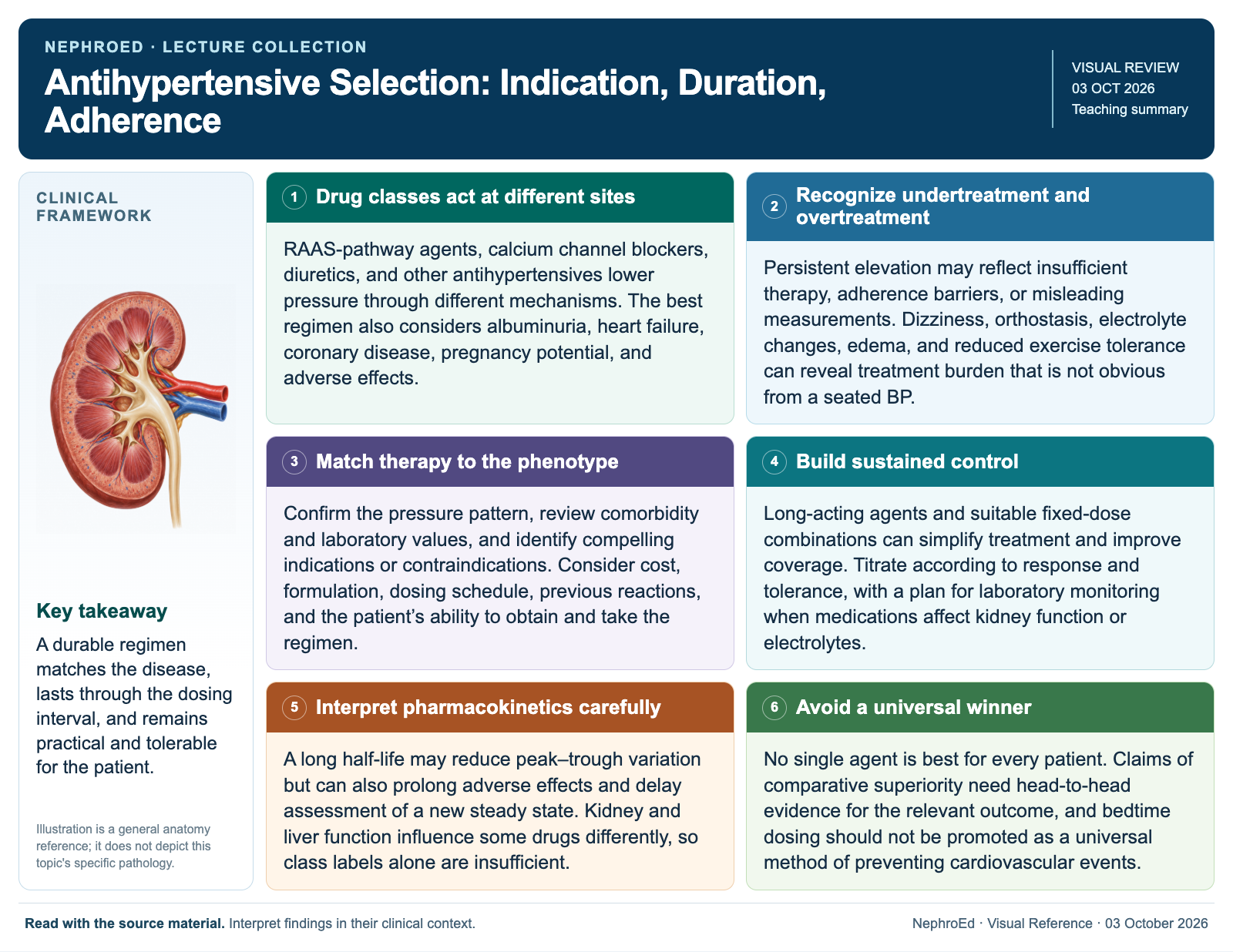
Text version
Drug classes act at different sites
RAAS-pathway agents, calcium channel blockers, diuretics, and other antihypertensives lower pressure through different mechanisms. The best regimen also considers albuminuria, heart failure, coronary disease, pregnancy potential, and adverse effects.
Recognize undertreatment and overtreatment
Persistent elevation may reflect insufficient therapy, adherence barriers, or misleading measurements. Dizziness, orthostasis, electrolyte changes, edema, and reduced exercise tolerance can reveal treatment burden that is not obvious from a seated BP.
Match therapy to the phenotype
Confirm the pressure pattern, review comorbidity and laboratory values, and identify compelling indications or contraindications. Consider cost, formulation, dosing schedule, previous reactions, and the patient’s ability to obtain and take the regimen.
Build sustained control
Long-acting agents and suitable fixed-dose combinations can simplify treatment and improve coverage. Titrate according to response and tolerance, with a plan for laboratory monitoring when medications affect kidney function or electrolytes.
Interpret pharmacokinetics carefully
A long half-life may reduce peak–trough variation but can also prolong adverse effects and delay assessment of a new steady state. Kidney and liver function influence some drugs differently, so class labels alone are insufficient.
Avoid a universal winner
No single agent is best for every patient. Claims of comparative superiority need head-to-head evidence for the relevant outcome, and bedtime dosing should not be promoted as a universal method of preventing cardiovascular events.
Continue learning
This graphic summarizes a topic. The full educational pages provide the broader discussion and references.