Visual reference
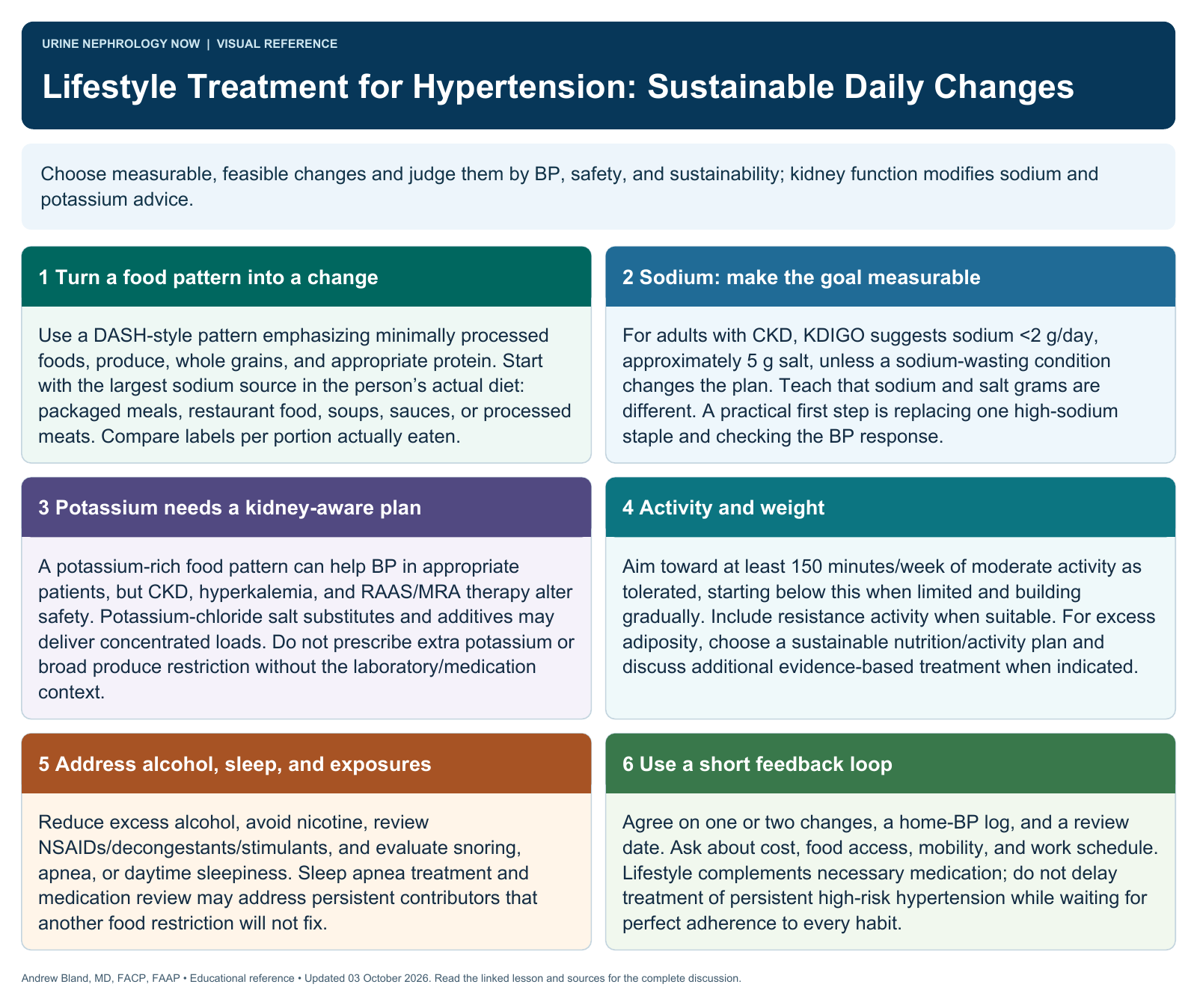
Browse the visual reference library · Download lesson Markdown
🎯 Quantifiable Blood Pressure Reductions
The 2025 guidelines provide specific, evidence-based targets for lifestyle modifications with documented blood pressure reductions. Each intervention offers measurable benefits when properly implemented and sustained.
🆕 NEW: Potassium-Enriched Salt Substitutes
Class 2a Recommendation
Reasonable to UseSSaSS Trial Evidence: 25% potassium chloride/75% sodium chloride formulations demonstrated 3.34 mmHg systolic reduction and 13% decrease in stroke risk. Provides dual benefit of sodium reduction and potassium supplementation.
⚠️ Contraindications:
- Advanced chronic kidney disease (eGFR <30 mL/min/1.73m²)
- Concurrent potassium-sparing diuretics
- Baseline hyperkalemia (>5.0 mEq/L)
- Severe heart failure with reduced ejection fraction
📋 Evidence-Based Lifestyle Interventions
⚖️ Weight Loss Class 1
Target Goals:
- BMI <25 kg/m² (optimal)
- Waist circumference: <40 inches (men), <35 inches (women)
- Realistic target: 5-10% body weight reduction
- Sustained approach: 1-2 pounds per week
Implementation Strategy:
Caloric deficit of 500-750 calories daily through combination of dietary restriction and increased physical activity. Consider referral to registered dietitian for structured program.
🧂 Sodium Restriction Class 1
Target Goals:
- <2,300 mg daily (general population)
- <1,500 mg daily (optimal, if achievable)
- Greater effects in: Older adults, African Americans, higher baseline BP
Key Education Points:
75% of dietary sodium comes from processed foods, not table salt. Emphasize reading nutrition labels, cooking at home, and identifying hidden sodium sources.
🧪 Potassium Salt Substitutes Class 2a
Optimal Formulation:
- 25% potassium chloride
- 75% sodium chloride
- Dual mechanism: Sodium reduction + potassium supplementation
Patient Selection:
Appropriate for patients with normal kidney function (eGFR ≥30) not on potassium-sparing medications. Monitor potassium levels after initiation.
🥗 DASH Dietary Pattern Class 1
Core Components:
- High: Fruits, vegetables, whole grains, lean proteins
- Moderate: Low-fat dairy, nuts, legumes
- Limited: Red meat, sweets, sodium
🏃♀️ Physical Activity Class 1
Prescription:
- Aerobic: 150 min/week moderate OR 75 min/week vigorous
- Resistance: 2-3 sessions per week, major muscle groups
- Flexibility: 2-3 sessions per week
🍷 Alcohol Moderation Class 1
Recommendations:
- Men: ≤2 drinks daily
- Women: ≤1 drink daily
- Preferred: Abstinence (recent evidence challenges protective effects)
🥗 DASH Diet: Detailed Implementation Guide
| Food Group | Daily Servings (2000 cal diet) | Serving Size Examples | Key Nutrients |
|---|---|---|---|
| Vegetables | 4-5 servings | 1 cup raw leafy, ½ cup cooked | Potassium, magnesium, fiber |
| Fruits | 4-5 servings | 1 medium fruit, ½ cup fresh/frozen | Potassium, magnesium, fiber |
| Whole Grains | 6-8 servings | 1 slice bread, ½ cup cooked rice/pasta | Energy, fiber, magnesium |
| Low-fat Dairy | 2-3 servings | 1 cup milk/yogurt, 1.5 oz cheese | Calcium, protein, potassium |
| Lean Meats/Poultry/Fish | ≤6 servings | 1 oz cooked meat/poultry/fish | Protein, magnesium |
| Nuts/Seeds/Legumes | 4-5 per week | ⅓ cup nuts, 2 tbsp seeds, ½ cup cooked beans | Energy, magnesium, potassium, protein |
| Added Fats/Oils | 2-3 servings | 1 tsp vegetable oil, 1 tbsp salad dressing | Essential fatty acids |
| Sweets/Added Sugars | ≤5 per week | 1 tbsp sugar/honey, ½ cup sorbet | Limit for calorie control |
🏃♀️ Evidence-Based Exercise Prescription
🏃♂️ Aerobic Exercise
- Frequency: 5-7 days per week
- Intensity: 40-60% VO₂ reserve (moderate)
- Duration: 30+ minutes continuous
- Type: Walking, cycling, swimming, dancing
- BP Reduction: 5-8 mmHg systolic
🏋️♀️ Resistance Training
- Frequency: 2-3 days per week
- Intensity: 60-80% 1RM
- Volume: 8-12 reps, 2-3 sets
- Type: Major muscle groups, progressive overload
- BP Reduction: 4 mmHg additional benefit
🧘♀️ Flexibility/Mind-Body
- Frequency: 2-3 days per week
- Duration: 10-30 minutes
- Type: Yoga, tai chi, stretching
- Benefits: Stress reduction, adherence improvement
- BP Effect: Modest additional benefit
🧮 Cumulative BP Reduction Calculator
Estimate the combined blood pressure reduction from multiple lifestyle interventions
📊 Clinical Significance:
Comprehensive lifestyle modification can achieve blood pressure reductions equivalent to multiple antihypertensive medications, with additional cardiovascular benefits beyond blood pressure control.
🎯 Implementation Success Strategies
📋 Patient Education
- Provide written materials and clear targets
- Demonstrate label reading and portion sizes
- Set realistic, achievable goals
- Address cultural and economic barriers
👥 Team-Based Approach
- Registered dietitian consultation
- Exercise physiologist or trainer referral
- Behavioral counseling support
- Pharmacist medication optimization
📱 Technology Integration
- Home blood pressure monitoring
- Smartphone apps for tracking
- Wearable fitness devices
- Telemedicine follow-up support