Visual summary
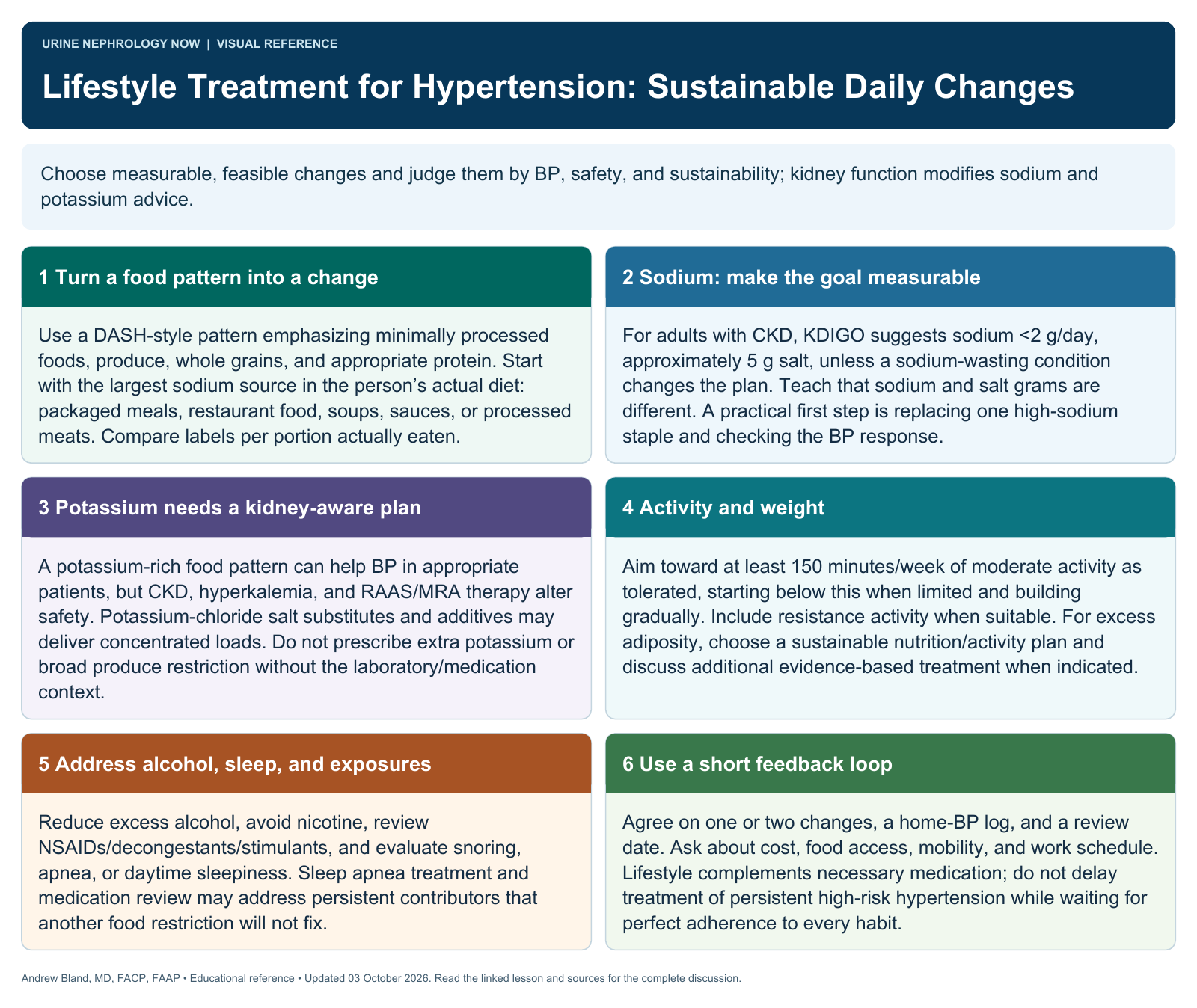
Choose realistic changes with measurable follow-up, and tailor dietary advice to the patient’s kidney and cardiovascular context.
Text version
Daily exposures influence pressure
Dietary sodium, overall dietary pattern, body weight, activity, alcohol, sleep, and medication or substance exposure can influence blood pressure. Effects vary across individuals and interact with kidney, cardiac, and metabolic disease.
Start with the person’s routine
Review food access, work schedule, exercise capacity, sleep symptoms, alcohol, smoking, and readiness for change. Avoid assuming that a high BP reflects poor effort or that every recommended habit is equally feasible.
Choose measurable priorities
A dietary pattern rich in minimally processed foods, appropriate sodium reduction, regular physical activity, and weight management when indicated can support BP control. Set achievable steps and use follow-up to learn what works.
Adapt for kidney disease
Dietary potassium advice must reflect kidney function, serum potassium, and medications. Salt substitutes can contain potassium. Nutrition should preserve adequate intake and avoid blanket restrictions that increase burden without a clear indication.
Integrate lifestyle and medication
Lifestyle measures and medication often work together. Do not defer treatment of persistent high-risk hypertension while waiting for a lifestyle trial that is unlikely to achieve sufficient control quickly enough.
Monitor benefit and feasibility
Track BP, symptoms, weight when relevant, and the sustainability of changes. Sleep apnea evaluation and substance or medication review may uncover treatable contributors. Discuss practical supports rather than promising a fixed BP reduction for every intervention.
Continue learning
This graphic summarizes a topic. The full educational pages provide the broader discussion and references.