⚡ Emergency Recognition Protocol
1
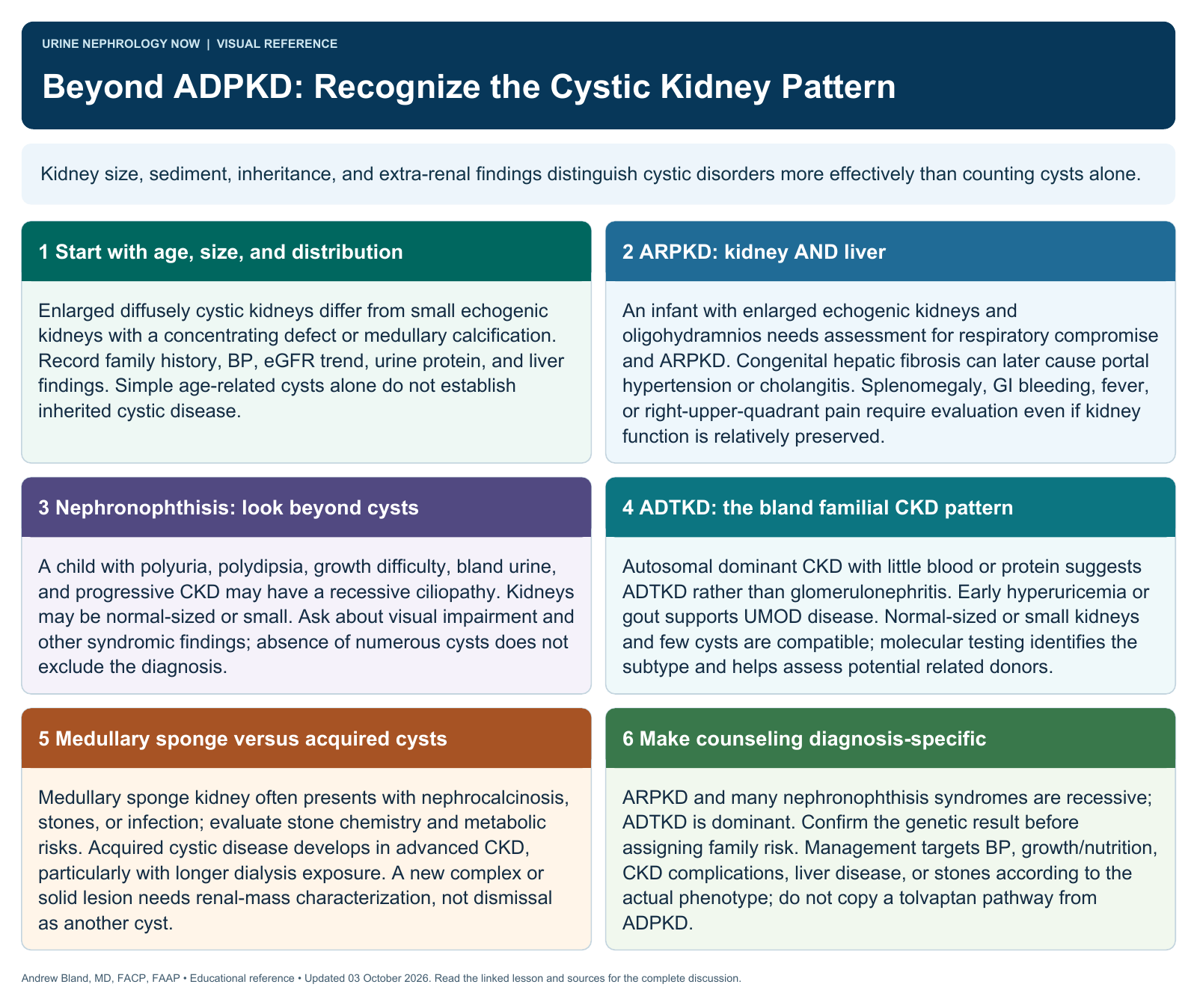
Neonatal ARPKD: Oligohydramnios + enlarged kidneys → Immediate respiratory support
2
Cholangitis: Fever + RUQ pain in ARPKD → Urgent antibiotics, biliary drainage
3
Portal Hypertension: GI bleeding + splenomegaly → Endoscopic evaluation
4
Progressive CKD: Unexplained kidney failure in child → Genetic evaluation
🧬 Spectrum of Cystic Kidney Diseases
Beyond ADPKD - Understanding rare hereditary and acquired cystic diseases
🧬 Autosomal Recessive
ARPKD, Nephronophthisis - Early onset, severe phenotype
👨👩👧👦 Autosomal Dominant
MCKD - Adult onset, variable progression
🔧 Developmental
Medullary sponge kidney - Congenital collecting duct abnormality
👶 Autosomal Recessive PKD (ARPKD)
- Incidence: 1:20,000-50,000 live births
- Genetics: PKHD1 gene mutations (chromosome 6p12)
- Perinatal Form: Enlarged echogenic kidneys, oligohydramnios
- Pulmonary Hypoplasia: High mortality from respiratory complications
- Congenital Hepatic Fibrosis: Portal hypertension, cholangitis risk
- Variable Presentation: Perinatal, infantile, childhood onset
🔬 ARPKD Management
- Respiratory Support: Ventilatory support for neonatal patients
- Conservative CKD Care: Growth, bone health, anemia management
- Hepatic Monitoring: Portal pressure, varices screening
- Genetic Counseling: 25% recurrence risk for siblings
- Multidisciplinary Team: Pediatric nephrology, hepatology
- Transplant Planning: Combined liver-kidney in severe cases
🧬 Nephronophthisis-Medullary Cystic Disease Complex
👶 Nephronophthisis (NPH)
- Inheritance: Autosomal recessive
- Age of Onset: Juvenile - median ESRD age 13 years
- Most Common: Inherited cause of ESRD in children
- Extrarenal: Retinal dystrophy, liver fibrosis
- Genetics: >20 genes identified (NPHP1 most common)
- Phenotype: Small kidneys, concentrating defect
👨⚕️ ADTKD (formerly Medullary Cystic Disease)
- Current Name: Autosomal Dominant Tubulointerstitial Kidney Disease (ADTKD)
- Inheritance: Autosomal dominant
- Age of Onset: Adult - ESRD around age 50
- Association: Hyperuricemia and gout common
- Genetics: UMOD, REN gene mutations
- MCKD1: Chromosome 1q21, unknown gene
- MCKD2: Uromodulin (UMOD) mutations
🔍 Common Features of NPH-MCKD Complex
Tubular basement membrane disintegration
Medullary cysts at corticomedullary junction
Concentrating defect with polyuria
🧮 Cystic Disease Differential Diagnosis Tool
Most Likely Diagnosis
Autosomal Dominant PKD
Based on clinical presentation pattern
🏺 Medullary Sponge Kidney
- Prevalence: ~1:5,000 population
- Pathology: Cystic dilatation of collecting ducts
- Bilateral: 70% of cases involve both kidneys
- Age of Presentation: Usually third decade
- Stone Association: High risk for nephrolithiasis
- Imaging: "Bouquet of flowers" or "paint brush" pattern
⚠️ MSK Complications
- Nephrolithiasis: Calcium phosphate stones common
- Urinary Tract Infections: Recurrent UTIs from stasis
- Hematuria: Gross or microscopic bleeding
- Renal Tubular Acidosis: Distal (Type 1) RTA
- Hypercalciuria: Often present, increases stone risk
- Hyposthenuria: Concentrating defect
🏥 Comprehensive Management Approach
1
Genetic Counseling: Family risk assessment, inheritance patterns, reproductive planning
2
Supportive Care: CKD management, growth support, bone health, anemia treatment
3
Complication Prevention: Stone prevention, infection treatment, BP control
4
Transplant Planning: Pre-emptive evaluation, living donor assessment
5
Monitoring Protocol: Regular eGFR, imaging, extrarenal manifestations
🧬 Genetic Testing in Cystic Diseases
Indications for Testing
- Uncertain diagnosis with atypical features
- Early-onset kidney disease
- Family planning and genetic counseling
- No family history in suspected hereditary disease
- Extrarenal manifestations present
Available Tests
- Single gene sequencing (PKHD1, NPHP genes)
- Multi-gene panels for cystic diseases
- Whole exome sequencing for complex cases
- Chromosomal microarray for syndromic features
- Prenatal diagnosis when indicated
Key Genes in Cystic Disease
ARPKD: PKHD1
NPH: NPHP1-20
MCKD: UMOD, REN
Rare forms: HNF1B, DZIP1L
📋 Cystic Disease Management Comparison
| Disease | Inheritance | Median ESRD Age | Key Management | Specific Considerations |
|---|---|---|---|---|
| ADPKD | AD | PKD1: 50-60y PKD2: 70-80y |
Tolvaptan, BP control | Aneurysm screening, liver disease |
| ARPKD | AR | Variable (neonatal-adult) | Respiratory support, CKD care | Hepatic fibrosis, portal HTN |
| NPH | AR | 13 years | CKD management, growth support | Retinal dystrophy, extrarenal features |
| ADTKD (formerly MCKD) | AD | 50 years | Hyperuricemia treatment | Gout management, family screening |
| MSK | Sporadic | Usually preserved | Stone prevention | UTI prevention, RTA management |
🎯 Key Learning Points
Early Recognition
Age of onset and family history are crucial clues for differential diagnosis of inherited cystic diseases.
Multisystem Disease
Most cystic diseases involve multiple organ systems requiring comprehensive evaluation and management.
Genetic Counseling
Inheritance patterns affect family planning decisions and screening recommendations for at-risk relatives.
Supportive Care Focus
Treatment remains largely supportive with emphasis on complication prevention and CKD progression management.