Visual summary
Identify the pattern and the likely disease before applying a cyst-management or inherited-kidney-disease pathway.
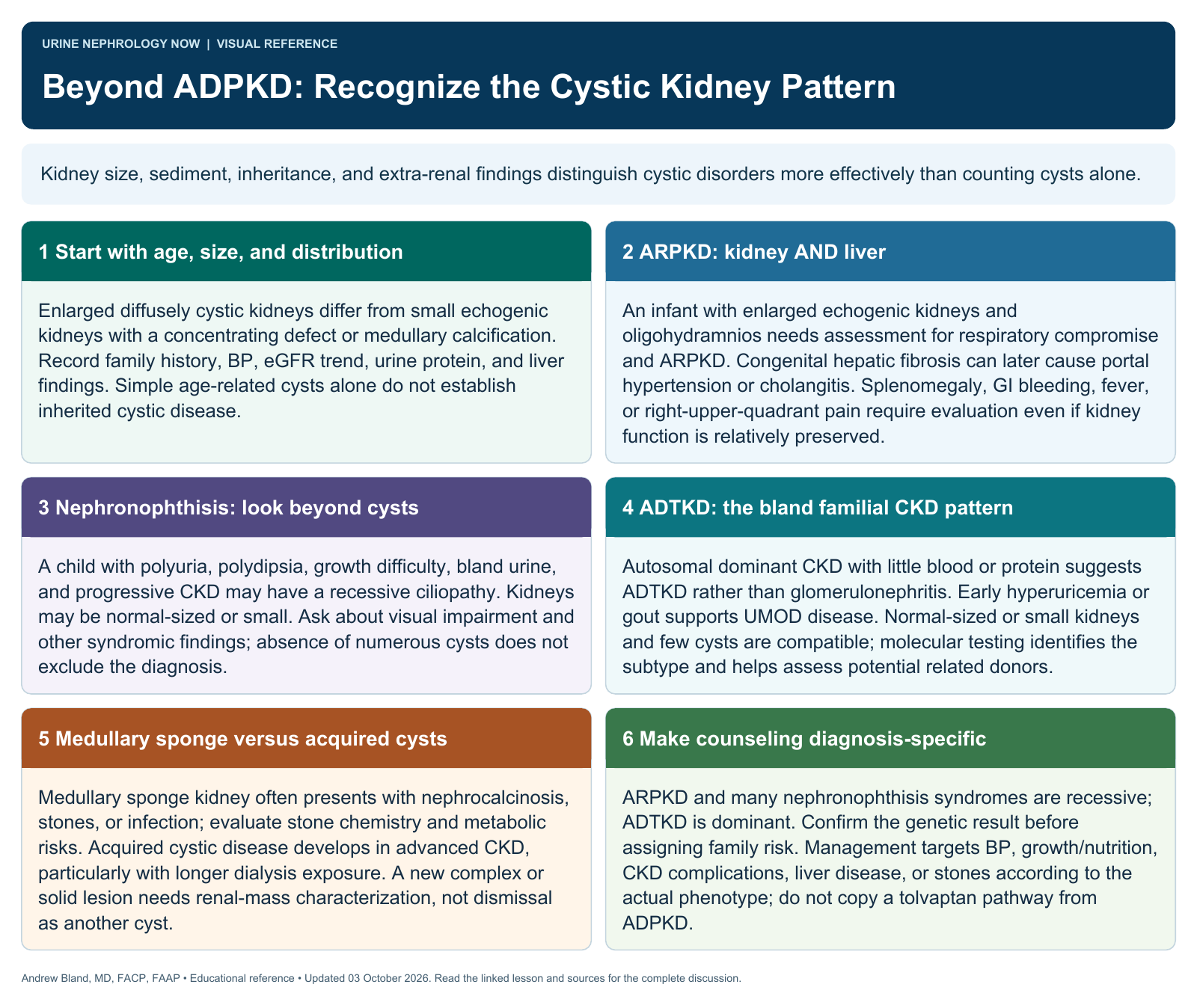
Text version
Cysts arise in different diseases
Cystic kidney findings can reflect inherited developmental disorders, tubulointerstitial disease, collecting-duct abnormalities, or acquired processes. Age at presentation, kidney size, cyst distribution, and extra-renal features help distinguish the possibilities.
Recognize pattern-specific clues
Early childhood renal and hepatic disease may suggest ARPKD; a tubulointerstitial phenotype can suggest other inherited conditions. Medullary sponge kidney often comes to attention through stones, hematuria, or recurrent urinary problems rather than massive kidney enlargement.
Build the diagnostic context
Review family history, growth, blood pressure, renal function, urine concentration, liver findings, and imaging. Distinguish incidental simple cysts from a syndromic pattern before initiating a broad genetic workup.
Use modern disease names
Older terms can group biologically distinct disorders together. When possible, use the current genetic or clinical classification and obtain specialist or genetics input so counseling and prognosis match the actual disease.
Treat complications and preserve function
Management may include BP control, stone prevention, infection care, CKD surveillance, and liver-related assessment. The appropriate monitoring schedule and prognosis differ by diagnosis, so an ADPKD care plan should not be copied automatically.
Counsel with uncertainty visible
A negative family history does not eliminate inherited disease, and a genetic variant needs proper interpretation. Discuss testing choices, reproductive implications, and limits of prediction using the patient’s preferences and available evidence.
Continue learning
This graphic summarizes a topic. The full educational pages provide the broader discussion and references.