Visual summary
A genetic result is useful when reliable evidence links it to an actionable drug decision, followed by ordinary clinical monitoring.
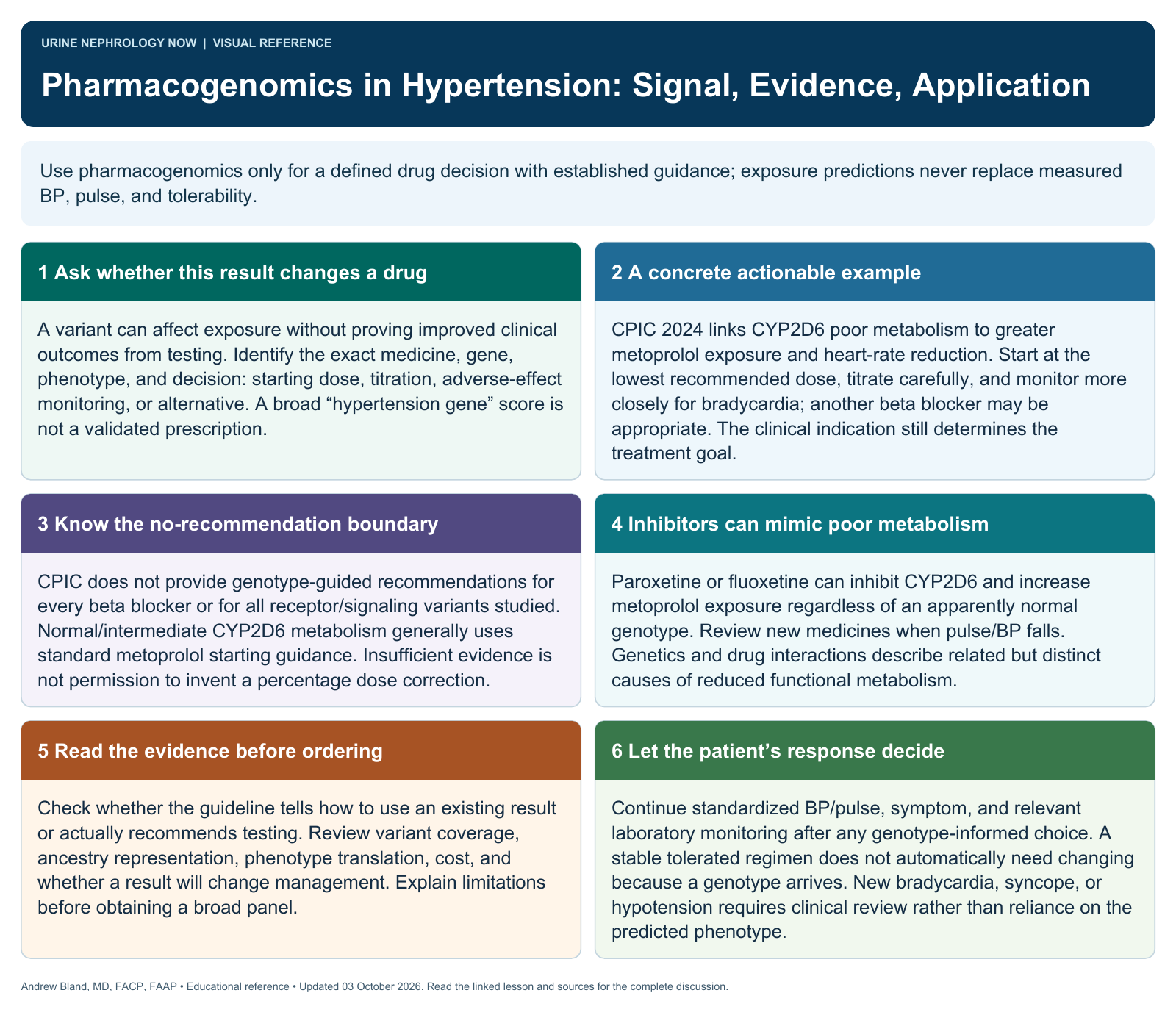
Text version
Genes can modify drug handling
Genetic variation can influence metabolism, transport, receptor response, or adverse-effect susceptibility. A pharmacokinetic association is biologically useful, but it does not automatically establish a better clinical outcome from genotype-guided prescribing.
Recognize the practical question
The relevant question is whether a specific result changes the choice or dose of a specific drug for this patient. Treatment response also depends on adherence, interacting medications, age, kidney and liver function, and disease phenotype.
Assess the evidence level
Distinguish exploratory associations, replicated pharmacokinetic findings, actionable prescribing guidance, and trials of patient outcomes. Review the tested variant, ancestry representation, phenotype definition, and uncertainty before applying a population association.
Use current decision support
When testing is clinically relevant, use an established pharmacogenomic guideline or label and involve pharmacy when appropriate. Interpret drug interactions alongside genotype because an inhibitor can change functional metabolism even without a genetic variant.
Keep BP monitoring central
Genotype cannot replace standardized blood pressure measurements, symptom review, and laboratory surveillance. A predicted metabolic phenotype may guide a starting decision, but the actual patient response still determines whether the regimen is effective and tolerable.
Avoid unsupported precision
Do not use an unvalidated genotype calculator to promise a percentage benefit or rank every ARB. Broader testing should have a clear clinical purpose, understandable limitations, and a plan for how results will be used.
Continue learning
This graphic summarizes a topic. The full educational pages provide the broader discussion and references.