Visual summary
Interpret calcium through its active fraction and regulatory response, then treat symptoms and the underlying disturbance together.
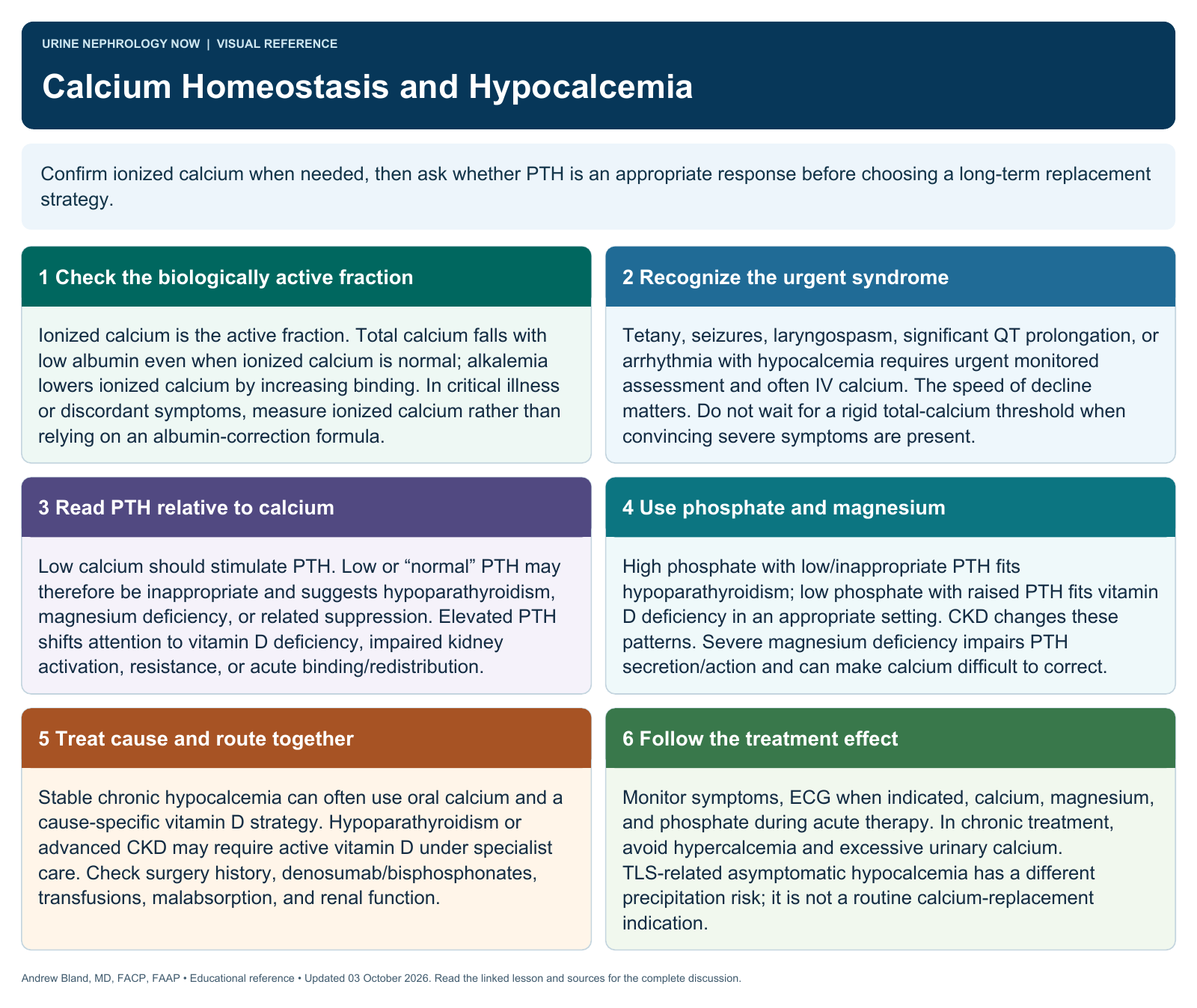
Text version
A regulated ion, several measurements
Ionized calcium is the biologically active fraction; total calcium also includes protein-bound and complexed calcium. PTH, vitamin D, the kidney, gut, and bone coordinate calcium balance with phosphate physiology.
Recognize symptomatic hypocalcemia
Paresthesias, cramps, tetany, seizures, and cardiac electrical changes can accompany low ionized calcium. Severity depends on acuity and the clinical setting, not just a total calcium value obtained during changing albumin or pH.
Confirm the abnormality
Check ionized calcium when clinically important or when total calcium is difficult to interpret. Review magnesium, phosphate, kidney function, PTH, vitamin D status, medications, recent surgery, and transfusion or critical illness exposures.
Treat symptoms and the cause
Significant symptomatic hypocalcemia may require monitored intravenous calcium. Stable chronic disease often needs an individualized oral strategy and treatment of vitamin D or parathyroid abnormalities. Magnesium deficiency must also be addressed when present.
Read the hormone response
A PTH value must be interpreted relative to the calcium level. An apparently normal PTH can be inappropriate during hypocalcemia. Phosphate and magnesium help distinguish impaired hormone secretion, resistance, kidney disease, and other mechanisms.
Avoid correction-formula certainty
Albumin-based calcium correction formulas can misclassify patients, especially in complex illness. Calcium and phosphate treatment interact, so avoid indiscriminate replacement or a fixed product threshold as the sole determinant of care.
Continue learning
This graphic summarizes a topic. The full educational pages provide the broader discussion and references.