Visual summary
Layer therapies with demonstrated indications, then monitor tolerance and outcomes that matter to the individual patient.
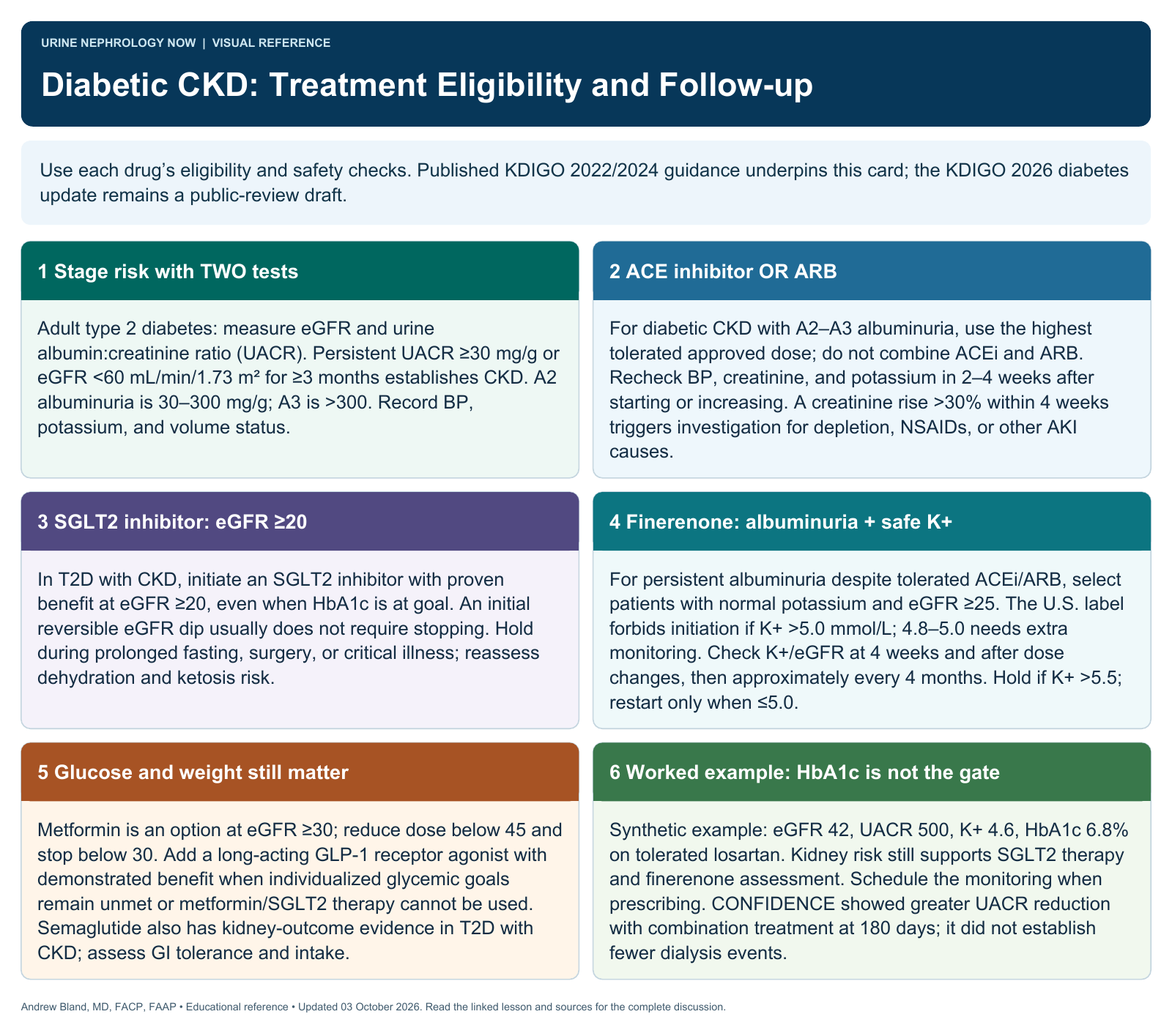
Text version
Multiple pathways drive injury
Hyperglycemia, glomerular pressure, inflammation, and cardiovascular disease contribute to diabetic CKD. Kidney protection therefore combines lifestyle support, blood pressure care, glucose management, and therapies selected for demonstrated organ benefit.
Define the phenotype
Measure eGFR and urine albumin, assess blood pressure and potassium, and review heart failure and atherosclerotic disease. Atypical features such as active sediment or abrupt decline deserve evaluation beyond assumed diabetic nephropathy.
Choose evidence-based layers
Use indicated RAAS blockade, SGLT2 inhibition, and additional therapies such as a nonsteroidal MRA or GLP-1 receptor agonist according to eligibility, albuminuria, comorbidities, kidney function, and treatment tolerance.
Monitor after changes
Check kidney function, potassium, symptoms, volume status, and medication adherence. Interpret an early hemodynamic eGFR change in context, and distinguish a tolerable expected effect from progressive AKI or clinically significant volume depletion.
Applied cases: medication optimization
Case 11 and Mercy Case 3 ask learners to improve a medication plan while preserving safety. Set individual glycemic goals, identify avoidable hypoglycemia, and discuss practical access, cost, and follow-up barriers.
Separate surrogates from outcomes
Reduced albuminuria is clinically informative but does not itself prove fewer dialysis events or deaths. When discussing combination trials, identify the studied population, endpoint, duration, and limitations before promising long-term benefit.
Continue learning
This graphic summarizes a topic. The full educational pages provide the broader discussion and references.