Visual summary
Use renal patterns to identify complications and guide supportive care, while preserving trust and coordinating treatment of the eating disorder.
Text version
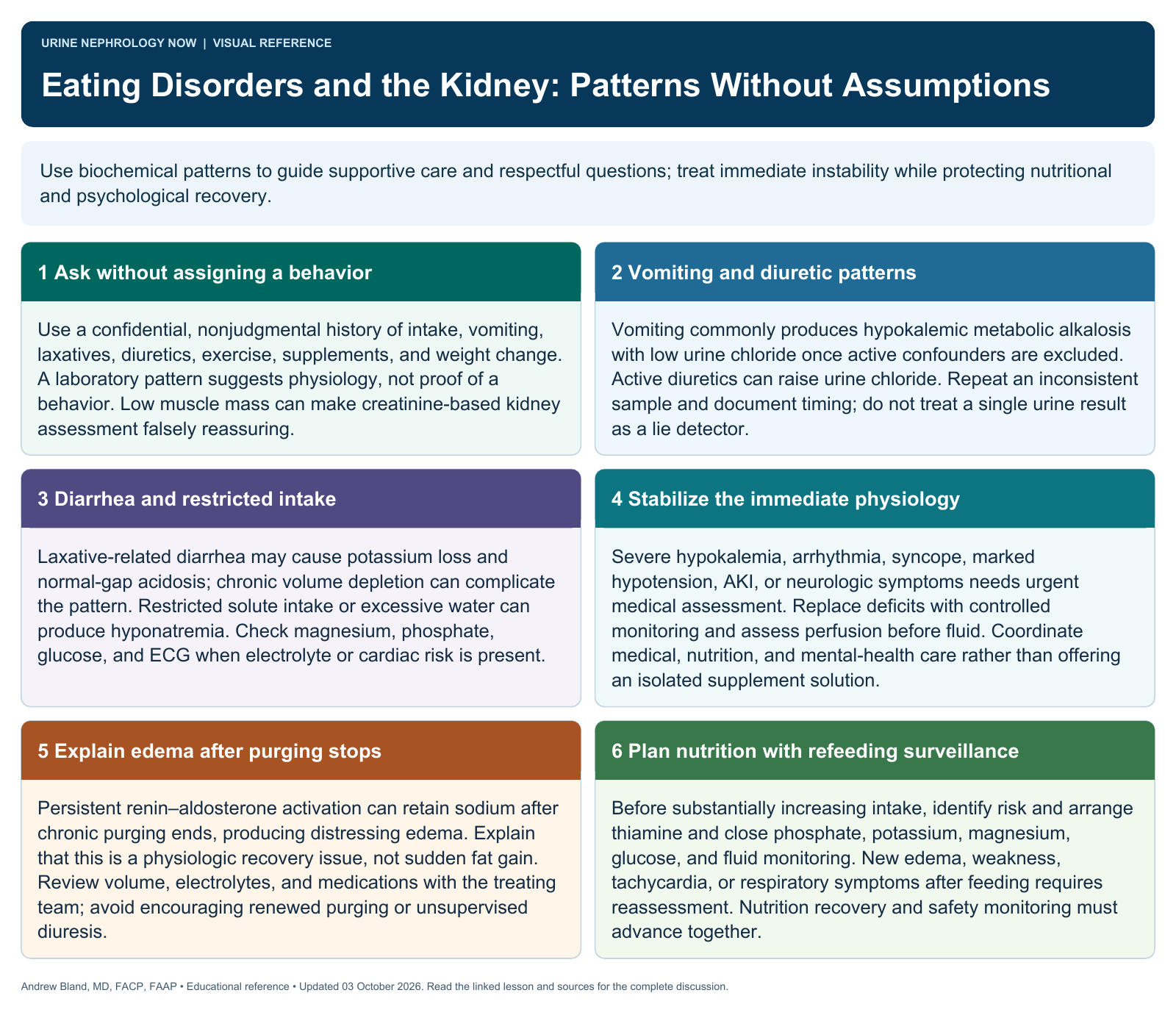
Multiple pathways to kidney injury
Restricted intake, vomiting, laxative or diuretic exposure, chronic potassium depletion, and volume depletion can harm kidney function. Low muscle mass may make creatinine appear reassuring despite important impairment.
Recognize physiology and vulnerability
Hypokalemia, alkalosis, acidosis, AKI, edema, arrhythmia, and refeeding abnormalities may reveal complications. Laboratory patterns can suggest a mechanism but cannot diagnose behavior or replace a respectful, confidential history.
Ask and evaluate carefully
Review intake, gastrointestinal symptoms, medications, exercise, and weight trajectory without judgment. Check electrolytes including magnesium and phosphate, kidney function, acid–base status, and ECG when indicated; urine studies can help clarify losses.
Stabilize and coordinate care
Treat dangerous electrolyte and volume abnormalities with appropriate monitoring, while involving nutrition, mental health, and medical teams. Avoid framing recovery as simply drinking more water or taking an electrolyte supplement.
Expect edema during recovery
After chronic purging stops, persistent sodium-retaining signals can contribute to rebound edema. Explain the physiology and manage it thoughtfully so that distress about swelling does not undermine recovery or trigger renewed purging.
Prevent refeeding complications
Identify nutritional risk before advancing intake and plan thiamine, electrolyte surveillance, and appropriate replacement. Phosphate, potassium, magnesium, fluid shifts, and cardiac status all matter; refeeding syndrome is broader than a single low phosphate value.
Continue learning
This graphic summarizes a topic. The full educational pages provide the broader discussion and references.