Visual summary
Use biochemical patterns to guide supportive care and respectful questions; treat immediate instability while protecting nutritional and psychological recovery.
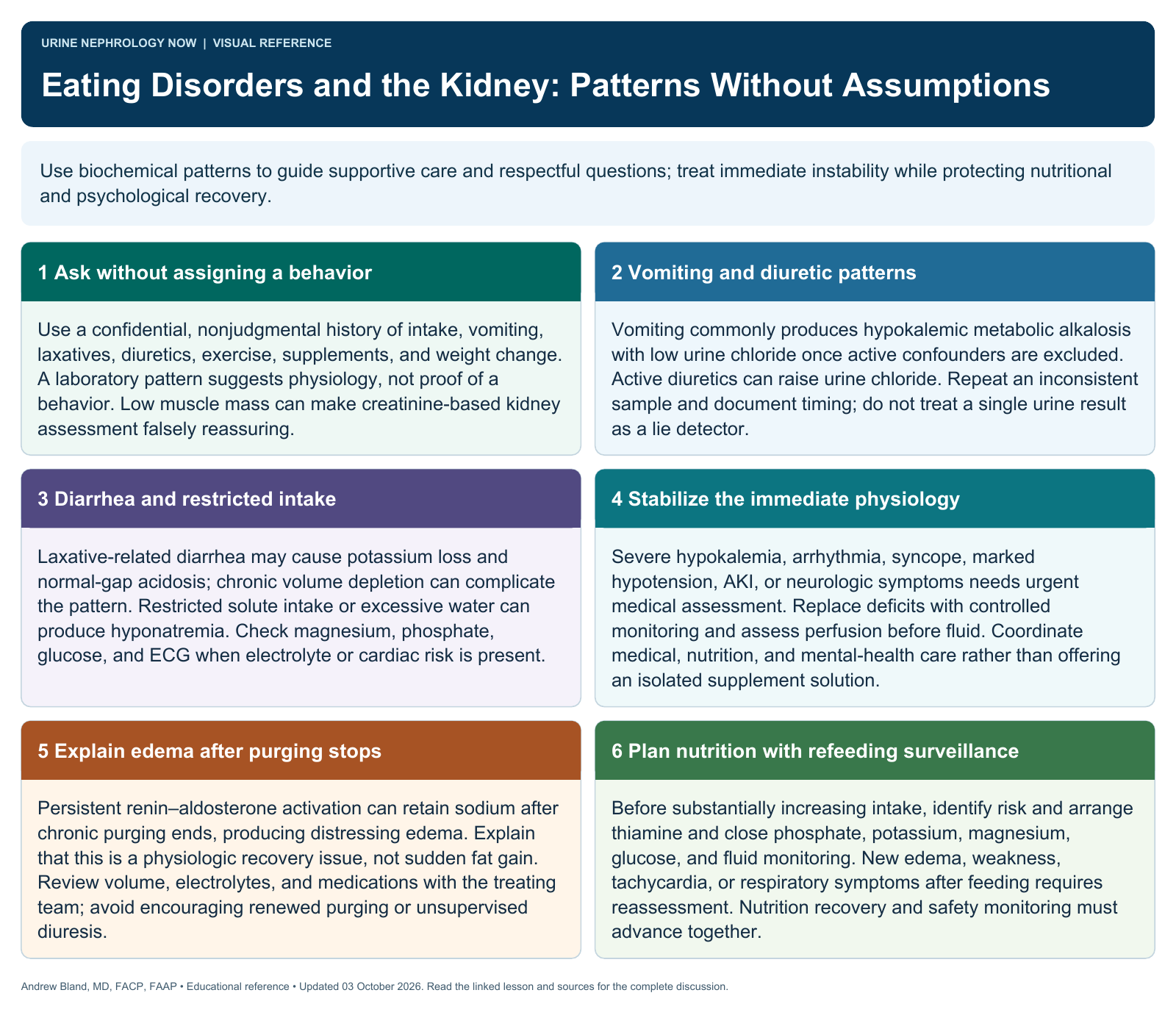
Text version
Ask without assigning a behavior
Use a confidential, nonjudgmental history of intake, vomiting, laxatives, diuretics, exercise, supplements, and weight change. A laboratory pattern suggests physiology, not proof of a behavior. Low muscle mass can make creatinine-based kidney assessment falsely reassuring.
Vomiting and diuretic patterns
Vomiting commonly produces hypokalemic metabolic alkalosis with low urine chloride once active confounders are excluded. Active diuretics can raise urine chloride. Repeat an inconsistent sample and document timing; do not treat a single urine result as a lie detector.
Diarrhea and restricted intake
Laxative-related diarrhea may cause potassium loss and normal-gap acidosis; chronic volume depletion can complicate the pattern. Restricted solute intake or excessive water can produce hyponatremia. Check magnesium, phosphate, glucose, and ECG when electrolyte or cardiac risk is present.
Stabilize the immediate physiology
Severe hypokalemia, arrhythmia, syncope, marked hypotension, AKI, or neurologic symptoms needs urgent medical assessment. Replace deficits with controlled monitoring and assess perfusion before fluid. Coordinate medical, nutrition, and mental-health care rather than offering an isolated supplement solution.
Explain edema after purging stops
Persistent renin–aldosterone activation can retain sodium after chronic purging ends, producing distressing edema. Explain that this is a physiologic recovery issue, not sudden fat gain. Review volume, electrolytes, and medications with the treating team; avoid encouraging renewed purging or unsupervised diuresis.
Plan nutrition with refeeding surveillance
Before substantially increasing intake, identify risk and arrange thiamine and close phosphate, potassium, magnesium, glucose, and fluid monitoring. New edema, weakness, tachycardia, or respiratory symptoms after feeding requires reassessment. Nutrition recovery and safety monitoring must advance together.