Visual summary
The syndrome directs urgent testing; serology and biopsy identify the cause and distinguish immunotherapy from infection control or supportive care.
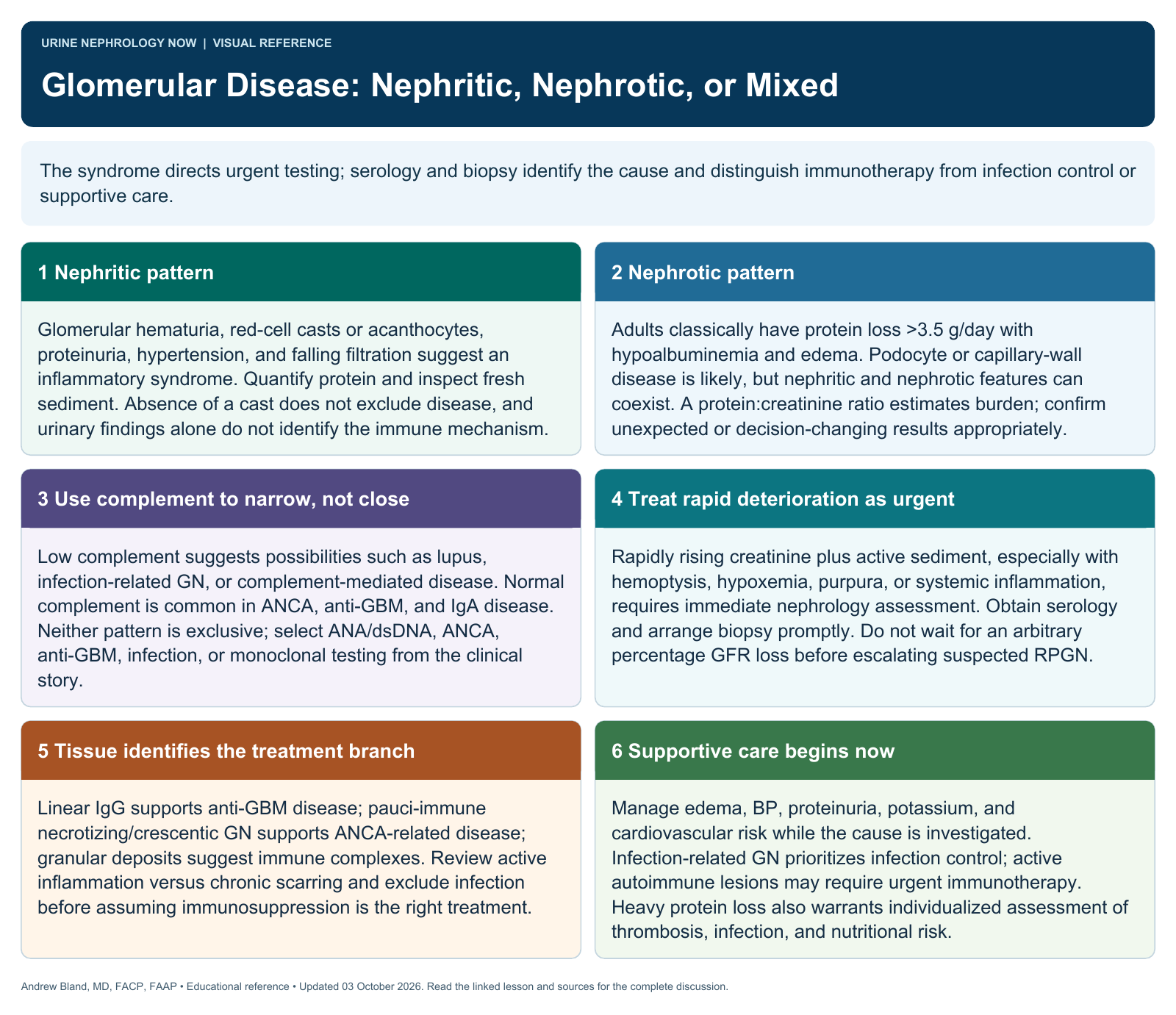
Text version
Nephritic pattern
Glomerular hematuria, red-cell casts or acanthocytes, proteinuria, hypertension, and falling filtration suggest an inflammatory syndrome. Quantify protein and inspect fresh sediment. Absence of a cast does not exclude disease, and urinary findings alone do not identify the immune mechanism.
Nephrotic pattern
Adults classically have protein loss >3.5 g/day with hypoalbuminemia and edema. Podocyte or capillary-wall disease is likely, but nephritic and nephrotic features can coexist. A protein:creatinine ratio estimates burden; confirm unexpected or decision-changing results appropriately.
Use complement to narrow, not close
Low complement suggests possibilities such as lupus, infection-related GN, or complement-mediated disease. Normal complement is common in ANCA, anti-GBM, and IgA disease. Neither pattern is exclusive; select ANA/dsDNA, ANCA, anti-GBM, infection, or monoclonal testing from the clinical story.
Treat rapid deterioration as urgent
Rapidly rising creatinine plus active sediment, especially with hemoptysis, hypoxemia, purpura, or systemic inflammation, requires immediate nephrology assessment. Obtain serology and arrange biopsy promptly. Do not wait for an arbitrary percentage GFR loss before escalating suspected RPGN.
Tissue identifies the treatment branch
Linear IgG supports anti-GBM disease; pauci-immune necrotizing/crescentic GN supports ANCA-related disease; granular deposits suggest immune complexes. Review active inflammation versus chronic scarring and exclude infection before assuming immunosuppression is the right treatment.
Supportive care begins now
Manage edema, BP, proteinuria, potassium, and cardiovascular risk while the cause is investigated. Infection-related GN prioritizes infection control; active autoimmune lesions may require urgent immunotherapy. Heavy protein loss also warrants individualized assessment of thrombosis, infection, and nutritional risk.