Visual summary
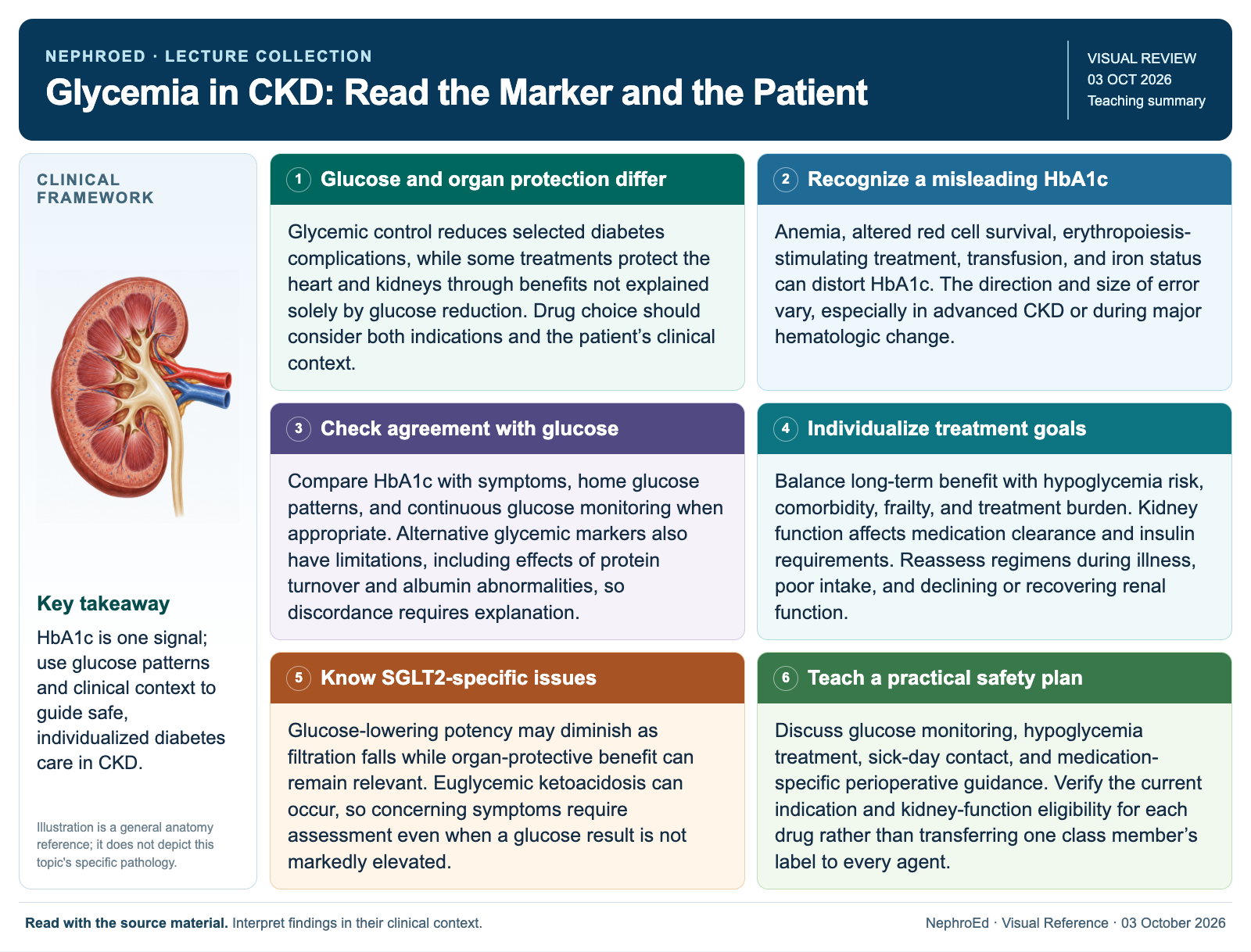
HbA1c is one signal; use glucose patterns and clinical context to guide safe, individualized diabetes care in CKD.
Text version
Glucose and organ protection differ
Glycemic control reduces selected diabetes complications, while some treatments protect the heart and kidneys through benefits not explained solely by glucose reduction. Drug choice should consider both indications and the patient’s clinical context.
Recognize a misleading HbA1c
Anemia, altered red cell survival, erythropoiesis-stimulating treatment, transfusion, and iron status can distort HbA1c. The direction and size of error vary, especially in advanced CKD or during major hematologic change.
Check agreement with glucose
Compare HbA1c with symptoms, home glucose patterns, and continuous glucose monitoring when appropriate. Alternative glycemic markers also have limitations, including effects of protein turnover and albumin abnormalities, so discordance requires explanation.
Individualize treatment goals
Balance long-term benefit with hypoglycemia risk, comorbidity, frailty, and treatment burden. Kidney function affects medication clearance and insulin requirements. Reassess regimens during illness, poor intake, and declining or recovering renal function.
Know SGLT2-specific issues
Glucose-lowering potency may diminish as filtration falls while organ-protective benefit can remain relevant. Euglycemic ketoacidosis can occur, so concerning symptoms require assessment even when a glucose result is not markedly elevated.
Teach a practical safety plan
Discuss glucose monitoring, hypoglycemia treatment, sick-day contact, and medication-specific perioperative guidance. Verify the current indication and kidney-function eligibility for each drug rather than transferring one class member’s label to every agent.
Continue learning
This graphic summarizes a topic. The full educational pages provide the broader discussion and references.