Visual summary
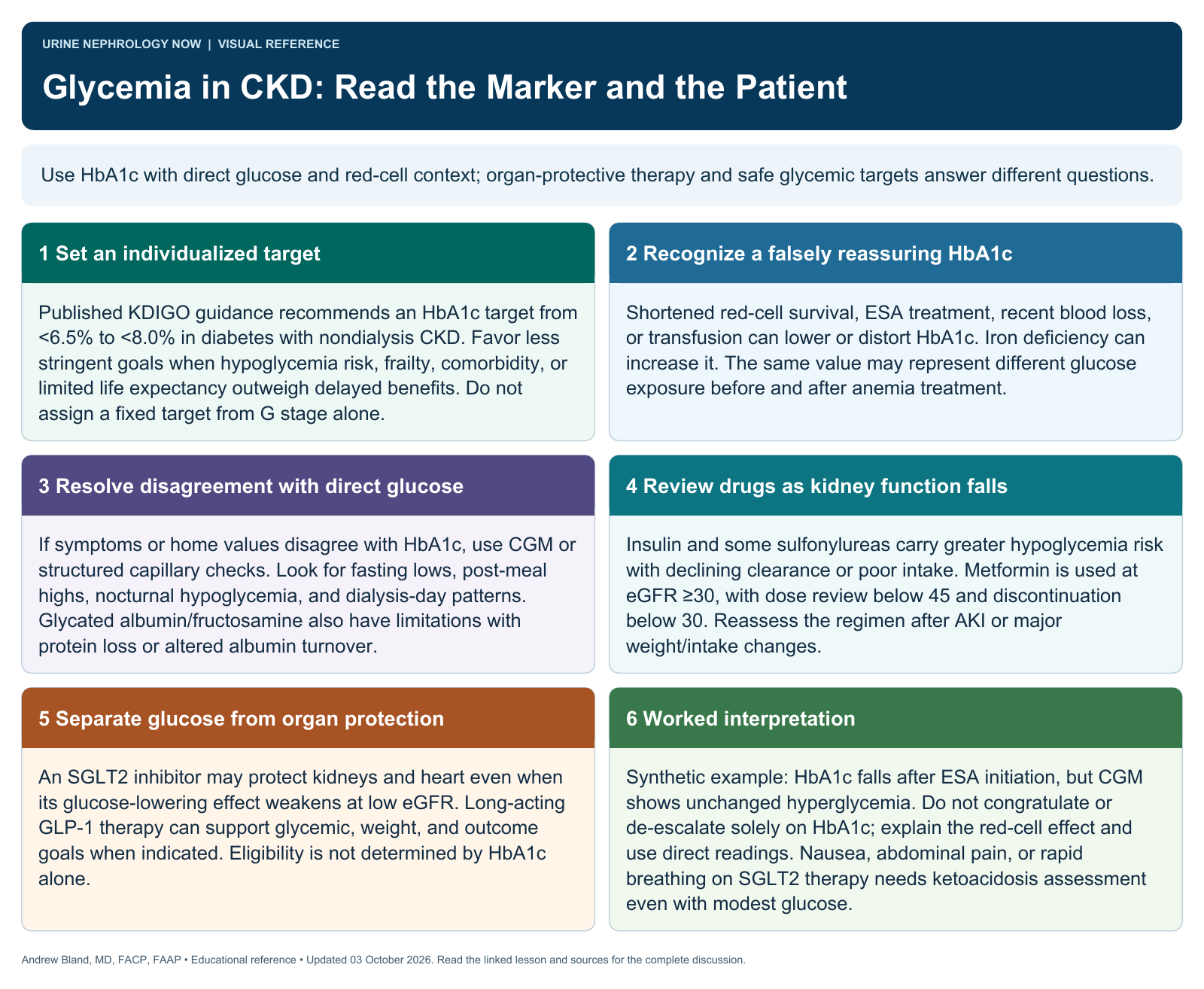
Use HbA1c with direct glucose and red-cell context; organ-protective therapy and safe glycemic targets answer different questions.
Text version
Set an individualized target
Published KDIGO guidance recommends an HbA1c target from <6.5% to <8.0% in diabetes with nondialysis CKD. Favor less stringent goals when hypoglycemia risk, frailty, comorbidity, or limited life expectancy outweigh delayed benefits. Do not assign a fixed target from G stage alone.
Recognize a falsely reassuring HbA1c
Shortened red-cell survival, ESA treatment, recent blood loss, or transfusion can lower or distort HbA1c. Iron deficiency can increase it. The same value may represent different glucose exposure before and after anemia treatment.
Resolve disagreement with direct glucose
If symptoms or home values disagree with HbA1c, use CGM or structured capillary checks. Look for fasting lows, post-meal highs, nocturnal hypoglycemia, and dialysis-day patterns. Glycated albumin/fructosamine also have limitations with protein loss or altered albumin turnover.
Review drugs as kidney function falls
Insulin and some sulfonylureas carry greater hypoglycemia risk with declining clearance or poor intake. Metformin is used at eGFR ≥30, with dose review below 45 and discontinuation below 30. Reassess the regimen after AKI or major weight/intake changes.
Separate glucose from organ protection
An SGLT2 inhibitor may protect kidneys and heart even when its glucose-lowering effect weakens at low eGFR. Long-acting GLP-1 therapy can support glycemic, weight, and outcome goals when indicated. Eligibility is not determined by HbA1c alone.
Worked interpretation
Synthetic example: HbA1c falls after ESA initiation, but CGM shows unchanged hyperglycemia. Do not congratulate or de-escalate solely on HbA1c; explain the red-cell effect and use direct readings. Nausea, abdominal pain, or rapid breathing on SGLT2 therapy needs ketoacidosis assessment even with modest glucose.