Visual summary
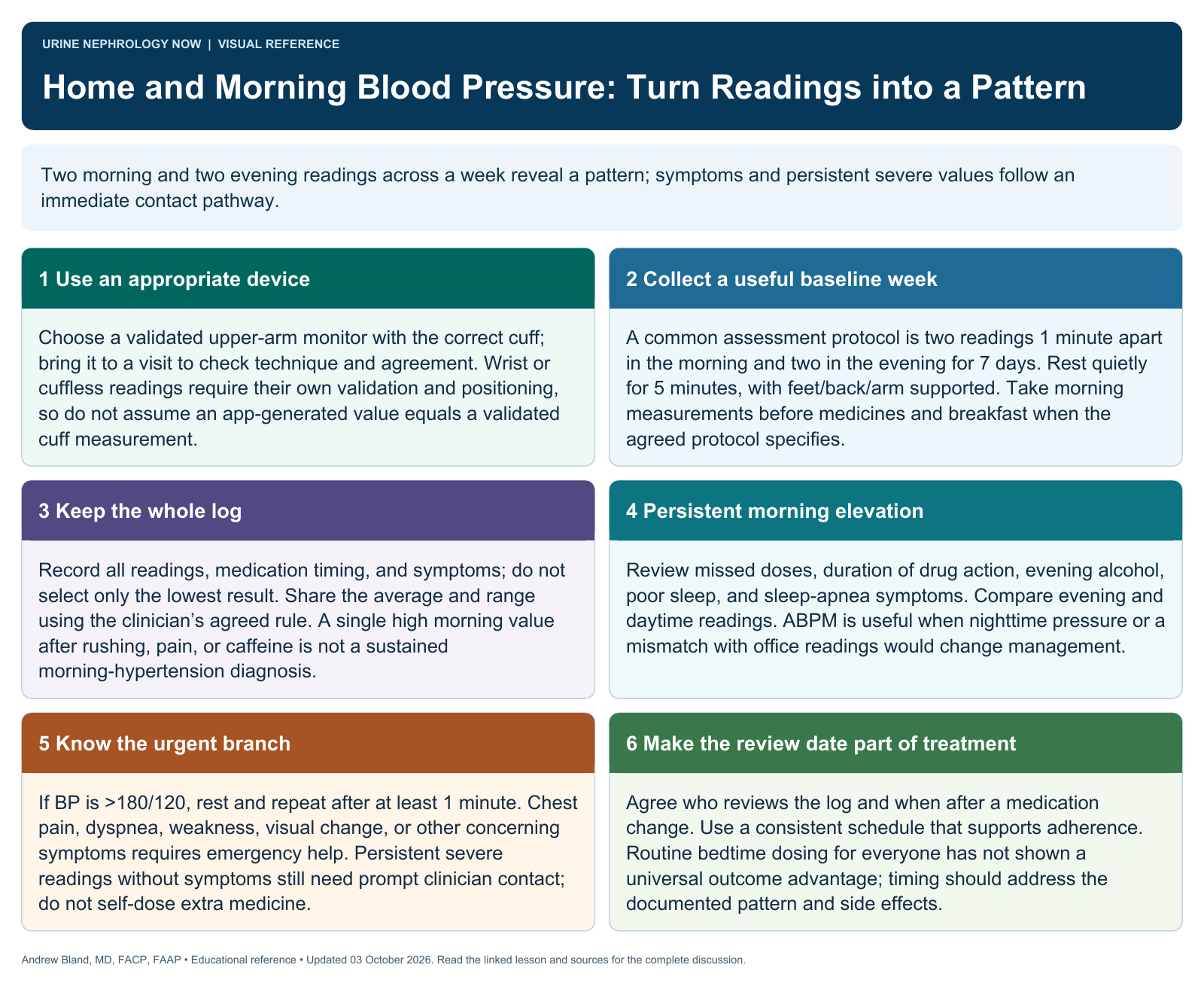
Two morning and two evening readings across a week reveal a pattern; symptoms and persistent severe values follow an immediate contact pathway.
Text version
Use an appropriate device
Choose a validated upper-arm monitor with the correct cuff; bring it to a visit to check technique and agreement. Wrist or cuffless readings require their own validation and positioning, so do not assume an app-generated value equals a validated cuff measurement.
Collect a useful baseline week
A common assessment protocol is two readings 1 minute apart in the morning and two in the evening for 7 days. Rest quietly for 5 minutes, with feet/back/arm supported. Take morning measurements before medicines and breakfast when the agreed protocol specifies.
Keep the whole log
Record all readings, medication timing, and symptoms; do not select only the lowest result. Share the average and range using the clinician’s agreed rule. A single high morning value after rushing, pain, or caffeine is not a sustained morning-hypertension diagnosis.
Persistent morning elevation
Review missed doses, duration of drug action, evening alcohol, poor sleep, and sleep-apnea symptoms. Compare evening and daytime readings. ABPM is useful when nighttime pressure or a mismatch with office readings would change management.
Know the urgent branch
If BP is >180/120, rest and repeat after at least 1 minute. Chest pain, dyspnea, weakness, visual change, or other concerning symptoms requires emergency help. Persistent severe readings without symptoms still need prompt clinician contact; do not self-dose extra medicine.
Make the review date part of treatment
Agree who reviews the log and when after a medication change. Use a consistent schedule that supports adherence. Routine bedtime dosing for everyone has not shown a universal outcome advantage; timing should address the documented pattern and side effects.