Visual summary
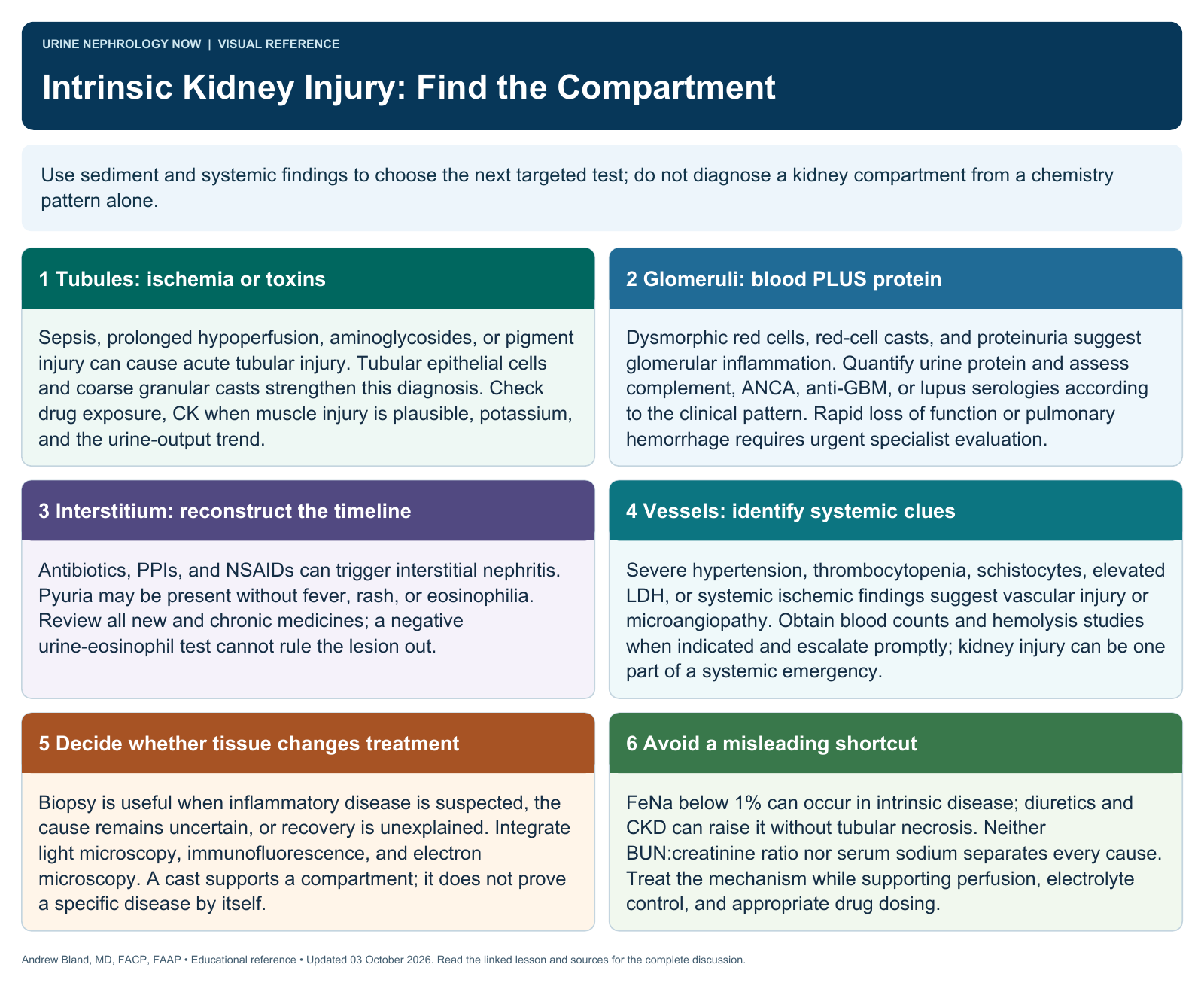
Intrinsic AKI is a family of diseases; laboratory patterns suggest mechanisms but do not establish the diagnosis.
Text version
Four sites of injury
Intrinsic injury may involve tubules, glomeruli, interstitium, or vessels. Different mechanisms can coexist, especially during sepsis or medication exposure. Distinguishing the compartment guides testing and treatment.
Tubular injury
Ischemia and toxins can injure tubular cells. Granular casts and tubular epithelial cells support acute tubular injury, but a bland sediment does not exclude it. Creatinine and potassium may rise.
Glomeruli and vessels
Hematuria, proteinuria, and red cell casts raise concern for glomerular inflammation. Severe hypertension, hemolysis, thrombocytopenia, or systemic vascular findings suggest vascular injury and prompt targeted evaluation.
Interstitial disease
Drugs, infection, and systemic inflammatory disorders can cause interstitial nephritis. Pyuria may support the diagnosis; rash, fever, and eosinophilia are often absent. Review the complete medication timeline.
Choose the next test
Use urine microscopy, protein quantification, serologies, blood counts, and imaging selectively. Kidney biopsy may be needed when the cause remains uncertain or a tissue diagnosis would change treatment.
Management depends on cause
Treat hemodynamic and infectious triggers, remove harmful exposures, and seek nephrology input for suspected inflammatory or vascular disease. Electrolytes and urine indices cannot reliably identify every intrinsic subtype.
Continue learning
This graphic summarizes a topic. The full educational pages provide the broader discussion and references.