Visual summary
Weight loss in CKD calls for nutritional assessment before adding restrictions. Tailor medical nutrition therapy to biochemistry, goals, food access, and ability to eat.
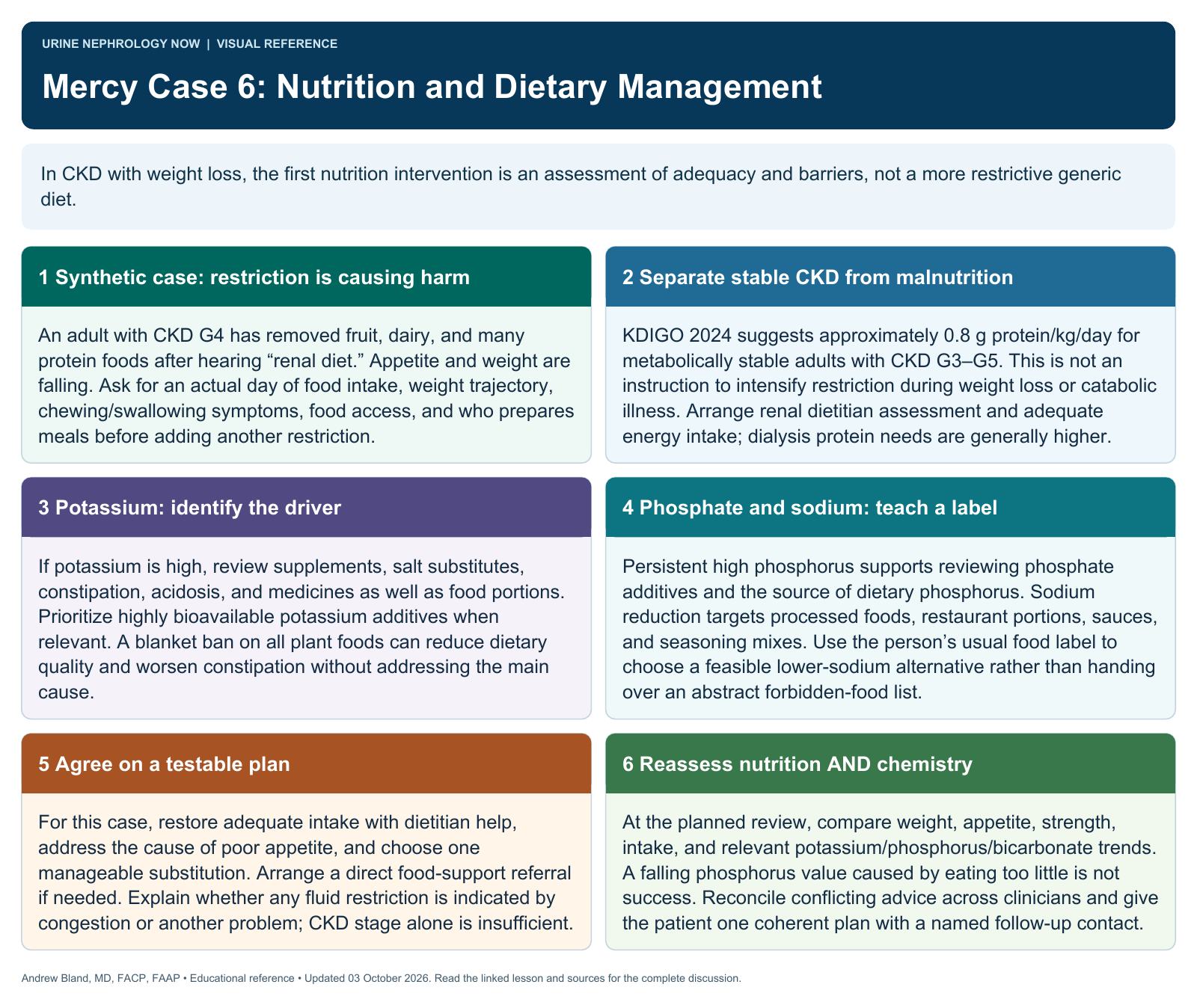
Text version
Define the nutrition problem
Ask what the patient actually eats, why foods were removed, and whether poor intake, symptoms, or food access is driving weight loss.
Avoid a universal renal diet
Base restrictions on the individual problem. Avoid a generic renal diet that unnecessarily removes food groups and compromises nutrition.
Discuss protein in context
A patient losing weight needs individualized dietitian assessment before further protein restriction; dialysis and nondialysis protein needs are different.
Address sodium and additives
Review sodium and phosphate additives while tailoring potassium advice to laboratory trends, medicines, bowel function, and the patient’s overall food intake.
Agree on a practical change
Choose feasible changes with the patient, teach using familiar foods, and address affordability or preparation barriers through a concrete referral.
Reassess the outcome
Judge the plan by intake, weight, function, symptoms, and relevant laboratory trends; better numbers caused by inadequate intake are not success.
Continue learning
This graphic summarizes a topic. The full educational pages provide the broader discussion and references.